 Safekipedia
An ester is a special kind of compound made from an acid. It forms when a part of the acid, called a hydrogen atom in a hydroxyl group, is replaced by another group of atoms. Esters have a unique structure that makes them important in many areas.
Esters are found in everyday life. For example, they are part of fats and oils, like those in animal fats and vegetable oils. They also give fruits and other foods their pleasant smells. Many esters are used as fragrances, and some are important in making plastics and other materials.
Esters play key roles in nature and technology. They are used in solvents, lubricants, and even in the structure of DNA molecules. Their properties make them useful in many different ways, from food to science and industry.
Nomenclature
The word ester was first used in 1848 by a German chemist named Leopold Gmelin. It comes from a German word meaning "acetic ether."
Esters are special kinds of chemicals made from acids and alcohols. Their names come from the names of these acids and alcohols. For example, an ester made from acetic acid and ethanol is called ethyl acetate. Some esters have simple names like formate or acetate. Others have names ending in "-oate," such as ethanoate.
Esters can also come from inorganic acids, like sulfuric acid or nitric acid. For example, dimethyl sulfate is an ester made from sulfuric acid and methanol. These esters are used in many everyday products and industries.
Structure and bonding
Esters come from carboxylic acids and alcohols. They have a special group called a carbonyl, which is a C=O. This makes esters flexible. They can twist easily around certain bonds. Because of this, esters are often less solid and easier to turn into gas than similar compounds called amides.
Esters can shape themselves in different ways. They usually choose a specific form to stay stable. Small ring-shaped esters, called lactones, have their own fixed shape because of their circular structure.
Physical properties and characterization
Esters are a type of chemical made from acids and alcohols. They are more polar than some other chemicals called ethers, but not as polar as alcohols. This means they can mix a little with water because they can form special connections called hydrogen bonds. However, they cannot form these bonds as well as alcohols can. Because of this, esters are often more likely to evaporate into the air compared to acids of the same size.
To identify esters, scientists often use a method called gas chromatography. Esters evaporate easily, which makes this method work well. Scientists also look at a special kind of light pattern called an IR spectrum. Esters show a strong, sharp line between 1730 and 1750 cm−1. This line helps scientists recognize esters, and it can shift a little depending on the specific groups attached to the ester.
Applications and occurrence
Esters are found everywhere in nature and are very important for industry. In nature, fats are a type of ester made from glycerol and fatty acids. Esters give many fruits their nice smells, such as apples, durians, pears, bananas, pineapples, and strawberries.
Industry makes lots of polyesters each year. Some key products include polyethylene terephthalate, acrylate esters, and cellulose acetate.
Preparation
Esters are compounds made through a special kind of chemical reaction called esterification. This reaction usually happens when an alcohol combines with an acid. Esters are very common because they often have pleasant, fruity smells. This is why they are used in making fragrances and flavors. They are also important parts of many polymers, which are materials used to make plastics and other everyday products.
One common way to make esters is through a reaction called Fischer esterification. In this process, a carboxylic acid is mixed with an alcohol, and a special helper called a dehydrating agent, like sulfuric acid, is added to make the reaction happen faster. There are other methods too, such as using diazomethane, which is good for turning carboxylic acids into methyl esters quickly. Another method involves using epoxides to make esters that have special properties.
Main article: Fischer esterification
Reactions
Esters are less reactive than some other compounds, like acid halides. They can react with ammonia and amines to form amides, but this is not commonly done because other compounds work better.
Esters can change into different esters through a process called transesterification. This happens when an ester reacts with an alcohol, with help from either an acid or a base. Because the products are also alcohols, the reaction can go both ways. Using more alcohol or removing one of the products can help the reaction finish.
Esters can also break down in a process called hydrolysis. With an acid helping, this is the opposite of how esters are made. With a base, this process is called saponification and is used to make soap from fatty acids.
Esters can be changed by adding hydrogen, a process called reduction. This can turn esters into alcohols. In the past, esters were reduced using sodium, but today we use better techniques.
Esters can also react with other compounds to form new products, such as in the Claisen condensation where two esters combine to make a new compound. These reactions are important for making many chemicals.
Finally, esters can act as protecting groups for carboxylic acids, especially when making proteins, by preventing unwanted reactions. Methyl and ethyl esters are commonly used for this purpose.
List of ester odorants
Many esters smell like sweet fruits and are found in plant oils. Because of this, esters are used to make artificial flavors and fragrances. They help create the tasty and scented products we enjoy every day.
| Acetate ester | Structure | Odor or occurrence |
|---|---|---|
| Methyl acetate |  | glue |
| Ethyl acetate |  | nail polish remover, model paint, model airplane glue, pears |
| Propyl acetate |  | pear |
| Isopropyl acetate |  | fruity |
| Butyl acetate |  | apple, honey |
| Isobutyl acetate |  | cherry, raspberry, strawberry |
| Amyl acetate (pentyl acetate) |  | apple, banana |
| Isoamyl acetate |  | pear, banana (main component of banana essence) (flavoring in Pear drops) |
| Hexyl acetate |  | pear-like |
| 2-Hexenyl acetate |  | fruity, both cis and trans are used, sometimes individually |
| 3,5,5-Trimethylhexyl acetate |  | woody |
| Octyl acetate | | fruity-orange |
| Benzyl acetate |  | pear, strawberry, jasmine |
| Bornyl acetate | pine (see also isobornyl acetate) | |
| Geranyl acetate |  | geranium |
| Menthyl acetate | 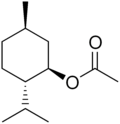 | peppermint |
| Linalyl acetate |  | lavender, sage |
| Formate esters | Structure | Odor or occurrence |
|---|---|---|
| Isobutyl formate |  | raspberry |
| Linalyl formate |  | apple, peach |
| Isoamyl formate | 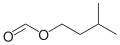 | plum, blackcurrant |
| Ethyl formate |  | lemon, rum, strawberry |
| Methyl formate | 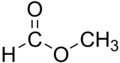 | pleasant, ethereal, rum, sweet |
| Propionate, butyrate, and isobutyrate esters | Structure | Odor or occurrence |
|---|---|---|
| Butyl propionate |  | pear drops, apple, rare example of a propionate odorant |
| Methyl butyrate |  | pineapple, apple, strawberry |
| Ethyl butyrate |  | banana, pineapple, strawberry, perfumes |
| Propyl isobutyrate |  | rum |
| Butyl butyrate |  | pineapple, honey |
| Isoamyl butyrate | 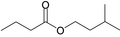 | banana |
| Hexyl butyrate |  | fruits |
| Ethyl isobutyrate |  | blueberries, used in alcoholic drinks |
| Linalyl butyrate |  | peach |
| Geranyl butyrate |  | cherry |
| Terpinyl butyrate |  | cherry |
| C5-C9 aliphatic esters | Structure | Odor or occurrence |
|---|---|---|
| Methyl pentanoate (methyl valerate) |  | flowery |
| Ethyl isovalerate |  | fruity, used in alcoholic drinks |
| Geranyl pentanoate |  | apple |
| Pentyl pentanoate (amyl valerate) |  | apple |
| Propyl hexanoate |  | blackberry, pineapple |
| Ethyl heptanoate |  | apricot, cherry, grape, raspberry, used in alcoholic drinks |
| Pentyl hexanoate (amyl caproate) |  | apple, pineapple |
| Allyl hexanoate |  | pineapple |
| Ethyl hexanoate |  | pineapple, waxy-green banana |
| Ethyl nonanoate |  | grape |
| Nonyl caprylate |  | orange |
| Esters of aromatic acids | Structure | Odor or occurrence |
|---|---|---|
| Ethyl benzoate |  | sweet, wintergreen, fruity, medicinal, cherry, grape |
| Ethyl cinnamate |  | cinnamon |
| Methyl cinnamate |  | strawberry |
| Methyl phenylacetate |  | honey |
| Methyl salicylate (oil of wintergreen) |  | Modern root beer, wintergreen, Germolene and Ralgex ointments (UK) |
Images
This article is a child-friendly adaptation of the Wikipedia article on Ester, available under CC BY-SA 4.0.
Images from Wikimedia Commons. Tap any image to view credits and license.