 Safekipedia
Vertebrate
Adapted from Wikipedia · Discoverer experience
Vertebrates, also called craniates, are animals with a vertebral column and a cranium. The vertebral column surrounds and protects the spinal cord, while the cranium protects the brain. They make up the subphylum Vertebrata with some 65,000 species, which is the largest ranked grouping in the phylum Chordata.
The vertebrates include mammals, birds, amphibians, and various classes of fish and reptiles. Fish include the jawless Agnatha, and the jawed Gnathostomata. The jawed fish include both the cartilaginous fish and the bony fish. Bony fish include the lobe-finned fish, which gave rise to the tetrapods, the animals with four limbs.
The first vertebrates appeared in the Cambrian explosion some 518 million years ago. Jawed vertebrates evolved in the Ordovician or Silurian; bony fishes appeared in the Silurian and diversified widely in the Devonian. The first tetrapods appeared towards the end of the Devonian, and the first amphibians appeared on land in the Carboniferous. During the Triassic, mammals and dinosaurs appeared, the latter giving rise to birds in the Jurassic. Today, extant species are roughly equally divided between fishes of all kinds, and tetrapods. Populations of many species have been in steep decline since 1970 because of land-use change, overexploitation of natural resources, climate change, pollution, and the impact of invasive species.
Characteristics
Vertebrates are animals that have a backbone and a skull to protect their brain. They belong to a group called Chordata, which share some special features like a notochord and a hollow nerve cord. What makes vertebrates unique is their backbone, which is made of bone or cartilage, and a large brain.
These animals come in many sizes, from tiny frogs to huge whales. They can live in water or on land. Most have a special way to get oxygen through gills, but land animals like amphibians and mammals use lungs instead. Their bodies are supported by a strong skeleton, and they have sense organs like eyes and ears to help them explore the world.
Evolutionary history
Vertebrates first appeared during the Cambrian explosion, a time when many animal groups began to appear. The earliest known vertebrates lived about 518 million years ago and had a basic body plan with a notochord and a head and tail, but no jaws.
Later, in the Devonian period, called the "Age of Fishes," jawed vertebrates appeared. Some bony fishes developed limbs that allowed them to move on land, leading to the first four-legged animals, or tetrapods. During the Mesozoic era, dinosaurs and many marine reptiles lived, and at the end of this time, a major extinction event changed life on Earth. The current era, the Cenozoic, is known as the "Age of Mammals" because mammals became the dominant land animals.
Approaches to classification
Scientists have studied how to group vertebrates for a long time. In 1801, Jean-Baptiste Lamarck described vertebrates as animals with backbones, separate from invertebrates. Later scientists added more details and changed how these animals are grouped.
Traditionally, vertebrates were divided into seven main classes: jawless fishes, cartilaginous fishes, bony fishes, amphibians, reptiles, birds, and mammals. However, we now know that birds actually evolved from reptiles, so grouping them separately doesn’t show their true family tree. Scientists today use evolutionary history to better understand how these animals are related.
Diversity
Vertebrates are animals that have a backbone and a skull to protect their brain. They make up a large group with about 65,000 different species, far more than any other group in the animal world.
Recent studies show that many vertebrate populations have been decreasing. Between 1970 and 2014, numbers dropped by about 60%. Freshwater species and tropical populations in South America and Central America have seen even bigger declines. Scientists say this loss could lead to a major event where many species disappear. The main reasons for these losses include changes in land use, taking too many natural resources, climate change, pollution, and invasive species.
| Vertebrate groups | Image | Class | Estimated number of described species | Group totals | ||
|---|---|---|---|---|---|---|
| Anamniote lack amniotic membrane so need to reproduce in water | Jawless | "Fish" |  | Myxini (hagfish) | 78 | >32,900 |
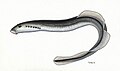 | Hyperoartia (lampreys) | 40 | ||||
| Jawed | 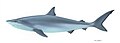 | Chondrichthyes | >1,100 | |||
 | Actinopterygii | >32,000 | ||||
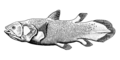 | "Sarcopterygii" | 8 | ||||
| Tetrapods | 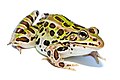 | Amphibia | 7,302 | 33,278 | ||
| Amniote have amniotic membrane adapted to reproducing on land | 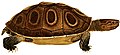 | "Reptilia" | 10,711 | |||
 | Mammalia | 5,513 | ||||
 | Aves (birds) | 10,425 | ||||
| Total described species | 66,178 | |||||
Images
This article is a child-friendly adaptation of the Wikipedia article on Vertebrate, available under CC BY-SA 4.0.
Images from Wikimedia Commons. Tap any image to view credits and license.