 Safekipedia
Alutiiq
Adapted from Wikipedia · Adventurer experience
The Alutiiq are one of the eight groups of Alaska Natives. They live along the southern-central coast of Alaska. They are also known by their ancestral name Sugpiaq, or as Pacific Eskimo or Pacific Yupik. Their history goes back more than 7,500 years. Their traditional lands include places like Prince William Sound, the Kenai Peninsula, the Kodiak Archipelago, and the Alaska Peninsula.
In the early 1800s, there were many Alutiiq villages in the Kodiak archipelago. Today, many Alutiiq people still live in Alaska and keep their culture and traditions alive.
Terminology
The most common names for this group are Alutiiq (for one person), Alutiik (for two people), and Alutiit (for many people). These names come from a word that Russian traders used long ago. In the late 1700s, Russian traders began to live in the area.
Some people from this group prefer to use the names Sugpiaq (for one person), Sugpiak (for two people), and Sugpiat (for many people). These names mean "the real people." Others use a name for their language like Sugstun. Today, people choose which name they like to use.
Contemporary nations
The Alutiiq people have many groups that are officially recognized. These include:
- Alutiiq Tribe of Old Harbor
- Kaguyak Village
- Native Village of Afognak
- Native Village of Akhiok
- Native Village of Karluk
- Native Village of Larsen Bay
- Native Village of Ouzinkie
- Native Village of Port Lions
- Sun'aq Tribe of Kodiak
- Tangirnaq Native Village
Culture
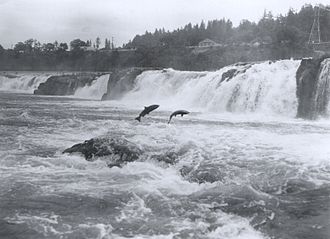
The Alutiiq people lived near the coast and used the ocean and land for food. In spring, they collected shellfish, hunted octopuses, and gathered greens. In summer, they fished for cod and halibut, and hunted seals and sea lions. They also used trees and shrubs for medicine and food. In fall, they picked berries, caught salmon, and hunted bears and ducks. They prepared food for winter by drying, smoking, or freezing it. In winter, they stayed indoors and celebrated their harvests.
The Alutiiq traditionally lived in homes called ciqlluaq before meeting Russian traders. Today, they live in modern homes but still value their traditions. Their art, including beaded decorations, wood carvings, and woven grass items, shows their pride in their ancestors and nature. They also tell stories, sing, and dance to keep their history alive. In 2010, a high school in Kodiak began teaching the Alutiiq language, which was spoken by only a few elderly people and was in danger of being lost.
Notable people
Here are some well-known Alutiiq people who have made important contributions in different areas:
- Alvin Eli Amason, a painter and sculptor
- Sven Haakanson, the executive director of the Alutiiq Museum and winner of a 2007 MacArthur Fellowship
- Jerry Laktonen, an artist and crafts person
- Loren Leman, who served as Lieutenant-governor of Alaska from 2002 to 2006
- Tanya Lukin Linklater, an artist and choreographer
- Linda Infante Lyons, a painter and muralist
- Peter the Aleut (Cungagnaq), recognized as an Eastern Orthodox saint from Kodiak Island
- Mary Peterson, an Alutiiq midwife and healer
- Denise Wallace, a jeweler
Images
Related articles


This article is a child-friendly adaptation of the Wikipedia article on Alutiiq, available under CC BY-SA 4.0.
Images from Wikimedia Commons. Tap any image to view credits and license.