 Safekipedia
American Samoa
Adapted from Wikipedia · Adventurer experience
American Samoa is a special part of the United States in the south Pacific Ocean. It has several islands, including Tutuila, Aunuʻu, Ofu, Olosega, Taʻū, and Rose Atoll, as well as Swains Island. The largest town is Pago Pago, and it is also the capital.
People have lived in American Samoa for a very long time. The United States took control of the islands in the late 1800s. Today, American Samoa has its own local government, but it is still under the control of the United States.
The main industry is fishing, and the territory trades mostly with the United States. Tourism is growing but is still small because the islands are far away.
American Samoa is unique because its people are not considered U.S. citizens by birth. Many Samoans want to keep their traditional ways of life, including their system of government and land ownership. They prefer to maintain their own culture.
Etymology
The name "Samoa" means "holy center". It comes from words in the Samoan language: sa meaning "sacred" and moa meaning "center". Some stories say the name comes from a local chief named Samoa.
Even though the country next door changed its name from Western Samoa in 1997, some people still call this place Eastern Samoa to tell it apart from its neighbor.
History
Main articles: History of Samoa, History of American Samoa, and Tui Manuʻa
Traditional stories from Samoa and Manuʻa tell about leaders called the Tui Manuʻa. These leaders were very important and ruled many islands, including Tutuila and smaller islands nearby.
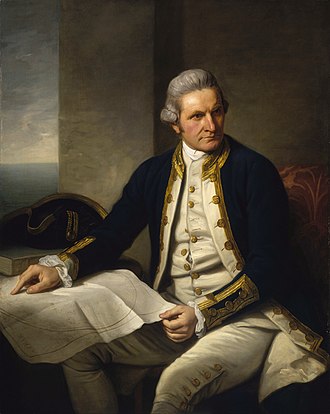
Europeans first visited these islands in the 1700s. Dutch explorer Jacob Roggeveen saw the islands in 1722. French explorer Louis-Antoine de Bougainville named them the "Îles des Navigateurs" in 1768. British explorer James Cook wrote down the island names in 1773.
In the 1800s, more ships visited Samoa, especially at Pago Pago Harbor. In 1899, an agreement split the Samoan Islands. The eastern islands became a U.S. territory called American Samoa, while the western islands became German Samoa.
During World War II, many U.S. Marines were stationed in Samoa, and some Samoans served in the war.
In 1967, American Samoa adopted its own constitution and began to govern itself, although it is still a U.S. territory. Today, American Samoa has its own government and recognizes both Samoan and English as official languages.
Notable events
Pre-20th century
In 1784, a French explorer named Jean-François de Galaup, comte de Lapérouse landed on the island of Tutuila. Sadly, some of his crew were killed in a conflict with local people. This made other Europeans careful about visiting the area for many years.
20th century
In 1912, writer William Somerset Maugham visited and later wrote a story called "Rain" inspired by his time there.
In 1924, anthropologist Margaret Mead began her studies in American Samoa, which led to her well-known book about the island’s culture.
During World War II in 1942, a Japanese submarine fired shots at a U.S. naval station, causing minor damage but no major injuries.
In 1966, President Lyndon B. Johnson visited and helped name a school and a hospital after him.
American Samoa was an important stop for astronauts returning from the Moon in the late 1960s and early 1970s.
21st century
In 2009, a powerful earthquake caused a large wave that sadly took many lives in the nearby islands.
Government and politics
Government
Main article: Government of American Samoa
American Samoa is a special part of the United States called an unincorporated territory. The U.S. President has main powers, but in 1951, President Harry Truman let the Secretary of the Interior manage these powers. In 1967, a new constitution for American Samoa was created and started being used.
The leader of American Samoa is the Governor. The Governor and Lieutenant Governor are chosen by voters for four-year terms. The President of the United States is the official head of state but does not take part in daily government work. The Secretary of the Interior watches over the government and can approve changes to the constitution, override the Governor’s decisions, and choose important leaders.
The group that makes laws is called the American Samoa Fono, which has two parts. The House of Representatives has 21 members who serve for two years. The Senate has 18 members who serve for four years and are chosen by island leaders. The Fono meets in Fagatogo.
The court system includes the High Court, a District Court, and village courts. The High Court and District Court are in Fagatogo.
Politics
Main article: Politics of American Samoa
See also: Elections in American Samoa and Political party strength in American Samoa
American Samoa is run as a territory of the United States. It has its own constitution, which started in 1967. American Samoa works like a representative democracy with an elected Governor as the leader. There are political groups, but not many leaders join them.
Besides U.S. government rules, American Samoa also follows its own Samoan traditions and customs called the "faʻa Sāmoa." These traditions are important and affect daily life and decisions.
Nationality
Further information: Tuaua v. United States
People born in American Samoa are considered U.S. nationals but not citizens. If a U.S. citizen has a child in American Samoa, that child is both a national and a citizen. Nationals can live anywhere in the United States and can become citizens after living there for three months and passing some tests.
Whether American Samoans should be citizens is a big debate. Some think it would change their government and traditions.
Voting rights
American Samoans can vote in local elections but cannot vote in U.S. federal elections unless they become citizens. They choose a non-voting delegate to the U.S. House of Representatives. This delegate can speak and help but cannot vote on laws.
Immigration
American Samoa has its own rules for who can move there, different from the rest of the United States. U.S. nationals can live there freely, but the government controls who comes from other countries.
Land ownership
In American Samoa, land rules are special. Most land is owned by families together, not by single people. There are rules about who can own land based on family history. These rules help protect the traditions and culture of American Samoa.
Official protest to naming of neighboring Samoa
The U.S. Embassy in Samoa notes that: "In July 1997 the Constitution was amended to change the country's name from Western Samoa to Samoa. Samoa had been known simply as Samoa in the United Nations since joining the organization in 1976. The neighboring U.S. territory of American Samoa protested the move, feeling that the change diminished its own Samoan identity. American Samoans still use the terms Western Samoa and Western Samoans."
Administrative divisions
Main article: Administrative divisions of American Samoa
American Samoa is divided into three districts – Western, Eastern and Manuʻa – and two small islands, Swains Island and the uninhabited Rose Atoll. The districts are split into smaller areas called counties and villages. Pago Pago, often called the capital, is a big village on Tutuila island in Maʻoputasi County.
Geography
American Samoa is found in Oceania. It is one of only two places that belong to the United States in the Southern Hemisphere, the other being Jarvis Island. It has a total land area of 76.1 square miles (197.1 km2) – just a bit larger than Washington, D.C.. It is made up of five rugged, volcanic islands and two coral atolls.
The five volcanic islands are Tutuila, Aunuʻu, Ofu, Olosega, and Taʻū. The coral atolls are Swains and Rose Atoll. Out of these seven islands, Rose Atoll has no people living on it and is a Marine National Monument. American Samoa is the southernmost part of the United States, located fourteen degrees below the equator.
American Samoa can sometimes be hit by big storms called tropical cyclones between November and April. Rose Atoll is the farthest east point in American Samoa and also the southernmost point of the United States. The area is home to the National Park of American Samoa.
The tallest mountain in American Samoa is Lata Mountain on Taʻū, which is 3,170 feet (970 meters) high. There are also other tall peaks on the islands. There are very high cliffs reaching up to 3,000 feet (910 meters) above the sea.
There is an underwater volcano called the Vailuluʻu that is still active, found 28 miles (45 km) east of Taʻū. Scientists from many countries study it to learn more about our planet.
In American Samoa, forests cover about 86% of the land. Most of these forests grow naturally and some are protected areas. The islands are part of two special areas called Samoan tropical moist forests and Western Polynesian tropical moist forests.
Climate
American Samoa has a tropical climate all year. There are two main seasons: the wet and dry season. The wet season is from December to March. The dry season is from April to September. Temperatures stay warm, about 81–83 °F (27–28 °C).
The weather is warm and humid, with temperatures around 80 °F (26.7 °C). The coolest time is in the southern winter from June to September. Summer, from December to March, is a little warmer. Rain often comes with clouds brought by trade winds, especially in the Pago Pago area, which gets about 200 inches (5,100 millimeters) of rain each year.
Economy
Main article: Economy of American Samoa
American Samoa's economy depends on support from the U.S. government. This includes money from Congress, Social Security, and military pensions. The biggest source of jobs is a factory that packs tuna fish.
People in American Samoa mainly work in three areas: government jobs, the tuna factory, and private businesses. Most government workers are employed by the local government. One big factory, StarKist, sends lots of canned tuna to the United States each year.
The economy changed when laws about minimum wage were discussed. Some factories closed or reduced workers because of these changes.
American Samoa does not collect certain U.S. taxes, but its own government taxes income. There is no sales tax, but imports are taxed at 8%.
Some parts of communication, like the internet, are not as good as in the mainland United States. Some reports say internet speeds are very slow and cost a lot.
From 2002 to 2007, the number of people in American Samoa grew, but the amount of goods and services each person could use actually decreased.
| 2002 | 2003 | 2004 | 2005 | 2006 | 2007 | 2002–2007 AAGRA | |
|---|---|---|---|---|---|---|---|
| GDPB | 536 | 527 | 553 | 550 | 548 | 532 | −0.1% |
| Real GDPC | 527 | 535 | 539 | 550 | 534 | 537 | 0.4% |
| PopulationD | 60,800 | 62,600 | 64,100 | 65,500 | 66,900 | 68,200 | 2.3% |
| Real GDP per capita | 8,668 | 8,546 | 8,409 | 8,397 | 7,982 | 7,874 | −1.9% |
Transportation
American Samoa has about 150 miles of highways. The speed limit is 30 miles per hour. There are several ports and harbors, including Pago Pago. There are three airports with paved runways. The main airport is Pago Pago International Airport on Tutuila Island. The islands of Ofu and Taʻū also have airports. There are no railways in American Samoa.
Demographics
Main article: Demographics of American Samoa
American Samoa is a small place with about 45,000 people. Most of them, around 97.5%, live on the biggest island called Tutuila. Many families have roots outside American Samoa, and at least 69% have a parent born somewhere else.
People in American Samoa mainly speak Samoan and English. Almost 90% of the people have Samoan heritage. There are also smaller groups from Asia and other parts of the Pacific. The place uses one ZIP code, 96799, and gets its mail through the U.S. Postal Service, just like other U.S. places.
Most people in American Samoa follow Christianity. Different Christian groups are present, such as the Congregational Christian Church in American Samoa, the Catholic Church, and The Church of Jesus Christ of Latter-day Saints. These churches include almost all of the people.
There are many schools, including 23 primary schools and ten secondary schools. Some schools are run by the government, while others are managed by religious groups or private owners. The American Samoa Community College, started in 1970, offers education after high school.
Culture
See also: Culture of Samoa
Samoan culture has changed over many years but still keeps many traditions. It fits well with Christian beliefs. People speak the Samoan language every day, but English is also used a lot and is the official language for laws. In schools, all lessons are taught in English. Families, called ʻaiga, are very important. They include both close family and extended family members.
The leader of the family, called the matai or chief, takes care of all family property. Villages are made up of many families who share common interests. Each family is represented by their chief in village meetings.
Sports
See also: Sports in American Samoa
Popular sports in American Samoa include football, Samoan cricket, canoeing, yachting, basketball, golf, netball, tennis, rugby, table tennis, boxing, bowling, volleyball, and fishing. Some well-known sports clubs are the American Samoa Tennis Association, Rugby Unions, Lavalava Golf Club, and Gamefish Association. After the Veterans Memorial Stadium was built, sports leagues became better organized.
The 1997 South Pacific Mini Games were a big event held in American Samoa. About 2,000 people from 19 countries came to compete in 11 sports. American Samoa had a team of athletes who won medals and came in fourth place overall.
In 1982, sailors took part in a big competition in Tahiti, and American Samoa won a cup. In 1983, a volleyball team won a tournament in Hawaii. That same year, three young golfers did well in a big tournament in San Diego, California.
Tony Solaita was the first person from American Samoa to play in Major League Baseball. Today, many players from American Samoa play in the National Football League (NFL) and college football.
After World War II, new groups were created to organize sports like bowling, softball, and basketball. Boxing and dancing also became popular.
American football
Main article: American football in American Samoa
Many players from American Samoa play in the National Football League and college football. Samoans are more likely to play in the NFL than other groups, which is why American Samoa is sometimes called "Football Islands".
Association football
The Football Federation American Samoa manages the men's and women's national teams. The men's team first played internationally in the 1983 South Pacific Games. They had their first big win in a FIFA World Cup qualifier in 2011.
Rugby league
The American Samoa national rugby league team plays in international competitions. They have taken part in several Pacific Cup events and World Sevens qualifiers.
Rugby union
Rugby union is growing in popularity. Two players from American Samoa have played for the famous New Zealand team, the All Blacks.
Other sports
- Boxing: Maselino Masoe was a champion boxer who competed in three Olympics.
- Professional wrestling: Many athletes from American Samoa have become well-known in professional wrestling.
- Sumo wrestling: Some Samoan sumo wrestlers have reached the highest levels of the sport.
- Track and field: Lisa Misipeka won a bronze medal in hammer throwing at the 1999 World Championships in Athletics.
Recreation
A team from the Bureau of Outdoor Recreation visited American Samoa in the 1960s to find good places for parks. They suggested spots like Cape Taputapu, Vailoatai, and Aʻoloau. Later, work began on the Pola Island area to make it a public park. In 1980, a law created the Department of Parks and Recreation.
In 1987, work started on the National Park of American Samoa. This park shows some of the world's most beautiful rainforests and coastal reefs and covers three islands. One popular spot on Tutuila Island is Pola Rock, a tall rock that rises over 400 feet above the ocean near Vatia.
The ASG Parks and Recreation takes care of all public parks, such as the Amanave Mini Park, Lions Park in Tafuna, and Pago Pago Park.
American Samoa has seven special natural places called National Natural Landmarks on Tutuila Island. These places have unique plants, animals, or rocks. The landmarks include Cape Taputapu, Fogamaʻa Crater, and Matafao Peak.
Wildlife
American Samoa is home to many interesting animals. You can find the Pacific tree boa and the Samoa flying fox, which has very large wings. There are also two kinds of small snakes: the brahminy blind snake on Tutuila and the Pacific tree boa on Taʻū. The islands have five types of geckos, small lizards that climb on walls and trees.
Sea turtles, like the green sea turtle and the hawksbill sea turtle, visit the beaches. Tutuila has many nesting turtles. There is also a type of frog called the cane toad.
The waters around American Samoa have many fish and coral, more than almost anywhere else in the United States. The National Marine Sanctuary of American Samoa protects these important sea animals.
The only native mammals in American Samoa are fruit bats. There are two kinds: the Pacific flying fox and the Samoa flying fox. Another smaller bat, the sheath-tailed bat, also lives there. In 1992, hunting these bats was banned to help their numbers grow. The Samoa flying fox lives only in Fiji and the Samoan Islands. Amalau Valley on Tutuila is a great place to see many birds and bats.
American Samoa has many special birds. Sixteen bird species found in the Samoan Islands live nowhere else on Earth, including the tooth-billed pigeon. Some birds, like the blue-crowned lory, live only in the Manuʻa Islands. Other special birds include the lesser shrikebill, the friendly ground-dove, and the spotless crake.
There are more bird species than all the reptiles, mammals, and frogs combined. Native land birds include two kinds of honeyeaters and the Samoan starling. Four types of pigeons are also native. The many-colored fruit dove is very rare. Amalau Valley is the best place to see these birds. Pola Island near Vatia and Rose Atoll are important places for seabirds like the red-footed booby. Fresh water birds include the Pacific reef heron and the Pacific black duck, found near wetlands in Nuʻuuli, Leone, and Aunuʻu Island.
Images
Related articles



This article is a child-friendly adaptation of the Wikipedia article on American Samoa, available under CC BY-SA 4.0.
Images from Wikimedia Commons. Tap any image to view credits and license.