 Safekipedia
British Columbia New Democratic Party
Adapted from Wikipedia · Adventurer experience
The New Democratic Party of British Columbia (BC NDP) is a social democratic political party in the Canadian province of British Columbia. It sits on the centre-left of the political spectrum and is connected to the federal New Democratic Party. The BC NDP is one of the two main parties in the province, working alongside the Conservative Party of British Columbia. For many years, its main rival was the BC United party, but in 2024, the Conservatives became a stronger opponent.
The party began in 1933 and later changed its name to the NDP in 1961. It quickly became an important group in British Columbia and often served as the Official Opposition before winning its first election in 1972 under leader Dave Barrett.
The BC NDP returned to power in 1991 and governed until 2001. After losing the 2001 election, the party stayed out of government until 2017, when it formed a minority government under John Horgan. In the 2020 election, the party won a majority government. David Eby took over as leader and premier in 2022 and led the party to another victory in the 2024 election.
Seven leaders of the NDP have served as premier of British Columbia: Dave Barrett, Mike Harcourt, Glen Clark, Dan Miller, Ujjal Dosanjh, John Horgan, and David Eby. Since 2022, David Eby has been both the party leader and premier of British Columbia.
History
Foundation and early history: 1933–1951
The party began in 1933 during a tough economic time called the Great Depression. It started as a group called the Co-operative Commonwealth Federated, working with other groups interested in social change. It won seats in elections and became important in British Columbia politics.
Solidification as opposition party: 1951–1972
After changes in elections, a new group called the BC Social Credit League became popular. The party faced challenges but kept trying to gain support. It worked to build its ideas and attract more people.
Barrett government: 1972–1975
In 1972, the party won an election and began leading the government. They made changes like starting a new insurance group and planning for land use. But they also faced problems, such as debt.
Return to opposition: 1975–1991
The party lost power in 1975 but kept trying to win back support. They had ups and downs, including a close call in an election where they almost won.
Harcourt government: 1991–1996
The party returned to power in 1991 and led the government for several years. They made changes to support people and the environment but had to deal with financial challenges.
Clark government: 1996–1999
After winning another election in 1996, the party faced difficulties, including financial problems. Leadership changes happened, and the party struggled to keep support.
Dosanjh government: 2000–2001
In 2000, the party tried to regain support but lost badly in the 2001 election. Only a few members kept their positions, and the party had to rebuild.
Opposition and recovery: 2001–2017
The party worked to regain support over the next years. They won some elections and came close to power several times but faced strong competition.
Horgan and Eby governments: since 2017
In 2017, the party formed a government with help from another group. They won a big election in 2020 and led the province. In 2022, a new leader took over, and the party continued to work in government.
Leaders
"†" denotes acting or interim leader.
CCF
NDP
Presidents
The party president helps organize meetings and events for the party.
- Thomas R. Berger (1961–1962)
- Fred Vulliamy (1962–1963)
- Jack Mackenzie (1963–1965)
- Frank Snowsell (1965–1966)
- Ray Haynes (1966)
- Norman Levi (1966–1968)
- John Laxton (1968–1970)
- Dave Stupich (1970–1972)
- Frank Murphy (1972–1975)
- Yvonne Cocke (1975–1977)
- John Brewin (1977–1978)
- Gerry Stoney (1978–1985)
- Joy Langan (1985–1988)
- Elaine Bernard (1988–1989)
- Ian Aikenhead (1989–1992)
- Patrice Pratt (1992–1996)
- Bruce Ralston (1996–2001)
- Maura Parte (2001–2003)
- Jeff Fox (2003–2009)
- Sav Dhaliwal (2009)
- Moe Sihota (2009–2013)
- Craig Keating (2013–2021)
- Aaron Sumexheltza (2021–2025)
- Aman Singh (2025–present)
| # | Party leader | Tenure |
|---|---|---|
| 1 | Robert Connell | 1933–1936 |
| 2 | Harold Edward Winch | 1937–1953 |
| 3 | Arnold Webster | 1953–1956 |
| 4 | Robert Strachan | 1956–1961 |
| # | Party leader | Portrait | Tenure |
|---|---|---|---|
| 1 | Robert Strachan | 1961–1969 | |
| 2 | Thomas R. Berger | 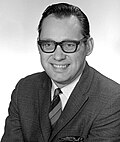 | 1969–1970 |
| 3 | Dave Barrett | 1970–1984 | |
| 4 | Bob Skelly | 1984–1987 | |
| 5 | Mike Harcourt | 1987–1996 | |
| 6 | Glen Clark | 1996–1999 | |
| † | Dan Miller | 1999–2000 | |
| 7 | Ujjal Dosanjh | 2000–2001 | |
| † | Joy MacPhail | 2001–2003 | |
| 8 | Carole James | 2003–2011 | |
| † | Dawn Black | 2011 | |
| 9 | Adrian Dix |  | 2011–2014 |
| 10 | John Horgan | 2014–2022 | |
| 11 | David Eby | Since 2022 |
Electoral performance
See also: List of BC general elections § Results by party
Results shown are for CCF from 1933 to 1960, and for NDP since 1963.
| Election | Leader | Seats | +/− | Place | Votes | Vote share (%) | Change (pp) | Legislative role |
|---|---|---|---|---|---|---|---|---|
| 1933 | Robert Connell | 7 / 47 (15%) | n/a | 2nd | 120,185 | 31.53 | n/a | Opposition |
| 1937 | vacant | 7 / 48 (15%) |  |  3rd 3rd | 119,400 | 28.57 | 2.96 | Third party |
| 1941 | Harold Winch | 14 / 48 (29%) |  7 7 | 2nd | 151,440 | 33.36 | 4.79 | Opposition |
| 1945 | 10 / 48 (21%) | 4 | 2nd | 175,960 | 37.62 | 4.26 | Opposition | |
| 1949 | 7 / 48 (15%) | 3 | 2nd | 245,284 | 35.10 | 2.52 | Opposition | |
| 1952 | 18 / 48 (38%) | 11 | 2nd | 236,562 | 30.78 | 4.32 | Opposition | |
| 1953 | Arnold Webster | 14 / 48 (29%) | 4 | 2nd | 224,513 | 30.85 | 0.07 | Opposition |
| 1956 | Robert Strachan | 10 / 52 (19%) | 4 | 2nd | 231,511 | 28.32 | 2.53 | Opposition |
| 1960 | 16 / 52 (31%) | 6 | 2nd | 326,094 | 32.73 | 4.41 | Opposition | |
| 1963 | 14 / 52 (27%) | 2 | 2nd | 269,004 | 27.80 | 4.93 | Opposition | |
| 1966 | 16 / 55 (29%) | 2 | 2nd | 252,753 | 33.62 | 5.82 | Opposition | |
| 1969 | Thomas Berger | 12 / 55 (22%) | 4 | 2nd | 331,813 | 33.92 | 0.30 | Opposition |
| 1972 | Dave Barrett | 38 / 55 (69%) | 26 | 1st | 448,260 | 39.59 | 5.67 | Majority |
| 1975 | 18 / 55 (33%) | 20 | 2nd | 505,396 | 39.16 | 0.43 | Opposition | |
| 1979 | 26 / 57 (46%) | 8 | 2nd | 646,188 | 45.99 | 6.83 | Opposition | |
| 1983 | 22 / 57 (39%) | 4 | 2nd | 741,354 | 44.94 | 1.05 | Opposition | |
| 1986 | Robert Skelly | 22 / 69 (32%) | | 2nd | 824,544 | 42.60 | 2.34 | Opposition |
| 1991 | Mike Harcourt | 51 / 75 (68%) | 19 | 1st | 595,391 | 40.71 | 1.89 | Majority |
| 1996 | Glen Clark | 39 / 75 (52%) | 12 | 1st | 624,395 | 39.45 | 1.26 | Majority |
| 2001 | Ujjal Dosanjh | 2 / 79 (3%) | 37 | 2nd | 343,156 | 21.56 | 17.89 | No status |
| Opposition | ||||||||
| 2005 | Carole James | 33 / 79 (42%) | 31 | 2nd | 694,978 | 41.43 | 19.87 | Opposition |
| 2009 | 35 / 85 (41%) | 2 | 2nd | 691,342 | 42.14 | 0.71 | Opposition | |
| 2013 | Adrian Dix | 34 / 85 (40%) | 1 | 2nd | 715,999 | 39.71 | 2.43 | Opposition |
| 2017 | John Horgan | 41 / 87 (47%) | 7 | 2nd | 795,527 | 40.28 | 0.57 | Opposition |
| Minority | ||||||||
| 2020 | 57 / 87 (66%) | 16 | 1st | 899,365 | 47.70 | 7.42 | Majority | |
| 2024 | David Eby | 47 / 93 (51%) | 10 | 1st | 943,915 | 44.87 | 2.82 | Majority |
Related articles


This article is a child-friendly adaptation of the Wikipedia article on British Columbia New Democratic Party, available under CC BY-SA 4.0.
Images from Wikimedia Commons. Tap any image to view credits and license.