 Safekipedia
Edmund Stoiber
Adapted from Wikipedia · Adventurer experience
Edmund Rüdiger Stoiber was born on 28 September 1941. He was a German politician. He served as the 16th minister-president of the state of Bavaria from 1993 until 2007. During this time, he also led the Christian Social Union (CSU) party from 1999 to 2007.
In 2002, Stoiber tried to become the Chancellor of Germany. This was during a federal election. It was a very close race. He lost to another leader named Gerhard Schröder.
In January 2007, Stoiber decided to leave his jobs as minister-president and party chairman by the end of September that year. This decision came after some criticism from people in his own party.
Early life
Edmund Stoiber was born in Oberaudorf, a town in the Rosenheim area of Bavaria. Before he started his political career in 1974, he worked as a lawyer and was employed at the University of Regensburg.
Education and profession
Edmund Stoiber went to the Ignaz-Günther-Gymnasium in Rosenheim. He finished high school there in 1961 after repeating a year because he didn’t pass Latin. He served in the military but stopped early because of a knee injury.
Later, he studied political science and law. In 1967, he passed an exam for state law and worked at the University of Regensburg, focusing on criminal law and Eastern European law. He earned a doctorate in law and passed a second state exam with top marks in 1971. After that, he worked at the Bavarian State Ministry of Development and Environment.
Political career
In 1978, Stoiber became secretary general of the Christian Social Union (CSU) until 1982/83. He helped lead campaigns for Franz-Josef Strauss, who ran for chancellor in the 1980 national elections. He later held many important jobs in Bavaria, including leading the State Chancellery and being State Minister of the Interior.
In May 1993, Stoiber became Minister-President of Bavaria after his predecessor left office. During his time, Bavaria grew to be one of Germany’s wealthiest states. By 1998, Stoiber helped the state sell businesses to invest in new roads, buildings, and support for new companies. Many technology and engineering firms moved to Bavaria, creating jobs.
In 2002, Stoiber became the candidate for chancellor from the CSU and the Christian Democratic Union (CDU). He had beaten out Angela Merkel for this role. Although his party led in polls, the Social Democratic Party (SPD), led by Gerhard Schröder, won the election. Some thought Stoiber’s handling of floods before the vote affected his campaign.
Stoiber’s CSU won big in the 2003 Bavarian state elections, getting more than 60% of the vote. Later, he helped change how power was shared between Germany’s national and state governments. Although he wanted to run for chancellor again in 2005, Angela Merkel became the candidate and won. Stoiber chose to stay in Bavaria.
In January 2007, Stoiber announced he would step down as minister-president and party leader by the end of September that year. He was succeeded by Günther Beckstein as minister-president and Erwin Huber as party chairman.
Life after politics
After leaving politics in 2007, Edmund Stoiber took on many important jobs. He first helped the leader of the European Commission by leading a group called the "Stoiber Group." This group worked on making rules easier to follow. Later, he was asked to do this work again but decided to leave after a year.
Stoiber also worked as a lawyer and joined boards of many groups and companies. These included sports teams, banks, and foundations, helping them make good decisions. In 2017, he was part of the group that helped choose the President of Germany.
Political positions
Foreign policy
Edmund Stoiber, as Minister-President of Bavaria, visited many countries, including China, Israel, Egypt, India, and South Korea. In 2002, he supported the United States about Iraq but said war should be avoided using weapons inspectors. He felt the German leader at the time damaged the relationship between Germany and the United States by not talking directly with the U.S. president.
Stoiber often supported the leader of Russia and was sometimes compared to another German leader for this.
European integration
Stoiber did not fully support Germany using the euro as its money. He thought Greece should wait longer to join. He also did not want Turkey to become part of the European Union because of cultural differences. Still, he wanted Europe to work together more closely, including having one army.
Economic policy
Stoiber was more popular in his home state of Bavaria than in all of Germany. This was because he had strong views on money and social issues that matched many people in Bavaria but not elsewhere. In 2005, he helped a big Swiss company move its office to Munich, which was a big win for Bavaria. He also wanted to build a very fast train line between Munich and its airport, but this plan was stopped after he left office because it became too expensive.
Domestic policy
Stoiber wanted Germany to accept fewer people seeking safety in the country. He also talked about a rule that required a special symbol to be in every classroom, even when a top court said this was not allowed. During his time, he said he would not stop marriages between people of the same sex, even though he did not agree with them when they were first allowed.
Media policy
Stoiber believed that private TV channel owners should have more control. He wanted to change Germany’s public TV service and even suggested stopping it if changes were not made. However, he later did not support changing how public TV was paid for.
Controversies
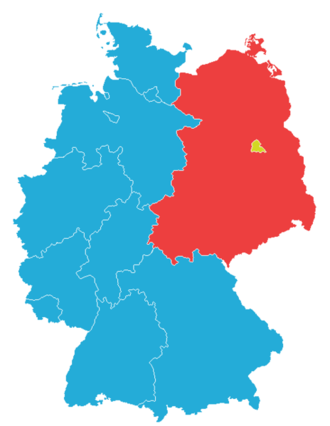
During the 2005 German general election, Edmund Stoiber made some comments that upset many people. In a speech, he said that he did not want people from East Germany to choose the next leader of Germany. He also said that if everyone were like the people in his home state of Bavaria, there would be fewer problems. These words were seen as rude and made many people angry, especially those from East Germany.
Later, Stoiber also faced criticism for his actions related to a bank called BayernLB. He strongly disagreed when Croatia refused an offer from the bank, calling the decision unfair. Eventually, the bank’s offer was accepted, but it led to financial troubles later on.
After his death, a former colleague, Wolfgang Schäuble, wrote in his memoirs that Stoiber had once suggested they should change leaders during a difficult time in 2015. Stoiber denied ever making such a suggestion.
Personal life
Edmund Stoiber is Roman Catholic. He is married to Karin Stoiber and they have three children and five grandchildren.
Stoiber loves football. When he was young, he played for a local team called BCF Wolfratshausen. Today, he helps manage FC Bayern München AG and the club FC Bayern Munich e.V.. Before a big election in 2002, important people from FC Bayern, like Uli Hoeneß and football star Franz Beckenbauer, showed their support for Stoiber. Beckenbauer even let Stoiber travel with the Germany national football team after the 2002 FIFA World Cup.
Honours and awards
Edmund Stoiber received many awards and honors from different countries and organizations. Some of these include:
- In 1984, he received the Bavarian Order of Merit.
- In 1996, he was given the Karl Valentin Order and the Grand Order of King Dmitar Zvonmir.
- In 1999, he received the Grand Cross of the Order of the Star of Romania.
- In 2000, he was awarded the Orden wider den tierischen Ernst.
- In 2002, he became a Commander of the Legion of Honour.
- In 2003, he was made an Officer of the Ordre national du Québec.
- In 2004, he received the Grand Cross of the Order of Merit of the Federal Republic of Germany.
- In 2005, he was given the Grand Decoration of Honour in Gold with Sash for Services to the Republic of Austria](/w/9).
- In 2006, he earned the Grand Cross of the Order of Merit of the Italian Republic.
- In 2007, he received the Large Gold Medal of the province of Upper Austria and an honorary degree from Sogang University.
- In 2008, he won the Steiger Award.
- In 2009, he was awarded the Order of Merit of Baden-Württemberg.
Literature
Here are some books about Edmund Stoiber:
- Michael Stiller: Edmund Stoiber: der Kandidat. Econ, München 2002, ISBN 3-430-18786-9.
- Jürgen Roth, Peter Köhler: Edmund G. Stoiber: Weltstaatsmann und Freund des Volkes. Eichborn, Frankfurt 2002, ISBN 3-8218-3584-2.
- Jule Philippi: Wer für alles offen ist, ist nicht ganz dicht. Weisheiten des Edmund Stoiber. Rowohlt, Reinbek bei Hamburg 2007, ISBN 978-3-499-62248-9.
Related articles



This article is a child-friendly adaptation of the Wikipedia article on Edmund Stoiber, available under CC BY-SA 4.0.
Images from Wikimedia Commons. Tap any image to view credits and license.