 Safekipedia
Fosna–Hensbacka culture
Adapted from Wikipedia · Adventurer experience
The Fosna/Hensbacka (c. 8300 BCE – 7300 BCE) were two similar Late Palaeolithic/early Mesolithic cultures in Scandinavia. They are often called the Fosna–Hensbacka culture. This group includes the Komsa culture. Though they had different kinds of tools, they are still seen as part of the Fosna culture group. The Fosna/Komsa culture was found along the coast of Northern Norway. The Hensbacka culture was more to the east, along the coast of western Sweden; mainly in central Bohuslän north of Gothenburg.
The Hensbacka culture later became the Sandarna culture, found along the coast of western Sweden. Recent studies show that this area, central Bohuslän, might have had many people during the Late Palaeolithic/early Mesolithic time. This was because of the environment, shaped by the Vänern basin in the east and features in the North Sea basin to the west.
Fosna–Hensbacka culture group
The name Fosna comes from Fosna or Lille-Fosen, an old name for Kristiansund. It is used to describe the oldest settlements along the Norwegian coast, from Hordaland to Nordland. The oldest settlements in Bohuslän on the Swedish west coast, called Hensbacka, came from the Ahrensburgian culture in Northern Germany. The oldest Fosna settlements in Eastern Norway are at Høgnipen in Østfold. Newer discoveries from 2008 at Pauler in Larvik appear to be even older.
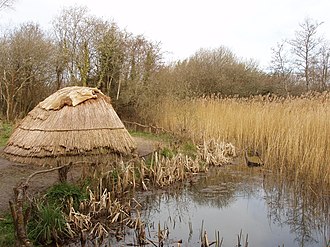
These settlements were near the coast a long time ago but are now far above sea level because the land rose after the ice age ended. In western Norway, they are 60–70 meters above the sea today, while Høgnipen is as high as 150 meters. This happened because the land rose more on the Baltic side of the Scandinavian Peninsula. The people here were hunters and gatherers. Fishing and hunting seals were important. They likely used wooden boats with hides for covering. Most Hensbacka sites are on islands far from the mainland. Archaeologists have found stone tools at these sites, including special axes, long stone blades, and arrowheads with points.
Related articles



This article is a child-friendly adaptation of the Wikipedia article on Fosna–Hensbacka culture, available under CC BY-SA 4.0.
Images from Wikimedia Commons. Tap any image to view credits and license.