 Safekipedia
Hainburg an der Donau
Adapted from Wikipedia · Adventurer experience
Hainburg an der Donau is a town in the Bruck an der Leitha district in the state of Lower Austria, in eastern Austria. It is often simply called Hainburg. The town's name means "Hainburg on the Danube," showing its location near the Danube River.
In 2021, about 7,000 people lived in Hainburg an der Donau. The town has a rich history and offers various places to explore, making it an interesting spot to visit or learn about in Austria.
Geography
Hainburg is on the right side of the Danube river. It is about 12 kilometres west of Bratislava, the capital of Slovak. It is also 43 kilometres east of Vienna, the capital of Austria. The town is part of the Industrial Quarter in Lower Austria.
About half of Hainburg's land is covered with forests. The rest is used for farming and buildings.
Population
| Year | Pop. | ±% |
|---|---|---|
| 1971 | 6,060 | — |
| 1981 | 5,731 | −5.4% |
| 1991 | 5,753 | +0.4% |
| 2001 | 5,651 | −1.8% |
| 2006 | 5,717 | +1.2% |
| 2011 | 5,951 | +4.1% |
| 2021 | 6,975 | +17.2% |
History
The area around Hainburg has been home to people for a very long time. Long ago, the Illyrians and the Celtic people lived on the Braunsberg hill. Later, during the Roman era, the nearby town of Carnuntum had a big influence on the area.
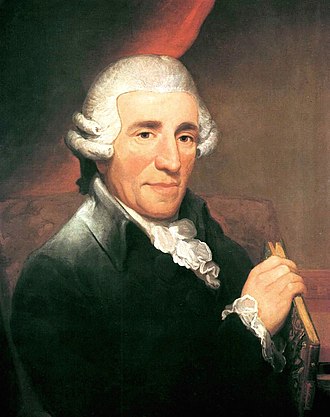
Many important events happened in Hainburg over the centuries. In 1050, Emperor Henry III ordered a castle to be built there. By the 13th century, the town had strong walls, gates, and towers to protect itself. In 1738, the famous composer Joseph Haydn came to Hainburg as a young boy to learn music.
In more recent times, Hainburg became the easternmost town in Austria after the First World War. In 1984, people protested against building a power station near the Danube, and their efforts helped protect the area. Today, Hainburg is part of the Danube-Auen National Park.
Sites of interest
Hainburg has many interesting places to see. One of them is Castle hill. There is also the Danube-Auen National Park, a beautiful floodplain forest. Another spot is Braunsberg, a hill with an old Celtic fortress.
You can also visit the Wienertor, or Vienna Gate. It was built in the 13th century and is the largest medieval gate still standing in Europe. Inside the gate, there is a city museum. There is also a Catholic church called the Philippus-und-Jakobus-Kirche, first built in 1263 and later redesigned in a Baroque style in 1683. Additionally, a Protestant Church opened in April 2011, designed by the Austrian architect group Coop Himmelb(l)au.
Economics and infrastructure
In 2001, Hainburg had 242 businesses and 29 farms. A total of 2,512 people had jobs. There were also 70 people who did not have jobs at that time.
SIGINT-station Königswarte
On Königswarte mountain near Hainburg, the Austrian armed forces have a special listening station. The NSA helps with this work. The station was built in the 1950s with money from the USA. The area has had military buildings since World War I.
This station is one of the best and most modern in Austria. Because of it, Austria is seen as an important partner to the NSA, even though it is not part of NATO. Since the end of the Cold War, the station has worked with satellites to get more information. It works with satellites such as Eutelsat, Thuraya 2, Azer-Sat, Yahsat 1B, and Türksat.
Twin towns – sister cities
Hainburg an der Donau has special friendships with towns in other countries.
It is twinned with Nieder-Roden in Germany since 1975 and with Šamorín in Slovakia since 2008.
Notable people
Hainburg is linked to the Haydn family. Mathias Haydn, the father of the famous composers Joseph and Michael Haydn, lived close by in Rohrau and worked as a wheelwright. Joseph Haydn went to boarding school in Hainburg.
Images
Related articles


This article is a child-friendly adaptation of the Wikipedia article on Hainburg an der Donau, available under CC BY-SA 4.0.
Images from Wikimedia Commons. Tap any image to view credits and license.