 Safekipedia
History of fluid mechanics
Adapted from Wikipedia · Adventurer experience
The history of fluid mechanics is a key part of the history of physics and engineering. It is the study of how liquids and gases move and the forces that act on them. People have been interested in fluids since ancient times because water was very important for early societies.
Early civilizations succeeded because they learned how to control water. They built canals and aqueducts to bring water to farms and cities, and they used their knowledge to travel by sea. Most early discoveries in fluid mechanics came from experiments, not just theories.
Important scientists like Archimedes, Johann Bernoulli, his son Daniel Bernoulli, Leonhard Euler, Claude-Louis Navier, and George Stokes created the basic equations that help us understand fluids. Today, fluid mechanics is used in many areas, from designing airplanes to studying stars and galaxies. Better experiments and computer tools have helped this field grow even more.
Antiquity
Pre-history
Ancient people knew a lot about how liquids move, even if they did not study it in a scientific way. They used this knowledge to make tools like arrows and boats. They also built projects to control water for farming and to protect their cities from floods. The first human civilizations grew up near rivers, which helped them understand water and how to use it.
Buoyancy
Long ago, people in China noticed how things float or sink. One story from many years ago tells how a big animal was weighed by looking at how much water it pushed away when placed on a boat. Around 250 BC, a man named Archimedes wrote about how objects float in water. He discovered that an object in water feels a lift that equals the weight of the water it pushes aside.
Greco-Roman engineering
In a place called Alexandria, people built clever machines to move water. They made tools like the siphon and the forcing-pump. These inventions helped move water for different uses. Later, a man named Sextus Julius Frontinus studied how water flows from pipes and fountains. He learned that the amount of water that comes out depends on the size of the opening and the height of the water behind it.
Main articles: civilizations, hydrology, hydraulics, hydraulic engineering, buoyancy, Mencius, Cao Chong, On Floating Bodies, Archimedes' principle, Alexandria, Ptolemies, siphon, forcing-pump, Ctesibius, Hero, Egyptian wheel, Noria, Sextus Julius Frontinus, Rome, Nerva, Trajan, aqueduct, fountain
Middle Ages
Islamicate physicists
See also: Physics in the medieval Islamic world
Islamicate scientists, including Abu Rayhan Biruni (973–1048) and Al-Khazini (fl. 1115–1130), were the first to use experimental scientific methods to study fluids. They looked at how fluids stay still and used math to understand their weights and measurements. Al-Khazini made a special balance to measure fluid weights in his book The Book of the Balance of Wisdom (1121).
During his work, Al-Biruni also invented a tool to measure fluids.
Islamicate engineers
See also: List of inventions in the medieval Islamic world
In the 9th century, the Banū Mūsā brothers wrote about early ways to control fluids in their book Book of Ingenious Devices. They made tools to manage fluid levels and flow, including valves and a system to prevent too much fluid from being removed. They also found new ways to pour liquids and measure pressure differences.
In 1206, Al-Jazari wrote about many water machines in his book Book of Knowledge of Ingenious Mechanical Devices. He created pumps that could lift water higher, using early parts like cranks and pistons to make the pumps work better.
Sixteenth century
During the Renaissance, Leonardo da Vinci was known for his experiments. He wrote about ideas like how water moves in different shapes and how it behaves in rivers and oceans. He also thought about how to make things glide smoothly through water.
In 1586, an engineer named Simon Stevin wrote a book about how water stays still. In his book, he shared interesting facts about water and its weight.
Seventeenth century
Torricelli's law
Benedetto Castelli and Evangelista Torricelli, students of Galileo Galilei, used their teacher's ideas to study how liquids move. In 1628, Castelli wrote about how water flows in rivers and canals. Torricelli saw that water shooting out of a small opening reached almost the same height as the water source. He thought the water moved as fast as if it had fallen that distance because of the force of gravity. This idea, called Torricelli's law, was shared in 1643. Tests by Raffaello Magiotti in 1648 showed this idea was right.
Blaise Pascal
Blaise Pascal helped organize the study of liquids at rest, called hydrostatics. After he passed away, a paper by him was found and shared in 1663. It showed simple rules about how liquids balance, and these rules were proven right through tests.
Mariotte and Guglielmini
Edme Mariotte wrote about liquid motion after he passed away in 1686. He did many tests at Versailles and Chantilly. He thought that friction made liquids slow down, even though he didn’t fully understand why. Around the same time, Domenico Guglielmini in Bologna studied rivers and canals. He believed that changes in the river bottom caused slower flow, but Mariotte thought friction was the reason, even in smooth glass pipes.
Eighteenth century
Studies by Isaac Newton
Friction and viscosity
Sir Isaac Newton studied how friction and thickness slow down water in his book Principia. He looked at how water moves in pipes and found patterns in its speed.
Orifices
Newton also looked at how water flows out of holes in containers. He tried to measure the speed of the water and found some surprising results.
Waves
Newton was the first to study how waves move.
Bernoulli's principle
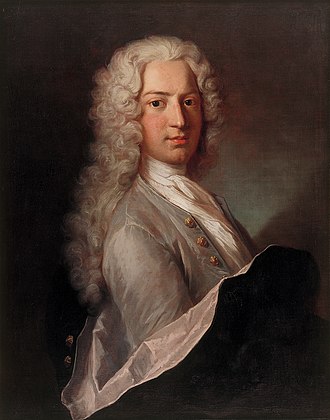
In 1738, Daniel Bernoulli wrote a book about how fluids move. He used ideas about how things keep moving to explain fluid motion.
d'Alembert principle
Jean le Rond d'Alembert also worked on fluid motion. He used simple ideas about balance to explain how fluids move and settle.
Ideal fluid equations
Leonhard Euler created important math rules to describe how ideal fluids move. These rules helped make the study of fluids more exact.
Early works on fluid resistance
Pierre-Louis-Georges du Buat did experiments to understand how water moves in channels. He found that water slows down because of friction and the shape of the channel.
Nineteenth century
Navier–Stokes equations and viscous flow
Main article: Navier–Stokes equations
In 1808, scientists in France offered a prize for explaining how plates vibrate. In 1820, Claude-Louis Navier tried to solve this. Later, he used his ideas to study how liquids and gases move. In 1822 and 1823, Navier created important equations about how friction affects moving fluids. Before this, most theories said fluids had no friction.
Other scientists like Augustin-Louis Cauchy, Siméon Denis Poisson, Adhémar Barré de Saint-Venant, and George Stokes also worked on these ideas. Stokes’ work in 1845 was important because he looked at how fluids behave under different conditions. These ideas helped create the Navier–Stokes equations, which explain how fluids move.
Reynolds number and turbulence
The idea of a number to measure how fluids swirl and mix was first suggested by Stokes in 1851 and later popularised by Osborne Reynolds in 1883. Arnold Sommerfeld named this number the Reynolds number.
Vortex dynamics
In 1858, Hermann von Helmholtz wrote an important paper about how swirling motions work in fluids. His work showed how important these swirling movements are in the study of fluids. For many years, this area of study stayed important.
19th century hydraulics
Scientists also made big steps in understanding how water moves in pipes and rivers. Gaspard Riche de Prony used past experiments to create simple rules for how fast water flows. Other scientists like J. A. Eytelwein in Berlin studied how water moves through pipes. Many others, including Jean Nicolas Pierre Hachette, J. V. Poncelet, and Julius Weisbach, did experiments to learn more about water flow.
Scientists such as Henry G. P. Darcy and Henri-Émile Bazin studied how water moves through pipes and channels. Engineers in Germany also measured water flow in rivers. Important studies were done on rivers like the Mississippi, Irrawaddy River, and the Ganges. Scientists like William Froude looked at how water moves at higher speeds, which helps understand how ships move through water.
Twentieth century
Boundary layer
In 1904, a scientist named Ludwig Prandtl learned something important about how fluids move near solid surfaces. He found that fluids with very little stickiness can be split into two parts: a thin sticky layer close to the surface, and an outer layer where simpler rules apply.
Relativistic ideal fluids
In the late 1800s, scientists realized that for fluids that can be squeezed, certain rules about energy needed to stay consistent. When the special theory of relativity was discovered, it helped unify ideas about energy and movement.
Developments in vorticity and turbulence
Between 1894 and 1910, scientists studied how swirling motions in fluids became more important, especially for airplanes. They learned that unpredictable changes in fluid movement, called turbulence, became very important as flights got faster. These swirling motions help explain big weather events like hurricanes and tornadoes, as well as smaller whirlpools we see in bathtubs or smoke rings.
Microfluidics
Starting in the 1950s, new ways to make tiny patterns on materials led to the creation of very small sensors. By the 1990s, scientists could make tiny devices that could perform complex tests, opening doors to many new technologies.
Twenty-first century
Millennium Prize Problem
Main article: Navier–Stokes existence and smoothness
In 2000, the Clay Mathematics Institute listed seven very hard math problems, called the Millennium Prize Problems. One of these problems is about how liquids and gases move, known as the Navier-Stokes equations.
Many smart people have tried to solve this problem. In 2016, a mathematician named Terrence Tao made progress on understanding these equations. In 2025, Google DeepMind used computer learning to find new patterns in how fluids behave.
Images
Related articles




This article is a child-friendly adaptation of the Wikipedia article on History of fluid mechanics, available under CC BY-SA 4.0.
Images from Wikimedia Commons. Tap any image to view credits and license.