 Safekipedia
Italian language
Adapted from Wikipedia · Adventurer experience
Italian, or italiano, is a beautiful language. It belongs to the Romance family, which also includes languages like French and Spanish. It grew from the old Vulgar Latin spoken in the Roman Empire.
Today, many people speak Italian. It is an official language in several countries, including Italy, San Marino, Switzerland (specifically in Ticino and part of the Grisons), and Vatican City. It is also recognized in places like Croatia, Slovenia, Romania, Bosnia and Herzegovina, and some areas in Brazil. Many people in countries such as Malta, Albania, and Monaco speak Italian too.
Italian is important in Europe. It is one of the official languages of groups like the Organization for Security and Co-operation in Europe and the Council of Europe. The language has influenced many areas, including music, fashion, and cuisine, with many Italian words used worldwide.
History
"History of Italian" redirects here. For the history of the Italian people, see Italians. For the history of the Italian culture, see culture of Italy.
Origins
The Italian language grew slowly, beginning after the fall of the Western Roman Empire and into the Middle Ages in the 5th century.
Latin was the main language of the western Roman Empire and stayed as the written language in Europe during the Middle Ages, even though most people could not read or write. Over time, the everyday Latin spoken in different parts of Europe—including the Italian peninsula—changed into many local ways of speaking, or dialects. These were not really versions of standard Italian, but were related to Italian. The Latin-speaking people called all these different European languages Romanz, Romance, or in Italy, Romanzo or Volgare.
The borders between old Latin and the new Romance languages in Italy were not clear. The oldest texts that are clearly these new languages are legal documents from the province of Benevento from 960 to 963, and a riddle from Verona, probably from the 8th or early 9th century. A writing from the Commodilla catacomb also seems to show a mix of old Latin and early new language.
The Italian language we think of today grew in central Tuscany and was first made formal in the early 1300s through the writings of the Tuscan writer Dante Alighieri. Dante’s big poems, called the Commedia, were read all over Italy. His way of writing became a model for a standard Italian that everyone could understand. The poems of Petrarch were also very popular and helped shape the language, as chosen later by Pietro Bembo in the 1500s.
Besides being famous in books, Florentine Italian became important because of Florence’s power and culture at the time. It was a middle way between the languages spoken in northern and southern Italy.
Italian slowly became the official language in many Italian states before the country joined together, replacing Latin even when those lands were ruled by other countries (like Spain in the Kingdom of Naples, or Austria in the Kingdom of Lombardy–Venetia). But most people still spoke their own local dialects.
Italy had many different local languages because each city used to be its own state. When Tuscan-based Italian spread across Italy, it mixed with these local ways of speaking, creating many versions of Regional Italian. For example, Roman Italian and Milanese Italian differ in how some sounds are made.
Renaissance
The Renaissance was a time when people in Italy became very interested again in old Roman and Greek ideas and in writing stories in everyday language.
New technology helped spread Italian. The printing press was invented in the 1400s and quickly spread. By 1500, Italy had more printing presses than any other place in Europe. Printing made books and papers easier and cheaper to make, helping Italian become more common.
Italian became the language used in all the courts in the Italian peninsula, and the special way of speaking used on the island of Corsica. Scholars argued about what the new Italian language should be like. Some thought it should only use words from old great books. Others thought it should use the language spoken by normal people. Some said every local way of speaking should help make the new language. Finally, the ideas of Bembo won out, and the Accademia della Crusca was started in Florence to guide the Italian language.
Modern era
When Napoleon took over Italy in the early 1800s, it helped bring the country together and made Italian a common language used by many people.
Today almost all of Italy’s people speak Italian, though many older people still use local dialects. Italian is now one of the most learned languages around the world.
Contemporary times
The first modern Italian novel, The Betrothed by Alessandro Manzoni, helped make Italian the standard language for the whole country. Manzoni wrote it in the Florentine way of speaking, calling it “rinsing” his local Milanese words “in the waters of the Arno” in Florence. This book is often called the most read work in Italian and helped unite the language across Italy.
At first, most people still spoke many different languages. By 1861, only about 2.5% to 10% of Italians could really speak the standard language well.
Classification
Italian is a Romance language that started from Vulgar Latin, the simple Latin people spoke long ago. Today’s Italian comes mostly from the language of Tuscany, especially its Florentine dialect. Like other Romance languages, Italian uses stress to change the meaning of words.
Italian has many words in common with other languages. It is very similar to French, Spanish, and Portuguese. This shows how these languages are linked and have changed through time.
Geographic distribution
Main article: Geographical distribution of Italian speakers
See also: Italian language in Argentina, Italian language in Brazil, Italian language in Canada, Italian language in Croatia, Maltese Italian, Italian language in Slovenia, Swiss Italian, Italian language in the United States, and Italian language in Venezuela
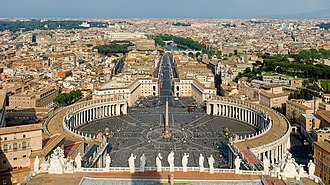
Italian is the official language of Italy and San Marino. Most people in these places speak it well. Italian is also one of the main languages in Switzerland, after German and French. It is official in two Swiss areas called cantons: Ticino and Grisons. Ticino, which includes Lugano, is the only area where Italian is the main language. Italian is also used in Vatican City for important work.
Italian is spoken by some people in Monaco and France, especially in the southeast. It used to be the official language in Savoy and Nice until they became part of France. Corsica, which is now part of France, used to have Italian as its official language. Many people there still speak Corsican, which is similar to Italian.
Italian used to be an official language in Montenegro, parts of Slovenia, and Croatia. It is still widely spoken in Malta. In Slovenia and Croatia, Italian is recognized as a minority language. In Albania, many people know Italian because of history and its closeness to Italy.
Italian was also an official language in places like Libya and Eritrea during Italian rule. Some people there still understand or speak Italian today.
Italian is spoken by many people who have moved to places like the Americas and Australia. In the United States, many people have Italian ancestors, but few still speak the language at home. In Canada, Italian is one of the most spoken languages after English and French. In Argentina, Italian is the second most spoken language after Spanish, though fewer young people are learning it.
Education
Italian is taught in many schools around the world. Today, with the help of technology like websites and apps, more people can learn Italian. Over 200,000 students each year study Italian in schools and cultural centers around the world.
Influence and derived languages
Main article: Italian diaspora
See also: Chipilo Venetian dialect, Cocoliche, Italian Eritrean, Italo-Australian dialect, Simplified Italian of Somalia, Itanglese, Lunfardo, Macarrônico, and Talian dialect
Many Italians moved to countries like Argentina, Uruguay, Brazil, and the United States in the past. In some places, they brought their regional languages with them. For example, in Rio Grande do Sul, Brazil, people still speak Talian, a version of the Venetian language from Italy. In Chipilo, Mexico, people speak a version of Venetian from the 19th century.
Lingua franca
See also: Mediterranean Lingua Franca
In the past, Italian was an important language for trade and culture in Europe and around the Mediterranean. It was used in places like Italy during the Renaissance. Many educated people in Europe learned Italian, especially for art, music, and travel. Italian words are still used in many languages, especially in art, music, fashion, and food.
Languages and dialects
See also: Languages of Italy and Regional Italian
In Italy, many people speak languages other than standard Italian. These are often called "Italian dialects." They are older forms of Latin that developed before Italian became the main language. These languages are very different from each other and from standard Italian. Some of them are recognized as separate minority languages.
People in different areas of Italy say words in different ways. For example, they might change the sounds of vowels or consonants. In some places, people use different words for simple actions like "to go."
As more people learned standard Italian, especially with better education, the use of these older dialects decreased. Today, many Italians can understand each other even if they speak different forms of the language, but some differences still exist.
Phonology
Main article: Italian phonology
Italian has seven vowel sounds and 23 consonant sounds. It keeps many words close to how they were in ancient Latin. For example:
- Italian quattordici "fourteen" and vita "life" sound similar in other languages.
- Italian keeps double consonants, like in anno "year".
- Italian keeps all the ending sounds from old Latin words, like in pace "peace" and otto "eight".
Italian spelling is very regular, meaning letters usually make the same sounds. Some rules include:
- The letter c makes a "k" sound at the end of words or before a, o, and u, but a "ch" sound before e and i.
- The letter g makes a "g" sound at the end of words or before a, o, and u, but a "j" sound before e and i.
- The letter n can change its sound before c and g.
The Italian alphabet has 21 letters. Letters like j, k, w, x, and y are not used in everyday words but appear in foreign words like jeans and whisky. Accents are used to show stress in words, like in perché "why" and tè "tea".
Grammar
Main article: Italian grammar
See also: Italian verbs
Italian grammar is similar to other Romance languages. It uses special words for pronouns but not for regular nouns.
Italian nouns are divided into two groups, called genders: masculine and feminine. For example, ragazzo means "boy" and ragazza means "girl". Most masculine nouns end in -o, like ragazzo. Feminine nouns often end in -a, like ragazza.
Nouns, adjectives, and articles change their endings to show if they are masculine or feminine, and if they are one or more than one.
The order of words in Italian sentences can change more than in English. Sometimes adjectives come before the noun they describe, and sometimes after. Subject nouns usually come before the verb. Italian often leaves out subject words, showing the subject through changes in the verb ending.
Italian has special words called articles that change depending on the noun. There are also many ways to change prepositions and nouns to create new words.
| Definition | Gender | Singular Form | Plural Form |
|---|---|---|---|
| Son | Masculine | Figlio | Figli |
| House | Feminine | Casa | Case |
| Love | Masculine | Amore | Amori |
| Art | Feminine | Arte | Arti |
Words
Italian has special ways to talk in fancy or polite situations, like when speaking to important people. There are also special words to ask questions, talk about time, numbers, days of the week, and months of the year.
| English (inglese) | Italian (italiano) | Pronunciation |
|---|---|---|
| Yes | Sì | (listen) /ˈsi/ |
| No | No | (listen) /ˈnɔ/ |
| Of course! | Certo! / Certamente! / Naturalmente! | /ˈtʃɛrto/ /ˌtʃertaˈmente/ /naturalˈmente/ |
| Hello! | Ciao! (informal) / Salve! (semi-formal) | /ˈtʃao/ |
| Cheers! | Salute! | /saˈlute/ |
| How are you? | Come stai? (informal) / Come sta? (formal) / Come state? (plural) / Come va? (general, informal) | /ˌkomeˈstai/; /ˌkomeˈsta/ /ˌkome ˈstate/ /ˌkome va/ |
| Good morning! | Buongiorno! (= Good day!) | /ˌbwɔnˈdʒorno/ |
| Good evening! | Buonasera! | /ˌbwɔnaˈsera/ |
| Good night! | Buonanotte! (for a good night sleeping) / Buona serata! (for a good night awake) | /ˌbwɔnaˈnɔtte/ /ˌbwɔna seˈrata/ |
| Have a nice day! | Buona giornata! (formal) | /ˌbwɔna dʒorˈnata/ |
| Enjoy the meal! | Buon appetito! | /ˌbwɔn‿appeˈtito/ |
| Goodbye! | Arrivederci (general) / Arrivederla (formal) / Ciao! (informal) | (listen) /arriveˈdertʃi/ |
| Good luck! | Buona fortuna! (general) | /ˌbwɔna forˈtuna/ |
| I love you | Ti amo (between lovers only) / Ti voglio bene (in the sense of "I am fond of you", between lovers, friends, relatives etc.) | /ti ˈamo/; /ti ˌvɔʎʎo ˈbɛne/ |
| Welcome [to...] | Benvenuto/-i (for male/males or mixed) / Benvenuta/-e (for female/females) [a / in...] | /benveˈnuto//benveˈnuti//benveˈnuta/ /benveˈnute/ |
| Please | Per favore / Per piacere / Per cortesia | (listen) /per faˈvore/ /per pjaˈtʃere/ /per korteˈzia/ |
| Thank you! | Grazie! (general) / Ti ringrazio! (informal) / La ringrazio! (formal) / Vi ringrazio! (plural) | /ˈɡrattsje/ /ti rinˈɡrattsjo/ |
| You are welcome! | Prego! | /ˈprɛɡo/ |
| Excuse me / I am sorry | Mi dispiace (only "I am sorry") / Scusa(mi) (informal) / Mi scusi (formal) / Scusatemi (plural) / Sono desolato ("I am sorry", if male) / Sono desolata ("I am sorry", if female) | /ˈskuzi/; /ˈskuza/; /mi disˈpjatʃe/ |
| Who? | Chi? | /ki/ |
| What? | Che cosa? / Cosa? / Che? | /kekˈkɔza/ or /kekˈkɔsa/ /ˈkɔza/ or /kɔsa/ /ˈke/ |
| When? | Quando? | /ˈkwando/ |
| Where? | Dove? | /ˈdove/ |
| How? | Come? | /ˈkome/ |
| Why / Because | Perché | /perˈke/ |
| Again | Di nuovo / Ancora | /di ˈnwɔvo/; /anˈkora/ |
| How much? / How many? | Quanto? / Quanta? / Quanti? / Quante? | /ˈkwanto/ |
| What is your name? | Come ti chiami? (informal) / Qual è il suo nome? (formal) / Come si chiama? (formal) | /ˌkome tiˈkjami/ /kwal ˈɛ il ˌsu.o ˈnome/ |
| My name is... | Mi chiamo... | /mi ˈkjamo/ |
| This is... | Questo è... (masculine) / Questa è... (feminine) | /ˌkwesto ˈɛ/ /ˌkwesta ˈɛ/ |
| Yes, I understand. | Sì, capisco. / Ho capito. | /si kaˈpisko/ /ɔkkaˈpito/ |
| I do not understand. | Non capisco. / Non ho capito. | (listen) /non kaˈpisko/ /nonˌɔkkaˈpito/ |
| Do you speak English? | Parli inglese? (informal) / Parla inglese? (formal) / Parlate inglese? (plural) | (listen) /parˌlate inˈɡleːse/ (listen) /ˌparla inˈɡlese/ |
| I do not understand Italian. | Non capisco l'italiano. | /non kaˌpisko litaˈljano/ |
| Help me! | Aiutami! (informal) / Mi aiuti! (formal) / Aiutatemi! (plural) / Aiuto! (general) | /aˈjutami/ /ajuˈtatemi/ /aˈjuto/ |
| You are right/wrong! | (Tu) hai ragione/torto! (informal) / (Lei) ha ragione/torto! (formal) / (Voi) avete ragione/torto! (plural) | |
| What time is it? | Che ora è? / Che ore sono? | /ke ˌora ˈɛ/ /ke ˌore ˈsono/ |
| Where is the bathroom? | Dov'è il bagno? | (listen) /doˌvɛ il ˈbaɲɲo/ |
| How much is it? | Quanto costa? | /ˌkwanto ˈkɔsta/ |
| The bill, please. | Il conto, per favore. | /il ˌkonto per faˈvore/ |
| The study of Italian sharpens the mind. | Lo studio dell'italiano aguzza l'ingegno. | /loˈstudjo dellitaˈljano aˈɡuttsa linˈdʒeɲɲo/ |
| Where are you from? | Di dove sei? (general, informal)/ Di dove è? (formal) | /di dove ssˈɛi/ /di dove ˈɛ/ |
| I like | Mi piace (for one object) / Mi piacciono (for multiple objects) | /mi pjatʃe/ /mi pjattʃono/ |
| English | Italian | IPA |
|---|---|---|
| what (adj.) | che | /ke/ |
| what (standalone) | cosa | /ˈkɔza/, /ˈkɔsa/ |
| who | chi | /ki/ |
| how | come | /ˈkome/ |
| where | dove | /ˈdove/ |
| why, because | perché | /perˈke/ |
| which | quale | /ˈkwale/ |
| when | quando | /ˈkwando/ |
| how much | quanto | /ˈkwanto/ |
| English | Italian | IPA |
|---|---|---|
| today | oggi | /ˈɔddʒi/ |
| yesterday | ieri | /ˈjɛri/ |
| tomorrow | domani | /doˈmani/ |
| second | secondo | /seˈkondo/ |
| minute | minuto | /miˈnuto/ |
| hour | ora | /ˈora/ |
| day | giorno | /ˈdʒorno/ |
| week | settimana | /settiˈmana/ |
| month | mese | /ˈmeze/, /ˈmese/ |
| year | anno | /ˈanno/ |
| English | Italian | IPA |
|---|---|---|
| one hundred | cento | /ˈtʃɛnto/ |
| one thousand | mille | /ˈmille/ |
| two thousand | duemila | /ˌdueˈmila/ |
| two thousand (and) twenty-five (2025) | duemilaventicinque | /dueˌmilaˈventitʃinkwe/ |
| one million | un milione | /miˈljone/ |
| one billion | un miliardo | /miˈljardo/ |
| one trillion | mille miliardi | /ˈmilleˈmiˈljardi/ |
| English | Italian | IPA |
|---|---|---|
| Monday | lunedì | /luneˈdi/ |
| Tuesday | martedì | /marteˈdi/ |
| Wednesday | mercoledì | /ˌmerkoleˈdi/ |
| Thursday | giovedì | /dʒoveˈdi/ |
| Friday | venerdì | /venerˈdi/ |
| Saturday | sabato | /ˈsabato/ |
| Sunday | domenica | /doˈmenika/ |
| English | Italian | IPA |
|---|---|---|
| January | gennaio | /dʒenˈnajo/ |
| February | febbraio | /febˈbrajo/ |
| March | marzo | /ˈmartso/ |
| April | aprile | /aˈprile/ |
| May | maggio | /ˈmaddʒo/ |
| June | giugno | /ˈdʒuɲɲo/ |
| July | luglio | /ˈluʎʎo/ |
| August | agosto | /aˈɡosto/ |
| September | settembre | /setˈtɛmbre/ |
| October | ottobre | /otˈtobre/ |
| November | novembre | /noˈvɛmbre/ |
| December | dicembre | /diˈtʃɛmbre/ |
Example text
Here is the first article of the Universal Declaration of Human Rights written in Italian:
Tutti gli esseri umani nascono liberi ed eguali in dignità e diritti. Essi sono dotati di ragione e di coscienza e devono agire gli uni verso gli altri in spirito di fratellanza.
And here it is in English:
All human beings are born free and equal in dignity and rights. They are endowed with reason and conscience and should act towards one another in a spirit of brotherhood.
The special symbols used to show exactly how it sounds are called the International Phonetic Alphabet
Nobel Prizes for Italian language literature
Main article: List of Italian Nobel laureates
| Year | Image | Laureate | Born | Died | Field | Rationale |
|---|---|---|---|---|---|---|
| 1906 | Giosuè Carducci | 27 July 1835 in Valdicastello | 16 February 1907 in Bologna | Literature | "not only in consideration of his deep learning and critical research, but above all as a tribute to the creative energy, freshness of style, and lyrical force which characterize his poetic masterpieces" | |
| 1926 | Grazia Deledda | 27 September 1871 in Nuoro (Sardinia) | 15 August 1936 in Rome | Literature | "for her idealistically inspired writings which with plastic clarity picture the life on her native island and with depth and sympathy deal with human problems in general" | |
| 1934 | Luigi Pirandello | 28 June 1867 in Agrigento | 10 December 1936 in Rome | Literature | "for his bold and ingenious revival of dramatic and scenic art" | |
| 1959 | Salvatore Quasimodo | 20 August 1901 in Modica | 14 June 1968 in Naples | Literature | "for his lyrical poetry, which with classical fire expresses the tragic experience of life in our own times" | |
| 1975 | Eugenio Montale | 12 October 1896 in Genoa | 12 September 1981 in Milan | Literature | "for his distinctive poetry which, with great artistic sensitivity, has interpreted human values under the sign of an outlook on life with no illusions" | |
| 1997 | Dario Fo | 24 March 1926 in Leggiuno-Sangiano | 13 October 2016 in Milan | Literature | "who emulates the jesters of the Middle Ages in scourging authority and upholding the dignity of the downtrodden" |
Images
Related articles




This article is a child-friendly adaptation of the Wikipedia article on Italian language, available under CC BY-SA 4.0.
Images from Wikimedia Commons. Tap any image to view credits and license.