 Safekipedia
Jacob Burckhardt
Adapted from Wikipedia · Adventurer experience
Jacob Burckhardt was a Swiss historian who lived from 1818 to 1897. He studied art and culture, especially the Renaissance period. His most famous book, The Civilization of the Renaissance in Italy, showed a new way to look at history. He thought about all parts of life, not just art. His ideas helped change how we study history today.
Life
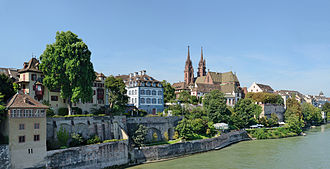
Jacob Burckhardt was born in Basel, Switzerland, in 1818. His father was a Protestant clergyman. He first studied theology but decided not to become a clergyman. Instead, he studied history, especially art history, at the University of Berlin and the University of Bonn.
Burckhardt taught at the University of Basel and the Federal Polytechnic School. He returned to Basel in 1858 and taught there until he retired in 1893. He also turned down teaching positions at other universities in Germany.
Work
Jacob Burckhardt was a Swiss historian. He helped us understand how art and culture shape history. He thought studying art, literature, and buildings could teach us about the past.
His most famous book, The Civilization of the Renaissance in Italy, changed how people think about the Renaissance. In this book, he showed how the Renaissance brought together art, ideas, and politics.
Burckhardt also wrote about ancient Greece and its importance in history. He gave many lectures about history, which were later turned into books. His work showed that history is more than just politics—it includes the arts and everyday life too.
Politics
Jacob Burckhardt grew up in Switzerland. He studied Calvinism a lot. He was careful and thoughtful. His Swiss home was more peaceful and fair than much of Europe at the time. He did not believe Germany was better than other countries.
Burckhardt saw big changes in Europe, like the Industrial Revolution and political problems. He worried about the future and thought leaders might cause trouble. Later, he became less sure about ideas like democracy, individualism, and socialism. He also saw how governments went into debt for wars and other reasons, hoping they would never go broke.
Legacy
After Jacob Burckhardt passed away, a special coin was made in 1898 to honor him. The coin was made by a Swiss artist named Hans Frei.
Famous thinker Friedrich Nietzsche respected Burckhardt and even attended his classes. They both liked the ideas of another thinker, Arthur Schopenhauer. Nietzsche thought Burckhardt agreed with his book The Birth of Tragedy, which talks about two sides of Greek culture. Though they enjoyed talking together, Burckhardt stayed careful about Nietzsche’s changing ideas. Their many letters to each other have been shared with the world.
One of Burckhardt’s students, Heinrich Wölfflin, took over his job at the University of Basel when he was just 28 years old. Later, Werner Kaegi spent his life writing a big book about Burckhardt and also helped bring the works of Johan Huizinga to German readers.
In 2018, a big meeting was held to celebrate the 200th anniversary of Burckhardt’s birth. Scholars came together to discuss his work and how we think about the Italian Renaissance today.
Burckhardt’s picture appeared on Switzerland’s thousand franc banknote.
Works
Here are some important books written by Jacob Burckhardt:
- In 1873, he wrote The Cicerone: or, Art-guide to Painting in Italy. This book helps travelers learn about art in Italy.
- In 1878, his famous book The Civilization of the Renaissance in Italy was translated. This book talks about life during the Renaissance in Italy.
- In 1999, The Greeks and Greek Civilization was published. This book explores the lives of ancient Greeks.
- Other works include Judgements on History and Historians, The Letters of Jacob Burckhardt, and Reflections on History.
Related articles


This article is a child-friendly adaptation of the Wikipedia article on Jacob Burckhardt, available under CC BY-SA 4.0.
Images from Wikimedia Commons. Tap any image to view credits and license.