 Safekipedia
Kamba people
Adapted from Wikipedia · Adventurer experience
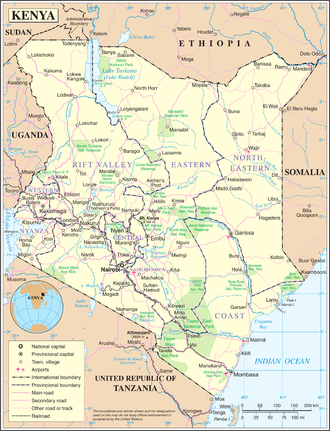
The Kamba, also known as the Akamba or Wakamba, are a Bantu ethnic group who mainly live in Kenya. Their homeland, called Ukambani, stretches from Nairobi to Tsavo and northwards to Embu. This area includes Makueni County, Kitui County, and Machakos County.
The Kamba people are one of the larger ethnic groups in Kenya and are found in many parts of the country, including Nairobi and Mombasa. They have a rich culture and history that contributes to the diversity of Kenya today.
Origin
The Kamba people are from Bantu origin. They began in the Congo Basin in Central Africa and later moved to Kenya. They are also called the 'Akamba People.' They share similar language and culture with the Kikuyu, the Embu, the Mbeere, and the Meru. They are also related to the Kambe and the Giriama near the Kenyan coast.
The first Kamba people settled in the Mbooni Hills in the Machakos District of Kenya in the second half of the 17th century. Later, they spread to Machakos, Makueni, and Kitui Districts.
Distribution
Most of the Akamba people live in Kenya, mainly in the eastern counties of Machakos, Kitui, and Makueni.
The Akamba are also found in cities like Nairobi and Mombasa, as well as in Taita–Taveta, Kiambu, Muranga, Kirinyaga, Kwale, and Kilifi counties. They are a significant group in Embu, Garissa, Meru, and Kajiado counties. In Embu county, they live in the Mbeere South region, and in Taita–Taveta County, they are mainly in the Taveta region. The Akamba share a border with the Maasai people.
Kamba people outside of Kenya
The Kamba people also live in Uganda, Tanzania, and Paraguay.
In South America, the Kamba people in Paraguay are split into two groups: Kamba Cuá and Kamba Kokue. The Kamba Cuá group is known for their African dance, which is important to their culture. They came to Paraguay in 1820 with General Jose Gervasio Artigas and his group.
Language
The Kamba people speak the Kamba language, also called Kikamba. It is part of the Bantu group in the Niger-Congo language family. Kikamba does not use some letters like c, f, j, r, x, q, and p. The Swahili language is similar to Kikamba because the Kamba people and Arab traders interacted for a long time.
Economy
The Akamba people were originally hunters and gatherers, but they later became traders because they knew the area very well. They also had good relationships with nearby groups and could talk well with others. Eventually, they started farming and taking care of animals because they had new land to use.
Today, many Akamba people work in different jobs. Some grow food, some trade goods, and others have regular jobs. They traded with many groups, such as the Kikuyu, Maasai, Meru, Embu, Mijikenda, and Arab people. Over time, the Akamba became important traders in a big part of what is now Kenya, from the Indian Ocean to Lake Victoria and up to Lake Turkana. They traded things like sugar cane wine, ivory, tools, weapons, millet, and cattle. They also traded medicines made from plants.
The Akamba are also good at making things like wood carvings, baskets, and pottery, and their work can be seen in many shops and galleries in Kenya. In the mid-1700s, many Akamba people moved to the coast because of drought and lack of grass for their cattle. They settled in places like Mariakani, Kinango, Kwale, and parts of Mombasa, helping to start towns there. Many successful people in business, politics, and other fields today come from these groups.
Main article: subsistence farming
Main articles: Barter, Meru, Embu, Mijikenda, Arab, Lake Victoria, Lake Turkana, ivory, famines, basketry, pottery, Mariakani, Kwale, Coast Province
History
Colonialism and the 19th century
In the late 1800s, the Arabs took control of trade along the coast from the Akamba people. The Akamba helped Arab and Swahili traders reach tribes living farther inland. They guided caravans that carried items like elephant tusks and precious stones to markets in the Middle East, India, and China. They also helped early European explorers travel through Southeast Africa because they knew the land well and were trusted by many local groups.
When Britain ruled Kenya, colonial leaders thought the Kamba people were very good soldiers. Many Kamba joined the British army, called the King's African Rifles. They were known as brave and strong soldiers. In 1938, the Kamba people peacefully resisted a British law that wanted to take their livestock. They stood up for their rights until the law changed.
The Kamba have a special dance called Kilumi to ask for rain when there is little water. This dance is a way to bring balance and healing through movement, offerings, and prayers. It has been part of their traditions for a long time.
Famous Kamba leaders who stood against colonial rule include Syokimau, Syotune wa Kathukye, Muindi Mbingu, Paul Ngei, JD Kali, and Malu of Kilungu. Syotune wa Kathukye led a peaceful protest to get back cattle taken by the British. Muindi Mbingu was arrested for leading a march to get back land and cattle near the Mua Hills. JD Kali and Paul Ngei joined the fight for Kenya's freedom from 1952 to 1960. JD Kali was imprisoned in Kapenguria during this time.
Culture and beliefs
The Akamba people have a special story about how they began. They believe that a god named Mulungu created a man and a woman and placed them on a rock. From anthills, another man and woman came out. The heavenly couple had only sons, while the anthill couple had only daughters, so they joined together. Later, they forgot to thank Mulungu, and he punished them with a famine, causing them to scatter. Some became the Kikuyu, others the Meru, and some remained as the original Akamba people.
The Akamba believe in one great God called Ngai or Mulungu, who lives in the sky. They also believe in the spirits of their ancestors, called Aimu or Maimu, who help connect them to God. Families are very important, with extended families called mbai. Men are usually the heads of families and work in jobs like farming or trading, while women care for the home and grow food like maize and beans. Children respect their parents and grandparents a lot, and grandparents help with lighter chores.
Naming children is very important. The first four children are often named after the grandparents, with special names chosen to honor them without using their first names. Other children may have names based on when they were born or what their parents hoped for them. The Akamba enjoy music and dance, with many different types of dances for special occasions. In the past, they wore simple clothing made from leather or bark, but today they wear modern clothes like most people in Kenya. There are several radio stations and a TV channel where the Kamba language is spoken.
Notable Akamba and people of Akamba descent
Academics, activism and authorship
- Crispus Makau Kiamba - 5th Vice-Chancellor of the University of Nairobi
- Nduku Kilonzo - advisor in Gender and Rights Advocacy Panel to World Health Organization
- Kamoya Kimeu - Kenyan paleontologist and curator
- Teresia Mbaika Malokwe - Kenyan environmentalist and health economist
- Peter Mbithi - 7th Vice-Chancellor of the University of Nairobi
- David Mulwa - Kenyan writer, academic, theatre director and actor
- Rose Mutiso - Kenyan activist and materials scientist
- Makau Mutua - Kenyan born professor of law and the dean of the University at Buffalo Law School
- Onesmus Kimweli Mutungi - first Kenyan to get a doctorate degree in law
- Jane Catherine Ngila - acting Executive Director of the African Academy of Sciences
- Musili Wambua - Associate Dean of the University of Nairobi Faculty of Law and Chancellor of University of Embu
- Charity Wayua - Kenyan Chemist and Researcher
Artists, athletes and media
- Patrick Ivuti - Kenyan long-distance athlete and winner of the Chicago Marathon
- Kakai Kilonzo - benga musician of Les Kilimambogo Brothers
- Francis Kimanzi - former Harambee Stars head coach
- Andrew Kisilu - Footballer for Nairobi City Stars
- Jackson Kivuva - Kenyan middle-distance runner
- Betty Kyallo - Kenyan media personality
- Theresia Kyalo - Kenyan Jewellery designer and multidisciplinary artist
- Mbithi Masya - Kenyan film director
- Benson Masya - long-distance runner
- Alex Mativo - Kenyan fashion designer
- Leonard Mbotela - Kenyan journalist
- Jimmy Muindi - Kenyan marathoner
- Jacob "Ghost" Mulee - former Harambee Stars head coach
- Kalekye Mumo - Kenyan media personality
- Brian Musau - winner of the 2025 NCAA Cross Country Championships
- Cosmas Muteti - winner of the Vienna City Marathon
- Lukas Wambua Muteti - Long-distance athlete and founder of MiraRunners
- George Mutinda - Kenyan sprinter
- Alexander Mutiso - winner of the London Marathon
- Joey Muthengi - Kenyan media personality and actress
- David Mutinda Mutua - Kenyan middle-distance runner, winner of 2010 Moncton 800 metres World Junior Champion
- Julius Mutinda - Kenyan field hockey player
- Joseph Mutua - Kenyan middle-distance runner
- Kasiva Mutua - Kenyan percussionist
- Henrie Mutuku - Kenyan gospel singer
- Jinna Mutune - Film Producer and screen writer
- Patrick Makau Musyoki - former world record holder in marathon
- Michael Musyoki - Kenyan long-distance athlete and bronze medallist at the 1984 Summer Olympics
- John Nzau Mwangangi - Kenyan long distance runner and gold medalist at the 2011 African Cross Country Championships
- Nick Mwendwa - former president of Football Kenya Federation
- Asha Mwilu - prominent Kenyan journalist
- Daniel Ndambuki - Kenyan comedian who hosts the comedy television show Churchill Show
- Cosmas Ndeti - three-time winner of the Boston Marathon
- Mulinge Ndeto - former footballer for Kenya national team and Ulinzi Stars
- Caleb Ndiku - Kenyan middle and long-distance runner
- Kaloki Nyamai - Kenyan painter and sculptor
- Joseph Nzau - Kenyan long-distance runner, winner of the Boston Marathon
- Peter Nzioki - Kenyan actor
- Maria Wavinya - Miss World Kenya, 2019
- Yvonne Wavinya - Volleyball Player for Kenya Prisons
- Winfred Yavi - Kenyan-born Bahraini athlete, winner of the 2023 World Athletics Championships 3000 metres Steeplechase and 2024 Olympics champion
Businesspersons and professionals
- Patricia Ithau - Chief Executive Officer of WPP-Scangroup
- Philip Kaloki - Chairperson of the Retirement Benefits Authority of Kenya
- Stella Kilonzo - former Chief Executive Officer of the Capital Markets Authority
- Nzamba Kitonga - former President of the East Africa Law Society and COMESA Court of Justice
- Kathryne Maundu - Kenyan lawyer and Corporation Secretary of Safaricom
- Rebecca Mbithi - Kenyan lawyer and former Chief Executive Officer of Family Bank
- Kyalo Mbobu - Lawyer, Lecturer and former Chairman of the Political Parties Disputes Tribunal of Kenya
- Jackson Kasanga Mulwa - former Judge of the East African Court of Justice
- Diana Mulili - Director of Digital Ecosystem for Africa at Prudential Africa
- Wilfred Musau - Kenyan banker and former Chief Executive Officer of National Bank of Kenya
- Carol Musyoka - Kenyan lawyer and business executive
- Eric Mutua - former chairman of the Law Society of Kenya
- Nzomo Mutuku - former Chief Executive Officer of the Retirement Benefits Authority of Kenya
- Willy Mutunga - former Chief Justice of Kenya
- Irene Koki Mutungi - pilot for Kenya Airways and the first woman in Africa to become certified as a captain of the Boeing 787 "Dreamliner" aircraft
- John Harun Mwau - Kenyan businessman and first director of Kenya Anti Corruption Commission
- Chief Kivoi Mwendwa - long distance trader who directed Ludwig Krapf to Mount Kenya
- Kitili Maluki Mwendwa - first black Chief Justice of independent Kenya
- Philomena Mwilu - Deputy Chief Justice of Kenya
- Angela Ndambuki - Regional Director for Sub-Saharan Africa at International Federation of the Phonographic Industry
- Nzioka Waita - State House Chief of Staff under President Uhuru Kenyatta
- Philip Waki - retired Judge Court of appeal Kenya
Military and security services
- Jeremiah Kianga - former Chief of the General Staff
- Eliud Mbilu - former Commander of the Kenya Navy
- Jackson Mulinge - former Chief of the General Staff of the Kenya Defence Forces
- Joseph Musyimi Lele Ndolo - first African Chief of General Staff of the Kenya Defence Forces and Commander Kenya Army
- Hillary Mutyambai - former Deputy Director of National Intelligence Service
Politics and diplomacy
- Monica Juma - Executive Director of the United Nations Office on Drugs and Crime, UNODC
- Kivutha Kibwana - former cabinet minister, former Dean of Law Faculty University of Nairobi and former Governor Makueni County
- Kiema Kilonzo - first Kenyan ambassador to Turkey
- Mutula Kilonzo - Senior Counsel, former Cabinet Minister and first Senator of Makueni County
- Samuel Kivuitu - chairman of the now defunct Electoral Commission of Kenya
- Cleopa Kilonzo Mailu - former Cabinet Secretary of Health, Permanent Representative of Kenya to United Nations Office at Geneva
- Richard Makenga - Member of Parliament, Kaiti Constituency
- Julius Malombe - Governor of Kitui County
- Peninah Malonza - Cabinet Secretary for East African Community, Arid and Semi-Arid Lands and Regional Development
- Peter Mathuki - 6th Secretary General of the East African Community
- Fred Mbiti Gideon Mati - First African Speaker of the National Assembly of Kenya
- Julius Muia - Permanent Secretary in Kenyan Ministry of Finance
- David Musila - former Provincial Commissioner, former Director Tourism, MP for Mwingi South (1998–2013), former Assistant Minister for Defense, first Senator Kitui County
- Mutava Musyimi - MP - former Member of Parliament Gachoka constituency now Mbeere South Constituency in Embu County
- Kalonzo Musyoka - 10th Vice President of the Republic of Kenya
- Robert Mbui - Minority Whip in the national Assembly and MP, Kathiani Constituency
- Joseph K. Munyao - former Minister of Livestock and Fisheries
- Johnson Muthama - Chairman of United Democratic Alliance and First Senator of Machakos County
- Alfred Mutua - Cabinet Secretary for Labour and Social Services, former Governor of Machakos County
- Jonathan Mwangangi Mueke - former deputy Governor of Nairobi County
- Ngala Mwendwa - member of Kenyan delegation to 1960 Lancaster House Conference
- Nyiva Mwendwa - first female Cabinet Minister in Kenya
- Gideon Ndambuki - former Member of Parliament, Kaiti Constituency
- Wavinya Ndeti - Governor of Machakos County
- Veronica Nduva - first female and the 7th Secretary General of the East African Community
- Paul Joseph Ngei - politician who was imprisoned for his role in the anti-colonial movement
- Charity Ngilu - former Cabinet Secretary for Land, Housing and Urban Development and former Governor of Kitui County
- Rachael Kaki Nyamai - Kenyan Member of Parliament for Kitui South
- Francis Nyenze - former Leader of Minority Party in the National Assembly
- Mike Sonko - former Senator and Governor of Nairobi City County
Religion
- Urbanus Joseph Kioko - former Bishop of the Roman Catholic Diocese of Machakos
- Boniface Lele - Catholic Archbishop (Emeritus), Roman Catholic Archdiocese of Mombasa
- John Samuel Mbiti - Kenyan-born Christian theologian and philosopher
- Martin Kivuva Musonde - Catholic Archbishop, Roman Catholic Archdiocese of Mombasa
- Joseph Mwongela - Bishop of the Roman Catholic Diocese of Kitui
- Raphael S. Ndingi Mwana a'Nzeki - retired Archbishop of the Roman Catholic Archdiocese of Nairobi
- Benjamin Nzimbi - retired Archbishop and Primate of the Anglican Church of Kenya
- Prophetess Syokimau - prophetess and healer
Images
Related articles


This article is a child-friendly adaptation of the Wikipedia article on Kamba people, available under CC BY-SA 4.0.
Images from Wikimedia Commons. Tap any image to view credits and license.