 Safekipedia
Latin American cuisine
Adapted from Wikipedia · Adventurer experience
Latin American cuisine is the food, drinks, and cooking styles shared by many countries and cultures in Latin America. This area is very different, so its foods are also different. Common foods include maize-based dishes like arepas, empanadas, pupusas, tacos, tamales, and tortillas. People also enjoy tasty salsas and sauces such as guacamole, pico de gallo, chimichurri, and chili.
Drinks in Latin America are special. Some popular drinks are coffee, mate, guayusa, hibiscus tea, horchata, chicha, atole, cacao, and aguas frescas. These drinks have been enjoyed for a long time.
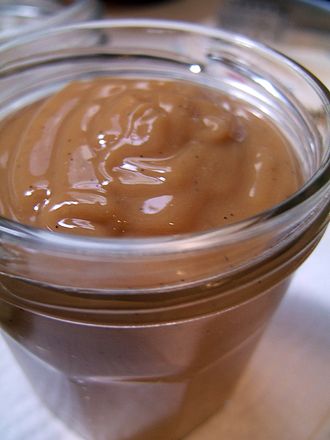
Desserts in Latin America are sweet and full of flavor. They often use tropical fruits and creamy ingredients like sugar, condensed milk, and caramel. Some favorite desserts are dulce de leche, alfajor, rice pudding, tres leches cake, flan, and churros. These sweets show a mix of traditions.
Traditional eating customs
Latin America has many traditions around eating. Special days and holidays often have special foods that families enjoy together.
Some families have special ways to show respect for food. In Argentina and Uruguay, families eat gnocchi on the 29th of each month, sometimes putting money under their plates for good luck. On Three Kings Day, celebrated on January 6, families have a big feast to remember the visit of the Three Magi. Many families eat lentils on New Year’s Day because they believe it brings good fortune.
Cultural influences
Amerindian influence
Main article: Indigenous cuisine of the Americas
Many traditional foods from Native American groups are popular in Latin American cuisine. Dishes like pupusas, tamales, and corn tortillas come from crops such as corn and beans that Indigenous peoples first used.
European influence
Main article: European cuisine
Europeans brought their own cooking styles and used foods native to the Americas, like potatoes and corn. The biggest influence came from Spain, Portugal, and Italy, with some ideas from France and other European countries.
African influence
Main article: African cuisine
Africans brought their own cooking methods and made new dishes from scraps of food they were given. In Peru, this led to dishes such as tacu-tacu, made from leftover rice and beans.
Asian influence
Main article: Asian cuisine
See also: Chinese Latin American cuisine
People from China and Japan brought their own spices and cooking styles to countries like Peru and Brazil. In Peru, this mix created a special type of restaurant called chifa.
Middle Eastern influence
Main article: Middle Eastern cuisine
People from Lebanon, Syria, and Palestine moved to places like Brazil and Argentina, bringing foods such as kibbeh that are now common in these countries.
Caribbean
Main article: Caribbean cuisine
Caribbean cuisine mixes foods from Amerindian, European, and African traditions. People from many places live in the Caribbean, and they brought their own cooking styles with them. Now, the Caribbean has many special foods.
Seafood is very popular in the Caribbean islands because they are close to the ocean. Each island has its own favorite seafood. Rice is also a main dish in the Caribbean.
Main article: Cuban cuisine
Cuban food combines Spanish, Indigenous, African, and Caribbean styles. Cuban meals often include white rice. They have a flatbread called casave made from ground cassava. This flatbread is often eaten with roasted pork.
Main article: Dominican Republic cuisine
The food of the Dominican Republic mixes Indigenous, Spanish, and African traditions. Meals usually include meat or seafood, rice, corn, wheat, vegetables like beans and plantains, and fruits such as oranges and mangos.
Main article: Puerto Rican cuisine
Puerto Rican food comes from the cooking of the Amerindian Taínos, Europe (Spain), and Africa. Today, plantains, bananas, and coffee are important in Puerto Rican meals. In the late 1800s, the United States also influenced Puerto Rican cooking.
Central America
Central American cuisine mixes foods from Indigenous peoples, Spanish, and African traditions. Most countries are in the Mesoamerica region. Key foods include maize, bell peppera, squash, beans, and tomatoes, which are now eaten around the world.
The food changes depending on where you are. Along the Pacific coast, you’ll find more Indigenous and European flavors. Along the Caribbean coast, the food has more Indigenous and African influences. Even in countries like El Salvador and Belize, which don’t touch both coasts, you can still taste all these traditions.
Rice is a big part of meals everywhere, usually served with meat like pork, beef, or chicken, or with seafood. In the Caribbean areas, you’ll often see dishes with coconut milk or oil. One popular dish in many places is gallopinto, which mixes rice and beans.
Costa Rica
Main article: Costa Rican cuisine
A typical breakfast in Costa Rica is gallo pinto, rice and black beans mixed together. People often eat this at every meal. Other common foods include corn tortillas, white cheese, and picadillos — mixtures of meat and chopped vegetables like potatoes or beans.
El Salvador
Main article: Salvadoran cuisine
El Salvador’s most famous dish is the pupusa, a thick corn tortilla stuffed with cheese, pork, beans, or a special flower bud called loroco. You can also find vegetarian versions with squash or garlic.
Other popular dishes are yuca frita (fried cassava root with pickled vegetables) and panes rellenos (stuffed bread). Many meals come with French bread.
Guatemala
Main article: Guatemalan cuisine
Guatemala’s food varies a lot by region. Some foods are linked to certain days — like “paches” on Thursdays, a potato-based tamal, and tamales on Saturdays.
Honduras
Main article: Honduran cuisine
Honduran cooking uses a lot of coconut in both sweet and savory dishes. Popular foods include pollo con tajadas (fried chicken with banana chips), fried fish, carne asada, and baleadas (stuffed tortillas). They also enjoy many soups, like conch soup or Mondongo soup, often served with plantains or yuca.
Nicaragua
Main article: Nicaraguan cuisine
Nicaraguan food blends Spanish, Caribbean, and Indigenous traditions. Corn is very important and appears in dishes like indio viejo and quesillo. The most famous corn dish is the Nacatamal, a tamale-style meal wrapped in banana leaves.
Gallo pinto is Nicaragua’s national dish, made with red beans and rice. It sometimes includes coconut, especially on the Caribbean coast.
Panama
Main article: Panamanian cuisine
Panamanian food uses many tropical fruits and vegetables. Common meals include seafood like crab and lobster, chicken soup, and plenty of fruits such as papayas and bananas. A popular drink is chicha.
Mexico
Main article: Mexican cuisine
Mexican cuisine mixes foods from the original people of Mexico and foods brought by people from Spain. The main foods are corn, beans, and chili peppers. Spanish people added meat like beef and pork, dairy like cheese, and new herbs and spices.
Over time, these foods mixed together, creating many cooking styles in different parts of Mexico. These styles depend on what grows well in the area and the traditions of the people there. For example, mole, a special sauce, is often used for celebrations, especially in the south.
Mexican food also changed a little when Mexican people moved to the United States. One of these changes is called Tex-Mex, which mixes Mexican cooking with foods common in the United States.
Different areas of Mexico have their own special dishes. In central Mexico, you might find foods like barbacoa, pozole, tamales, and carnitas. In the southeast, the food is often spicy and includes chicken and vegetables. In the Yucatán, veal is popular. And near the ocean, like Veracruz, seafood is a big part of meals, especially fish dishes.
South America
Main article: South American cuisine
The richest foods of South America come from the middle of the continent, the Amazonia. Potatoes are often grown there, along with plants like quinoa. The Peruvian capital, Lima, was named the "Gastronomic Capital of the Americas" in 2006. Many plains on this continent are great for growing lots of food. In the Patagonian south of Argentina, people raise lamb and venison. King crab is usually caught at the southern end of the continent. Antarctic krill has been found recently and is now considered a special dish. Tuna and tropical fish are caught all around the continent, but Easter Island is where they are found most. Lobster is also caught in large amounts from the Juan Fernández Islands.
Argentina
Main article: Argentine cuisine
The food of Argentina is strongly influenced by Italian and Spanish foods and cooking ways. Indigenous foods from groups like the Quechua, Mapuche, and Guarani have also played a part. There are many regional differences, especially in the northern, western, eastern, and central parts of Argentina, with many plants, fruits, and dishes that are not well-known or hardly known in Buenos Aires.
Argentina is one of the world's biggest food producers. It makes a lot of meat (especially beef), wheat, corn, milk, beans, and since the 1970s, soybeans. Because of the country's huge beef production, red meat is a very common part of the Argentine diet. Because many Argentines have Italian ancestors, pizza and especially pasta are also very popular, but there are food traditions from other European countries as well, including the English afternoon tea.
Bolivia
Main article: Bolivian cuisine
Bolivian food is the result of Spanish food mixed with ancient Andean traditions and changes a lot because of the geography of Bolivia. It has been shaped by Inca cuisine, Aymara cuisine, Spanish cuisine, and to a smaller extent the foods of other nearby countries, like Argentina and Paraguay. European moving to Bolivia is not as common as in other Latin American countries, and while German, Italian, Basque and other foods have influenced Bolivian food, Spanish cuisine is the main influence.
In Western Bolivia in the Altiplano, because of the high, cold climate, the food often uses spices, while in the lowlands of Bolivia in the more Amazonian areas, dishes use products found in the region: fruits, vegetables, fish and yuca.
Almuerzo is the most important meal of the Bolivian day, so daily life often centers around it. Long lunches are traditional all over the country, so shops and businesses often close between 12 and 2 pm so workers can go home for lunch. A typical Bolivian lunch would have several parts, including a soup, a main course of meat, rice, and potatoes, then a dessert and coffee. Lunch is eaten slowly and is usually followed by a nap, called the siesta.
Brazil
Main article: Brazilian cuisine
The food of Brazil, like Brazil itself, changes a lot by region. Brazilian food can be split into several different places. From the north of Brazil through the Amazonian jungle, down the Brazilian coastline.
This variety shows the country's mix of native Amerindians, Portuguese, Africans, Italians, Spaniards, Germans, Syrians, Lebanese and Japanese, among others. This has created a national cooking style that keeps regional differences.
Coffee, being one of the main farming products of Brazil, is an important part of every Brazilian's diet. "Chimarrão,"[citation needed] a drink with caffeine made from “erva mate”,[citation needed] and the super caffeinated "cafezinho" are commonly served at meals, between meals, and for snacks. The average Brazilian drinks 12-24 of these drinks per day.
Chile
Main article: Chilean cuisine
Chilean food comes from mixing traditional Spanish cuisine with local ingredients.
European people moving to Chile brought various cooking styles and traditions, heavily shaping the country's food, including Italian, German, and French influences as well as the English afternoon tea. These mixtures have created a special mix. Seafood is widely used and many fruits and vegetables that have grown in the area over time are used in Chilean cooking. Many recipes are made better with Chilean wine such as Curanto.
Colombia
Main article: Colombian cuisine
The food of Colombia has many different dishes that consider the different climates in the country. For example, in the city of Medellín the typical dish is the bandeja paisa. It includes beans, rice, ground meat or carne asada, chorizo, fried egg, arepa and chicharrón. It is usually served with avocado, tomato and sauces.
Inland, the plates look like a mix of cultures, mainly from Amerindian and European foods, and the products of the land mainly from farming, raising cattle, fishing in rivers and raising other animals. Such is the case of the sancocho soup in Valledupar. Local animals like the guaratinaja, part of the wayuu Amerindian culture.
Ecuador
Main article: Ecuadorian cuisine
See also: List of Ecuadorian dishes and foods
The food in Ecuador is different, changing with height, farming conditions, and ethnic and racial groups. Ecuadorian food is a mix of Spanish, Andean, and Amazonian foods and to a smaller degree Italian, Lebanese, African, and Chinese. Most areas in Ecuador follow the traditional three-course meal of sopa/soup and segundo/second dish then dessert and a coffee are usual. Dinner is usually lighter and sometimes just coffee or agua de remedio/herbal tea with bread.
Beef, chicken, and seafood are popular in the coastal areas and are usually served with foods that have a lot of carbohydrates, such as rice with lentils, pasta, or plantain, while in the mountainous areas pork, chicken, beef and cuy (guinea pig) are popular and are often served with rice, corn, or potatoes.
Some of the typical dishes in the coastal region are: a variety of ceviches, pan de yuca (cassava bread), corviche (plantain, peanut and fish dumplings), guatita, encebollado (fish, cassava and onion stew), empanada de viento (deep-fried flour empanada with cheese filling, served sprinkled with sugar), empanada de verde (green plantain empanada with cheese filling), mangrove crab, arroz con menestra (lentil or bean stew and rice) con asado, caldo de bola (beef soup with a green plantain ball filled with meat, egg, and spices). Local main foods are rice, plantains and many kinds of seafood.
Typical dishes in the mountain region include: hornado, fritada, humitas, tamales, llapingachos, lomo saltado, and churrasco. Pork, chicken, beef, and cuy (guinea pig) are popular in the mountain areas and are served with many grains (especially rice and corn or potatoes). A popular street food in mountain areas is hornado, consisting of potatoes served with roasted pig. Fanesca, a fish soup with several types of bean, is often eaten during Lent and Easter. During the week before the celebration of the dead or All Souls' Day, the fruit drink colada morada is typical, accompanied by t'anta wawa which is stuffed bread shaped like children.
In the rainforest, a main food is the yuca, also called cassava elsewhere. The starchy root is peeled and boiled, fried, or used in many other dishes. Across the country it is also used as a bread, pan de yuca, which is similar to the Brazilian pão de queijo and is often eaten with different types of drinkable yogurt "yogur persa" brought by Persian immigrants.
Chifa (from the Mandarin words 吃饭, meaning "to eat rice") Ecuadorian-Chinese fusion food is a regular part of Ecuadorian food.
Paraguay
Main article: Paraguayan cuisine
The food of Paraguay is the set of dishes and cooking ways of Paraguay. Like its neighboring countries, Paraguayan food is a mix of Indigenous food (Guaraní), Spanish food and international foods from people who have moved there over the years. Meat, especially beef, is a main part of the Paraguayan diet. This is shown in the Asado, a series of barbecuing practices and the social event that are traditional to Argentina, Uruguay, and Paraguay.
The food of Paraguay includes special dishes such as sopa paraguaya, kiveve made with a pumpkin, also known as "andai", or Chipa Guasú. Chipa Guasú, an original dish from Paraguay, is a cake made with corn grains that is now widely served in Northeastern Argentina as well. The national drink of Paraguay is known as terere, in addition to fruit juices and soft drinks being very common all over the country. Yucca and corn are two important ingredients in Paraguayan food
Peru
Main article: Peruvian cuisine
Peru has different food with ingredients like potato, uchu or Ají (Capsicum pubescens), oca, ulluco, avocado, fruits like chirimoya, lúcuma and pineapple, and animals like taruca (Hippocamelus antisensis), llama and guinea pig (called cuy). The mix of Inca and Spanish cooking traditions created new meals and ways to prepare them. The arrival of Africans, Chinese and Japanese people in the 19th century also led to the development of Creole food in the city of Lima, where most of these people lived.
Some typical Peruvian dishes are ceviche (fish and shellfish mixed in citrus juices), the chupe de camarones (a soup made of shrimp (Cryphiops caementarius)), anticuchos (cow's heart roasted en brochette), the olluco con charqui (a dish made of ulluco and charqui), the Andean pachamanca (meats, tubers and broad beans cooked in a stone oven), the lomo saltado (meat fried lightly with tomato and onion, served with french fries and rice) that has a Chinese influence, and the picante de cuy (a dish made of fried guinea pig with some spices). Peruvian food can be served with typical drinks like the chicha de jora (a chicha made of tender corn dried by the sun). There are also chichas made of peanuts or purple corn, known as chicha morada.
Uruguay
Main article: Uruguayan cuisine
The food of Uruguay is traditionally based on its European roots, especially from Italy, Spain, France, Portugal, Germany and Britain. Many foods from those countries such as pasta, sausages, and desserts are common in the nation's diet. The Uruguayan barbecue, asado, is one of the best and most famous in the world. A sweet paste, Dulce de Leche is the national favorite, used to fill cookies, cakes, pancakes, milhojas, and alfajores.
The base of the country's diet is meat and animal products: mainly beef but also chicken, lamb, pig, and sometimes fish. The preferred ways to cook meats and vegetables are still boiling and roasting, although modern ways have made frying popular (see milanesas and chivitos). Meanwhile, wheat and fruit are generally served fried (torta frita and pasteles), comfited (rapadura and ticholos de banana), and sometimes baked (rosca de chicharrones), a new modern style. Bushmeat comes from mulitas and carpinchos. Regional fruits like butia and pitanga are commonly used for flavoring caña, along with quinotos and nísperos.
Venezuela
Main article: Venezuelan cuisine
Because of its land, many farming resources, and the cultural mix of the Venezuelan people, Venezuelan food often changes a lot from one area to another. Its food, both traditional and modern, is shaped by European, Amerindian and West African traditions. Food staples include corn, rice, plantain, yams, beans and several meats. Potatoes, tomatoes, onions, eggplants, squashes, spinach and zucchini are also common sides in the Venezuelan diet. Venezuela has several special national dishes such as the arepa (a corn based bread like patty), pan de jamón, tequeño, pabellón criollo and the hallaca at Christmas time.
Images
Related articles



This article is a child-friendly adaptation of the Wikipedia article on Latin American cuisine, available under CC BY-SA 4.0.
Images from Wikimedia Commons. Tap any image to view credits and license.