 Safekipedia
Marshall Space Flight Center
Adapted from Wikipedia · Adventurer experience
The Marshall Space Flight Center, officially called the George C. Marshall Space Flight Center (or MSFC), is a big place where scientists and engineers work on rockets and spacecraft. It is located in Redstone Arsenal, Alabama, with a postal address in Huntsville. This center is very important for the U.S. government because it helps build and test rocket engines and other parts that make spacecraft move.
Marshall Space Flight Center was first created to help develop the Saturn launch vehicles for the Apollo program, which was the mission to send people to the Moon. Over the years, the center has played a big role in many space projects. It was the main place for building the engine system and fuel tank for the Space Shuttle. It also helped design and put together the International Space Station, and it works on new rockets like the Space Launch System.
Inside the center, there is a special building called the Huntsville Operations Support Center (or HOSC). This place helps manage experiments and activities on the International Space Station and supports launches when Marshall has a part on the rocket. It works closely with the Kennedy Space Center and monitors launches from Cape Canaveral Space Force Station when needed. The center is named after General of the Army George C. Marshall to honor his contributions.
History
MSFC has been NASA's lead center for developing rocket propulsion systems and technologies. During the 1960s, its activities focused on the Apollo Program, with the Saturn family of launch vehicles designed and tested there. MSFC also played major roles in projects like Skylab, the Space Shuttle, Spacelab, and experiments using the Shuttle's cargo bay.
Groundwork
After World War II ended in 1945, the U.S. started Operation Paperclip to bring scientists and engineers from Nazi Germany to work on advanced military technologies. In 1945, 127 missile specialists led by Wernher von Braun signed contracts to work with the United States Army. They were sent to Fort Bliss, Texas, to join the Army's new Research and Development Division. For five years, they worked on improving the V-2 missile for U.S. use. Von Braun used a WAC Corporal rocket as a second stage for a V-2, creating a combination called Bumper.
After the war, three arsenals near Huntsville, Alabama, were combined to form Redstone Arsenal. In 1949, the Secretary of the Army approved moving rocket research and development from Fort Bliss to Redstone Arsenal. By April 1950, about 1,000 people, including von Braun's group, were involved in this transfer. Missile development at Redstone Arsenal expanded greatly over the next decade. In 1952, von Braun published a widely read article about space, and in 1954-55, most of the German scientists became U.S. citizens. Von Braun was appointed Chief of the Guided Missile Development Division.
In 1954, von Braun proposed using the Redstone rocket as the main booster for a multi-stage rocket to launch artificial satellites. A study for Project Orbiter was completed in 1955, but the Army's role in the U.S. space satellite program was delayed in favor of the Vanguard rocket being developed by the Naval Research Laboratory. In 1956, the Army Ballistic Missile Agency was established, and development began on the PGM-19 Jupiter missile. Guidance testing for Jupiter began in 1956 on a modified Redstone missile, and re-entry vehicle testing started later that year. The Jupiter-C rocket, developed by ABMA, was used to launch satellites, with the first successful U.S. satellite, Explorer 1, launched in 1958 using a Jupiter C in a Juno I configuration.
Redstone Army Arsenal becomes the Marshall Space Flight Center
On July 1, 1960, the Marshall Space Flight Center (MSFC) was created from the old Redstone Arsenal. It was placed under NASA's jurisdiction, with Wernher von Braun as its first NASA Director. MSFC had 4,670 civilian employees, about $100 million worth of buildings and equipment, and 1,840 acres of land transferred from the Army Ordnance Missile Command to the new center. MSFC was named in honor of General George C. Marshall.
The initial main project at MSFC was preparing a Redstone rocket for Project Mercury to launch the first American into space. On May 5, 1961, astronaut Alan Shepard made America's first sub-orbital spaceflight.
By 1965, MSFC had about 7,500 government employees, with prime contractors for launch vehicles and related items collectively having a similar number of employees working at MSFC facilities. Support contracting firms, like Brown Engineering Company, were also involved.
Saturn launch vehicles
On May 25, 1961, President John F. Kennedy committed the U.S. to a lunar landing by the end of the decade. MSFC's primary mission under the Apollo program was developing the Saturn family of rockets. This required developing three new liquid-fueled rocket engines, as well as improving the existing RL10 for the Saturn S-IV stage.
The Saturn I rocket, first tested in flight on October 27, 1961, had two propulsion stages and an instrument unit. The first stage had eight H-1 engines, and the second stage had six LR10A-3 engines. Ten Saturn Is were used in flight-testing Apollo boilerplate units.
The Saturn IB, an upgraded version of the Saturn I, had two propulsion stages and an instrument unit. The first stage had eight H-1 engines, and the second stage had a single J-2 engine. The Saturn V, the most vital element in the Apollo Program, had three propulsion stages and an instrument unit. The first stage had five F-1 engines, the second stage had five J-2 engines, and the third stage had a single J-2 engine.
The first Saturn V test flight was on November 9, 1967, and it played a key role in the Apollo 11 mission to the Moon on July 16, 1969. A total of 15 Saturn Vs were built, with 13 functioning flawlessly.
Fabrication and test facilities
Wernher von Braun believed that designers should participate directly in building and testing hardware. MSFC had facilities where prototypes of every Saturn vehicle were fabricated. Special-purpose computers were used for checkout procedures, and static test stands were constructed for Redstone and Jupiter rockets. In 1961, the Jupiter stand was modified to test Saturn 1 and 1B stages, and other test stands followed, including the Saturn V Dynamic Test Stand completed in 1964. The S1C Static Test Stand, completed in 1964, was for live firing of the F-1 engines of the first stage.
As Saturn activities progressed, external facilities and factories were needed. In 1961, the Michoud Rocket Factory near New Orleans, Louisiana, was selected as the Saturn V rocket manufacturing site. A 13,500-acre area in Hancock County, Mississippi, was selected for Saturn tests, known as the Mississippi Test Facility, now the John C. Stennis Space Center.
Early scientific and engineering research
MSFC had strong research projects in science and engineering from the start. Projects like Highwater and Pegasus were conducted while testing the Saturn I vehicle. In Project Highwater, a dummy Saturn I second stage was filled with water as ballast, which was released into the upper atmosphere after burnout of the first stage. Pegasus satellites, launched in 1965, studied micrometeoroid frequency and penetration depth using instrumented surfaces on the Saturn I second stage.
Lunar exploration
Six Apollo missions landed on the Moon: Apollo 11, Apollo 12, Apollo 14, Apollo 15, Apollo 16, and Apollo 17. Apollo 13 was intended to land but only circled the Moon and returned to Earth after an oxygen tank ruptured. Except for Apollo 11, all missions carried an Apollo Lunar Surface Experiments Package (ALSEP) for scientific experiments. The Lunar Roving Vehicle (LRV), developed at MSFC, provided transportation for exploring the Moon's surface on the last three missions.
Skylab and ATM
The Apollo Applications Program involved science-based crewed space missions using surplus Apollo equipment. MSFC was responsible for developing the Orbital Workshop, later renamed Skylab. Skylab was launched on May 14, 1973, and logged about 2,000 hours on scientific and medical experiments. The Apollo Telescope Mount (ATM), a solar observatory, was added to Skylab but developed separately.
Apollo–Soyuz Test Program
The Apollo–Soyuz Test Project was the last flight of a Saturn IB. On July 15, 1975, a three-person crew launched on a six-day mission to dock with a Soviet Soyuz spacecraft. This was the last crewed U.S. space mission until April 1981.
Post-Apollo science
The High Energy Astronomy Observatory (HEAO) Program involved three missions of large spacecraft in low Earth orbit for X-ray and gamma-ray astronomy and cosmic-ray investigations. Using Atlas-Centaur launch vehicles, three successful missions were flown: HEAO 1 in 1977, HEAO 2 (Einstein Observatory) in 1978, and HEAO 3 in 1979. Other MSFC-managed space science projects in the 1970s included the Laser Geodynamics Satellite (LAGEOS) and Gravity Probe A. LAGEOS, launched in 1976 by a Delta rocket, tracks Earth's crust movements using laser beams from ground stations.
Space Shuttle development
On January 5, 1972, President Richard M. Nixon announced plans to develop the Space Shuttle, a reusable system for routine access to space. MSFC was responsible for the Shuttle's solid rocket boosters, the orbiter's three main engines, and the external tank. The first test firing of an orbiter main engine was in 1975, and the first firing of a solid rocket booster took place in 1977. The first flight of the orbiter Enterprise, attached to a Shuttle Carrier Aircraft, was in February 1977, followed by free landings in August and October. In March 1978, the Enterprise was flown to MSFC and mated to an external tank, then tested on the Saturn V Dynamic Test Stand. The first spaceworthy Shuttle, Columbia, was completed and placed at Kennedy Space Center for launch preparation. On April 12, 1981, Columbia made the first orbital test flight.
1980s and 1990s – early Shuttle era
The Space Shuttle was the most complex spacecraft ever built. From 1972, managing and developing Shuttle propulsion was a major activity at MSFC. On April 12, 1981, Columbia made the first orbital test flight, STS-1, verifying the system's performance. These flights carried on-board experiments on pallets in the Shuttle's cargo bay.
Space Shuttle Challenger was launched on mission STS-51-L on January 28, 1986, resulting in a disaster. Analysis showed that a leak in a joint on one of the solid rocket boosters caused the destruction of the vehicle. Redesign and extensive testing of the SRBs were conducted, and flights resumed in September 1988 with STS-26.
Shuttle missions and payloads
The Space Shuttles carried a wide variety of payloads, from scientific research equipment to highly classified military satellites. Flights were assigned STS numbers, generally in sequence by planned launch date. MSFC managed the adaptation of the Inertial Upper Stage, first flown in May 1989.
Many Shuttle flights carried equipment for on-board research, accommodated in two forms: on pallets or other arrangements in the cargo bay. Pallet experiments included fluid physics, materials science, biotechnology, combustion science, and commercial space processing. The Getaway Special (GAS) program offered low-cost flights for experiments from colleges, universities, companies, individuals, and foreign governments.
Spacelab
In addition to pallet experiments, many experiments were performed onboard Spacelab, a reusable laboratory developed by ten European nations through the European Space Research Organisation. Over 15 years, Spacelab components flew on 22 Shuttle missions, the last in April 1998. Examples include Spacelab 1 on STS-9 in 1983, with 73 experiments in astronomy, physics, atmospheric physics, Earth observations, life sciences, materials sciences, and space plasma physics.
International Space Station
NASA began planning a space station in 1984, named Freedom in 1988. By the early 1990s, planning for the American Freedom, the Soviet/Russian Mir-2, the European Columbus, and the Japanese Kibō was incorporated into a single International Space Station (ISS). ISS assembly continued throughout the next decade, with continuous occupancy since February 7, 2001. Since 1998, 18 major U.S. components have been assembled in space. In October 2007, Harmony (Node 2) was attached to Destiny, managed by MSFC, providing connection hubs for European and Japanese modules and additional living space.
Hubble Space Telescope
In 1962, the first Orbiting Solar Observatory was launched, followed by the Orbiting Astronomical Observatory (OAO) for ultraviolet observations from 1968 to 1972. This led to planning the Large Space Telescope (LST), later named the Hubble Space Telescope, with MSFC responsible for design, development, and construction. The telescope was launched in April 1990 but had flawed images due to a flawed primary mirror. Repair missions corrected these issues. It is expected to remain operational until its successor, the James Webb Space Telescope, is available in 2018.
Chandra X-Ray Observatory
Before HEAO-2 (Einstein Observatory) was launched in 1978, MSFC began preliminary studies for a larger X-ray telescope. With the success of HEAO-2, MSFC was given responsibility for the Advanced X-ray Astrophysics Facility (AXAF), renamed Chandra X-ray Observatory in 1998. Launched on July 23, 1999, by Shuttle Columbia (STS-93), Chandra has transformed astronomers' view of the high-energy universe.
Compton Gamma Ray Observatory
The Compton Gamma Ray Observatory (CGRO) was another of NASA's Great Observatories. Launched on April 5, 1991, on Shuttle flight STS-37, CGRO was the heaviest astrophysical payload flown at that time. MSFC was responsible for the Burst and Transient Source Experiment (BATSE), which detected sudden changes in gamma count-rates. After a gyroscope failure, NASA decided to de-orbit CGRO, with debris falling harmlessly into the Pacific Ocean on June 4, 2000.
2000s and 2010s - late Shuttle and successors
MSFC is NASA's designated developer and integrator of launch systems. The Propulsion Research Laboratory is a leading national resource for advanced space propulsion research. In early March 2011, NASA Headquarters announced that MSFC will lead efforts on a new heavy-lift rocket to carry large, human-rated payloads beyond low-Earth orbit. MSFC has the program office for the Space Launch System.
Orbital Space Plane
The initial plans for the Space Station included a small, low-cost Crew Return Vehicle (CRV). The Challenger disaster led planners to consider a more capable spacecraft, the Orbital Space Plane (OSP), development starting in 2001. In 2004, knowledge gained from OSP was transferred to Johnson Space Center for use in developing the Crew Exploration Vehicle of the Constellation program. No operational OSP was ever built.
Columbia disaster and Shuttle retirement
MSFC had responsibility for the Space Shuttle's rocket propulsion elements, including the External Tank. On February 1, 2003, the Space Shuttle Columbia disaster occurred. NASA retired the Space Shuttle in 2011, leaving the U.S. dependent on the Russian Soyuz spacecraft for crewed missions until Demo-2 in 2020.
Constellation Program
Between 2004 and early 2010, the Constellation Program was a major NASA activity. MSFC was responsible for the propulsion of the proposed Ares I and Ares V heavy-lift vehicles.
Deep-space astronomy
The Fermi Gamma-ray Space Telescope, initially called the Gamma-Ray Large Area Space Telescope (GLAST), is an international space observatory used to study the cosmos. Launched on June 11, 2008, it has a design life of 5 years and a goal of 10 years. MSFC manages the GBM, with Charles A. Meegan of MSFC as Principal Investigator. Many new discoveries have been made.
The Burst and Transient Source Experiment (BATSE), with Gerald J. Fishman of MSFC as Principal Investigator, continues examining data from gamma-ray bursts, pulsars, and other transient gamma-ray phenomena.
Present and future – 2010s onward
The Marshall Space Flight Center helps NASA with three important jobs: launching spacecraft, living and working in space, and studying Earth and space.
The International Space Station is a team project with space agencies from the United States, Russia, Europe, Japan, and Canada. People have lived there since November 2, 2000. It goes around Earth 16 times every day and helps scientists learn how to live in space. The station will keep being used until at least 2030. After the Space Shuttle stopped flying in 2011, NASA used Russian spacecraft to get to the station. In 2020, private companies like SpaceX began taking astronauts there.
Marshall helps with research on the station, linking scientists on Earth with astronauts in space. Hundreds of experiments have been done, studying the Sun, the Moon, planets, and Earth's climate. Marshall also works on telescopes that take pictures of space, like the Hubble Space Telescope and the James Webb Space Telescope. In 2010, Marshall launched a small satellite called FASTSAT to explore space in new ways.
List of center directors
The Marshall Space Flight Center has had many directors.
| No. | Image | Director | Start | End |
|---|---|---|---|---|
| 1 |  | Wernher von Braun | July 1, 1960 | January 27, 1970 |
| 2 |  | Eberhard F. M. Rees | March 1, 1970 | January 19, 1973 |
| 3 |  | Rocco A. Petrone | January 26, 1973 | March 15, 1974 |
| 4 | 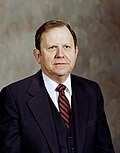 | William R. Lucas | June 15, 1974 | July 3, 1986 |
| 5 |  | James R. Thompson Jr. | September 29, 1986 | July 6, 1989 |
| 6 | 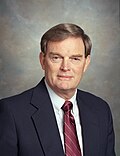 | Thomas J. Lee | July 6, 1989 | January 6, 1994 |
| 7 |  | Gene Porter Bridwell | January 6, 1994 | February 3, 1996 |
| 8 |  | J. Wayne Littles | February 3, 1996 | January 1998 |
| Acting |  | Carolyn S. Griner | January 1998 | September 1998 |
| 9 |  | Arthur G. Stephenson | September 1998 | May, 2003 |
| 10 |  | David A. King | June 15, 2003 | March 26, 2009 |
| Acting |  | Robert M. Lightfoot, Jr. | March 26, 2009 | July 2009 |
| 11 | August 2009 | March 4, 2012 | ||
| Acting | Arthur E. Goldman | March 5, 2012 | August 3, 2012 | |
| Acting | Robin Henderson | August 4, 2012 | September 24, 2012 | |
| 12 |  | Patrick Scheuermann | September 25, 2012 | November 13, 2015 |
| Acting |  | Todd May | November 14, 2015 | January 31, 2016 |
| 13 | February 1, 2016 | July 27, 2018 | ||
| Acting |  | Jody Singer | July 27, 2018 | September 12, 2018 |
| 14 | September 13, 2018 | July 29, 2023 | ||
| Acting |  | Joseph Pelfrey | July 29, 2023 | February 5, 2024 |
| 15 | February 5, 2024 | September 24, 2025 | ||
| Acting |  | Rae Ann Meyer | September 25, 2025 | present |
Images
Related articles


This article is a child-friendly adaptation of the Wikipedia article on Marshall Space Flight Center, available under CC BY-SA 4.0.
Images from Wikimedia Commons. Tap any image to view credits and license.