 Safekipedia
Mediterranean diet
Adapted from Wikipedia · Adventurer experience
The Mediterranean diet is a way of eating that became well known in the 1990s. It was first suggested in 1975 by a scientist named Ancel Keys and his wife, chemist Margaret Keys. This diet is based on the food traditions of places like Greece, Italy, the coasts of France and Spain, and the Levant.
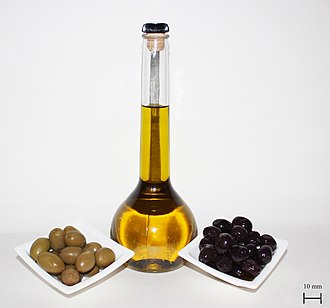
This eating pattern focuses on healthy foods such as plant-based foods like vegetables, fruits, legumes, and whole grains. It also includes fish, dairy products such as cheese and yogurt, and uses olive oil as the main type of fat. People following this diet eat less red meat, refined grains, and sugar.
Studies show that the Mediterranean diet can help lower the chance of heart problems. It is one of the recommended healthy diets in the Dietary Guidelines for Americans and is supported by the World Health Organization. Besides food, this way of eating also includes enjoying meals together and staying active.
Health effects
The Mediterranean diet has less fat and lots of healthy oils and fibers. One reason might be the use of olive oil, which has special fats that may be good for health. Experts say olive oil can help keep blood healthy.
Eating this way has been studied for its health benefits. Research suggests it may help lower the chance of heart problems, some diseases, and early aging. It may also help with keeping a healthy weight and support brain health. However, some studies say we still need more research to be sure of all the benefits.
Dietary components
Further information: Mediterranean cuisine
The Mediterranean diet looks a little different in various countries and among people living around the Mediterranean Sea. This is because of differences in their cultures, money, and religions. The Mediterranean diet, as suggested by nutrition experts, usually includes these foods, which are not common in the Mediterranean Basin:
- Lots of olive oil (used as the main type of fat) and foods from plants: vegetables (like leafy greens, onions, garlic, tomatoes, and peppers), fresh fruits (eaten as desserts or snacks), grains (mostly whole grains), nuts, and beans.
- A moderate amount of fish and other seafood, chicken, eggs, dairy products (mostly cheese and yogurt), and red wine.
- Small amounts of red meat, processed meat, refined grains, and sweets.
These amounts are sometimes shown in the Mediterranean Diet Pyramid. In a diet like this, fats make up 25% to 35% of the total calories you eat, and the amount of saturated fat is at most 8% of the calories.
Some foods from the Mediterranean region do not always match the Mediterranean diet rules. For example, olive oil is not the main fat used in all Mediterranean countries: in northern and central Italy, lard and butter are often used for cooking, and olive oil is only for salads and cooked vegetables; in both North Africa and the Middle East, sheep's tail fat and rendered butter (samna) are traditional main fats.
| Foods | Oldway's Preservation and Trust (2009) | Mediterranean Diet Foundation (2001) | Greek Dietary Guidelines (1999) |
|---|---|---|---|
| Olive oil | Every meal | Every meal | Main added lipid |
| Vegetables | Every meal | ≥2 servings every meal | 6 serv./day |
| Fruits | Every meal | 1–2 serv. every meal | 3 serv./day |
| Bread/cereals | Every meal | 1–2 serv. every meal | 8 serv./day |
| Legumes | Every meal | ≥2 serv./week | 3-4 serv./week |
| Nuts | Every meal | 1–2 serv./day | 3–4 serv./week |
| Fish/seafood | ≥2 serv./week | ≥2 serv./week | 5–6 serv./week |
| Eggs | Moderate portions, daily to weekly | 2–4 serv./week | 3 serv./week |
| Poultry | Moderate portions, daily to weekly | 2 serv./week | 4 serv./week |
| Dairy products | Moderate portions, daily to weekly | 2 serv./day | 2 serv./day |
| Red meat | Less often | 4 serv./month | |
| Sweets | Less often | 3 serv./week | |
| Red wine | In moderation | In moderation | Daily, in moderation |
| Servings are defined as: bread 25 g., potato 100 g., cooked pasta 50–60 g., vegetables 100 g., apple 80 g., banana 60 g., orange 100 g., melon 200 g., grapes 30 g., milk or yogurt 1 cup, 1 egg, meat 60 g., cooked dry beans 100 g. | |||
Environmental effects
See also: Sustainable diet and Environmental impact of agriculture
Eating a Mediterranean diet or a plant-based diet can help the environment. These diets use less meat, dairy, and processed foods. Feeding animals often uses more energy than the food they give. A study showed that eating this way could lower harmful gases in the environment. This could mean a big reduction in these gases by 2050.
History and research
The Mediterranean diet started with ancient cultures like the Greeks and Romans. They used olive oil, seafood, bread, and wine. In 1975, American scientist Ancel Keys and his wife Margaret Keys talked about the Mediterranean diet. They studied people in southern Italy in the 1950s and found links between diet and heart health.
Later studies, including the Seven Countries Study, showed that people who followed a Mediterranean diet had less heart disease. This diet includes olive oil, bread, pasta, vegetables, herbs, and seafood, with less meat. Since around 2016, health groups like the American Heart Association have recommended this diet to help prevent heart disease and type 2 diabetes.
Related articles


This article is a child-friendly adaptation of the Wikipedia article on Mediterranean diet, available under CC BY-SA 4.0.
Images from Wikimedia Commons. Tap any image to view credits and license.