 Safekipedia
North Island
Adapted from Wikipedia · Adventurer experience
The North Island (co-officially Te Ika-a-Māui from Māori) is one of the two main islands of New Zealand. It is separated from the South Island by Cook Strait.
Twelve main cities are found across the North Island, from north to south: Whangārei, Auckland, Hamilton, Tauranga, Rotorua, Gisborne, New Plymouth, Napier, Hastings, Whanganui, Palmerston North, and New Zealand's capital city, Wellington, located at the island's southwest tip.
Naming and usage
The North Island has been called that in English for many years. It also has an official Māori name, Te Ika-a-Māui, which means "the fish of Māui." This name is not used much by most people. Other old Māori names include Te Ahi no Māui, meaning "the fire of Māui," and Aotearoa, which means "land of the long white cloud" and is often used for all of New Zealand.
In 2013, the New Zealand Geographic Board officially named the island North Island or Te Ika-a-Māui after asking people for their ideas. When talking about the two main islands of New Zealand, we say "the North Island" and "the South Island." We usually say a place is "in the North Island," like "Hamilton is in the North Island." On maps and in headings, we just say "North Island" without "the."
Māori mythology
According to Māori mythology, the North and South Islands of New Zealand were formed by the demigod Māui. Māui and his brothers were fishing from their canoe, which became the South Island. Māui caught a huge fish and pulled it from the sea. His brothers cut the fish into pieces, and it became the North Island. One Māori name for the North Island is Te Ika-a-Māui, meaning "The Fish of Māui." The mountains and valleys came from Māui’s brothers carving up the fish.
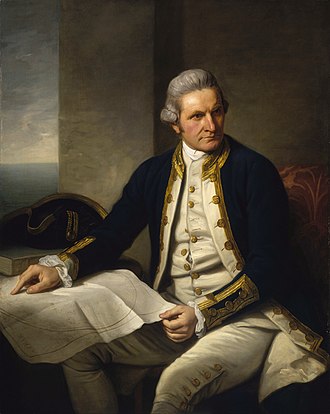
During Captain James Cook’s voyage between 1769 and 1770, a Tahitian navigator named Tupaia helped map New Zealand. He called the North Island names that mean “The Fish of Māui.” Some tribe names, like Muaūpoko and Muriwhenua, show where they settled on this “fish.” Another old name for the North Island is Aotearoa, but this name is now used for all of New Zealand.
Geography
Main article: Geography of the North Island
The North Island of New Zealand was once connected to the South Island when sea levels were lower. This happened during the Last Glacial Period. When the seas rose about 7,000 years ago, the two islands separated, creating the Cook Strait.
The island has many beautiful places, such as bays like the Bay of Islands and Bay of Plenty, large lakes like Lake Taupō, and tall mountains like Mount Ruapehu. There are also famous forests and parks, including Tongariro National Park and the Waipoua Kauri Forest.
Demographics
The North Island has about 4 million people.
The North Island had a population of about 3.8 million at the 2023 New Zealand census. This is an increase since the 2018 census. Many people live in the island’s cities. The largest city is Auckland and the capital is Wellington. The area called the Golden Triangle between Auckland, Hamilton, and Tauranga has many people and jobs.
| Name | Population (June 2025) | % of island |
|---|---|---|
| Auckland | 1,547,200 | 38.0% |
| Wellington | 209,800 | 5.2% |
| Hamilton | 192,100 | 4.7% |
| Tauranga | 160,900 | 4.0% |
| Lower Hutt | 113,200 | 2.8% |
| Palmerston North | 81,200 | 2.0% |
| Napier | 66,400 | 1.6% |
| Porirua | 60,100 | 1.5% |
| Hibiscus Coast | 67,800 | 1.7% |
| New Plymouth | 60,200 | 1.5% |
| Rotorua | 58,500 | 1.4% |
| Whangārei | 56,100 | 1.4% |
| Hastings | 49,800 | 1.2% |
| Upper Hutt | 44,500 | 1.1% |
| Whanganui | 42,800 | 1.1% |
| Gisborne | 38,100 | 0.9% |
| Paraparaumu | 29,900 | 0.7% |
| Pukekohe | 28,800 | 0.7% |
| Taupō | 27,000 | 0.7% |
| Masterton | 22,600 | 0.6% |
| Cambridge | 22,700 | 0.6% |
| Levin | 20,500 | 0.5% |
| Feilding | 17,650 | 0.4% |
| Whakatāne | 16,950 | 0.4% |
| Havelock North | 15,000 | 0.4% |
| Tokoroa | 14,500 | 0.4% |
| Waikanae | 13,600 | 0.3% |
| Te Awamutu | 13,950 | 0.3% |
| Hāwera | 10,700 | 0.3% |
| Te Puke | 10,400 | 0.3% |
Economy
The North Island's part of New Zealand's economy was about NZ$282.355 billion in 2021. This was 78% of all the money made in New Zealand that year.
Transport
Air
Main article: List of airports in New Zealand
The North Island has many important airports. Auckland Airport is the biggest and busiest. Wellington Airport is also very busy. There are smaller airports too, like Kerikeri Airport, Gisborne Airport, Hamilton Airport, Hawke's Bay Airport, New Plymouth Airport, Palmerston North Airport, Rotorua Airport, Taupō Airport, and Tauranga Airport.
Governance
The North Island is split into nine regions. Each region has its own local government. These regions include the island and nearby smaller islands and waters. The regions are:
Images
Related articles


This article is a child-friendly adaptation of the Wikipedia article on North Island, available under CC BY-SA 4.0.
Images from Wikimedia Commons. Tap any image to view credits and license.