 Safekipedia
Animism
Adapted from Wikipedia · Discoverer experience
Animism is the belief that places, objects, and creatures all have a special spiritual essence. It means that everything — like animals, plants, rocks, rivers, and even weather systems — is alive in some way, with its own will and spirit. This idea is often found in the traditions of many indigenous peoples, who see the world around them as full of living spirits.
The word "animism" comes from a Latin word meaning "breath, spirit, life". It was first used by a scholar named Edward Tylor in the late 1800s to describe how many ancient cultures understand the world. For these cultures, there is no clear line between the physical world and the spiritual world. They believe that spirits live not just in people, but also in trees, mountains, rivers, and many other parts of nature.
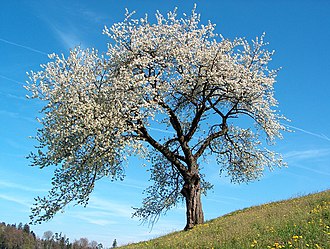
Some examples of animistic beliefs include water sprites, vegetation deities, and tree spirits. Even today, some people from all parts of the world feel drawn to animism, seeing the world as a place full of spirit and life in everything around us.
Etymology
English anthropologist Sir Edward Tylor wanted to describe a special way of thinking about the world, but he worried it might get mixed up with another idea called spiritualism. So, he used a word called animism from a German scientist named Georg Ernst Stahl. Stahl created the term in 1708 to explain how spirits might be connected to life and health.
The word animism comes from a Latin word, anima, meaning life or soul. People first started using this word in English around the year 1819.
"Old animism" definitions
Earlier ideas about animism focused on trying to understand what makes something alive. These ideas were later called "old animism." Some critics said these early ideas were unfair and showed a biased view of different cultures.
The idea of animism was first described by the anthropologist Sir Edward Tylor in his 1871 book Primitive culture. Tylor said animism is the belief that many things in nature, not just people, have spirits. He thought animism was an early form of religion that people would eventually move beyond as they learned more about science.
Some people debated how early societies lived and what they believed. Over time, these debates helped create the study of anthropology. Tylor believed that as societies became more advanced, fewer people would believe in animism. However, he thought any remaining beliefs in spirits were leftovers from early human ideas.
"New animism" definitions
Many experts stopped using the word animism because it was too tied to old ideas. But some groups, like Indigenous peoples and nature lovers, started using it again to describe their beliefs. Scholars then began using the term in new ways, focusing on how to treat other living things, even those that aren’t human.
The idea of new animism grew from the work of anthropologist Irving Hallowell, who studied the Ojibwe people in Canada. The Ojibwe believe that being a person doesn’t mean looking human. They think rocks, bears, and other things can also be persons with their own will. By treating these beings with respect, people learn how to act like a true person.
Other experts, like Nurit Bird-David and Tim Ingold, also support this new way of thinking. They say that animism isn’t just old ideas, but a way of seeing the world where everything is connected. For example, when a hunter tries to understand his prey, he thinks like the animal, feeling both part of and separate from it.
David Abram suggests that our senses naturally help us see the world as full of life. He believes that when we pay attention to what we sense, we treat the world with more respect. This way of thinking helps us understand our place in nature better.
Religion
There is ongoing disagreement about whether animism is a single religious belief or a way of thinking that includes many different stories from various cultures around the world. This also brings up questions about what animism means for right and wrong behavior. Some believe that by seeing nature as full of spirit, animism encourages a deeper care for the environment.
In his 1992 book, American historian Jack D. Forbes wrote that the animism of native and folk religions in Africa, Asia, and the Americas can be called "life-ism," meaning more respect for all forms of life. In a 2012 book, it is noted that calling Native world-views animism is correct if we understand it as "life-ism."
Concepts
Distinction from pantheism
Animism is different from pantheism, even though people sometimes mix them up. While animists believe everything has a spirit, they do not think everything shares the same spirit like pantheists do. Animism focuses more on each soul being unique.
Fetishism / totemism
In many animistic beliefs, humans are seen as equal to other animals, plants, and natural forces.
African indigenous religions
Traditional African religions are mostly complex forms of animism that include believing in many gods, shamanistic practices, and honoring ancestors.
In West Africa, the Serer religious beliefs include honoring ancestors through the Pangool, who are spirits that connect the living with the Divine, Roog.
In East Africa, the Kerma culture shows animistic traits similar to other Traditional African religions. Unlike later periods, the Kerma culture appears more animistic than polytheistic, with animals featured in amulets and lions held in high regard. The Kermans may have treated Jebel Barkal as a sacred site, passing it on to the Kushites and Egyptians.
In North Africa, the traditional Berber religion includes polytheistic, animist, and sometimes shamanistic beliefs of the Berber people.
Asian origin religions
In Indian-origin religions like Hinduism, Buddhism, Jainism, and Sikhism, animistic ideas about nature and protecting the environment are part of their core beliefs.
The Matsya Purana, a Hindu text, teaches the importance of respecting nature. It says, "A pond equals ten wells, a reservoir equals ten ponds, a son equals ten reservoirs, and a tree equals ten sons." These religions worship trees, rivers, and mountains.
In Hinduism, the banyan tree is very sacred. Married women in North India and some western states fast and tie threads around a banyan tree to pray for their husbands' well-being. The banyan tree is also important in Buddhism.
Mun, or Munism, is the traditional religion of the Lepcha people, and Sanamahism is the ethnic religion of the Meitei people in Northeast India.
Chinese religions
Shendao is a term from Chinese folk religions that refers to the divine order of nature.
The Shang dynasty's state religion, practiced from 1600 BCE to 1046 BCE, was based on spiritualizing natural phenomena.
Japan and Shinto
Shinto, the traditional Japanese folk religion, has many animist aspects. The kami, supernatural beings, are central to Shinto. Everything, including natural forces and famous places, is believed to be home to kami. These kami are worshipped at home shrines, family shrines, and public shrines.
The Ryukyuan religion of the Ryukyu Islands is different from Shinto but shares similar ideas.
Kalash people
The Kalash people of Northern Pakistan follow an ancient animistic religion. They are considered unique and the smallest ethnoreligious group in Pakistan. They have faced pressure to convert to Islam but have mostly kept their traditions.
Korea
Muism, the native Korean belief, has many animist aspects. The deities, called kwisin, can interact with humans and cause problems if not honored properly.
Philippines indigenous religions
In the indigenous Philippine folk religions, animism is a core belief. They believe in Anito, Diwata, and Bathala, and respect sacred shrines, forests, mountains, and grounds. In these beliefs, everything has a spirit, from rocks and trees to animals and humans.
Paganism
Animism has been important in the development of many ancient and modern pagan religious traditions. It is the idea that natural things like animals, plants, and weather have spirit or can act on their own.
In ancient cultures like the Celts, Norse, Greeks, Romans, and Slavs, religious beliefs often included animistic ideas. Natural features were seen as sacred or home to spiritual beings. Deities were linked to specific places in nature.
Even after monotheistic religions like Christianity spread, animistic and Pagan practices continued in folk religion. Customs like honoring household spirits and celebrating seasons tied to farming kept animistic ideas alive.
In recent times, there has been renewed interest in pre-Christian religions. Modern Pagan traditions like Wicca, Druidry, and Heathenry often include animistic ideas. They see humans as part of a larger network of living beings and respect the natural world.
Shamanism
A shaman is a person who connects with spirits to help heal and solve problems. Shamans enter trance states during rituals to practice healing and divination.
Shamans are seen as messengers between the human world and the spirit worlds. They help heal by restoring balance to the soul. Shamans may journey to other worlds to bring guidance and healing.
In animistic cultures, shamans act as intermediaries between humans and the natural world. They help balance relationships with animals, plants, and landforms, which in turn helps heal people.
Animist life
Animism is the belief that everything — animals, plants, stones, weather, and even places — has a spirit or soul. In these beliefs, animals are seen as having intentions and plans, just like people. They are treated with respect, especially when they are used for food or other needs. For example, some communities welcome special visitors, like birds, during important events and see these visits as signs of approval.
Plants and fungi are also seen as having spirits. When people collect them for food, they often perform rituals to show respect. Some traditions even talk to plants or give them small gifts to thank them. In animism, stones, weather, and places can also be seen as having spirits. For instance, certain stones or storms might be thought of as special beings with their own messages and roles in nature.
Other usage
Psychology
From his studies of how children grow and learn, Jean Piaget thought that children naturally see everything around them as alive, like giving life to objects, and only later learn that this isn’t true. On the other hand, Margaret Mead believed the opposite — that children don’t start with this idea but learn it from the world around them as they grow.
Attempts to reconcile with science
In the early 1900s, William McDougall supported a version of the idea that everything has a spirit in his book.
Physicist Nick Herbert talked about “quantum animism,” suggesting that consciousness is part of everything, from the tiniest parts of the world to the biggest. This means that everything might have some kind of inner experience, even though we can’t see it.
Socio-political impact
Some believe that animism challenges common modern ideas by saying that animals, plants, and even things like rivers have their own intelligence, thoughts, and feelings. This idea also questions the belief that humans are special or unique, which is common in many religions and ways of thinking.
Art and literature
Animist beliefs show up in art and stories too. For example, the Māori people of New Zealand treat wood and stone with great respect when they carve them into art, because they believe these materials have a spirit. They return any leftover pieces to the land and treat the finished artwork with care.
Many writers and artists share animist ideas, including the works of Alan Garner, Leslie Silko, Barbara Kingsolver, Alice Walker, Daniel Quinn, Linda Hogan, David Abram, Patricia Grace, Chinua Achebe, Ursula Le Guin, Louise Erdrich, Marge Piercy, and in the animated films of Hayao Miyazaki.
Images
Related articles





This article is a child-friendly adaptation of the Wikipedia article on Animism, available under CC BY-SA 4.0.
Images from Wikimedia Commons. Tap any image to view credits and license.