 Safekipedia
Cook Islands
Adapted from Wikipedia · Discoverer experience
The Cook Islands is an island country in Polynesia, part of Oceania, in the South Pacific Ocean. It is made up of 15 islands, covering about 236.7 square kilometres. The capital city, Avarua, is located on the largest island called Rarotonga.
The Cook Islands works closely with New Zealand but makes its own decisions about foreign affairs and defense. It has its own police force and a small patrol boat for protecting its waters. Many people from the Cook Islands also live in New Zealand and Australia, where they have the right to live and work.
Tourism is very important to the Cook Islands, with many visitors coming each year to enjoy its beautiful beaches and natural beauty. Other industries include fishing, farming fruit, and pearl production. The main airport on Rarotonga helps connect the islands to the rest of the world.
Etymology
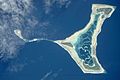
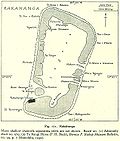
The Cook Islands are made up of 15 islands, each with its own name in the local languages, such as Cook Islands Māori and Pukapukan. The first European name given to one of these islands, Rakahanga, was Gente Hermosa, meaning "beautiful people," by Spanish explorers in 1606.
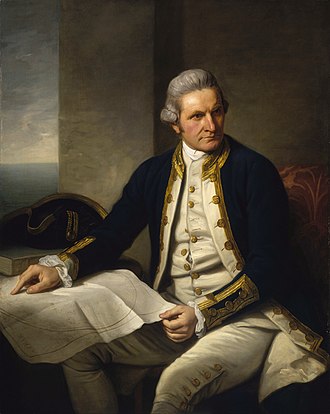
The group of islands is named after Captain James Cook, an English explorer who visited them in the 1770s. He named one island "Hervey Island" after a British nobleman. Later, a Russian admiral called the southern islands the "Cook Islands" in his atlas. It was only after New Zealand took control of the islands in the early 1900s that the name "Cook Islands" was used for all of them.
History
Main articles: History of the Cook Islands and British Western Pacific Territories
The Cook Islands were first settled around the year 1000 by Polynesian people who traveled from Tahiti, located northeast of the main island Rarotonga.
The first Europeans to see the islands were Spanish explorers in 1595 and 1606. Later, British explorer James Cook visited in 1773 and 1777, giving the islands their current name in his honor.
In 1888, the Cook Islands became a British protectorate. In 1901, they became part of the Colony of New Zealand. During World War I, many Cook Islanders volunteered to serve. In 2017, the Cook Islands created Marae Moana, one of the world's largest protected areas by size.
Geography
Main article: Geography of the Cook Islands
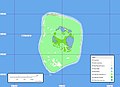
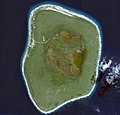
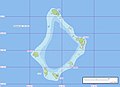
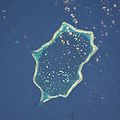
The Cook Islands are a group of islands in the South Pacific Ocean. They sit northeast of New Zealand between American Samoa and French Polynesia. There are 15 main islands spread across a huge area of ocean. These islands are divided into two groups: the Southern Cook Islands and the Northern Cook Islands, which are made of coral atolls.
The islands were created by old volcanic activity. The northern islands are older and are made of sunken volcanoes covered in coral. The climate there is warm and pleasant. The Cook Islands can sometimes feel strong storms called tropical cyclones between March and December. Two famous ones were cyclones Martin and Percy. The islands are home to special forests called the Central Polynesian tropical moist forests and the Cook Islands tropical moist forests.
The Cook Islands have many birds and sea creatures, but some animals have changed the balance of nature. There are many rats that came from ships, and they have made it hard for bird populations to grow.
The national flower is called the tiare māori. The waters around the islands are home to a special kind of fish called the peppermint angelfish. These fish are very rare and valuable.
| Island group | Island | Area (km2) | Population | Density per km2 |
|---|---|---|---|---|
| Northern | Penrhyn atoll | 10 | 233 | 24 |
| Northern | Rakahanga | 4 | 81 | 20 |
| Northern | Manihiki | 5 | 215 | 40 |
| Northern | Pukapuka | 1 | 456 | 351 |
| Northern | Tema Reef (submerged) | 0 | 0 | – |
| Northern | Nassau | 1 | 92 | 71 |
| Northern | Suwarrow | 0.4 | 0 | 0 |
| Southern | Palmerston | 2 | 25 | 12 |
| Southern | Aitutaki | 18 | 1,782 | 97 |
| Southern | Manuae | 6 | 0 | 0 |
| Southern | Takutea | 1 | 0 | 0 |
| Southern | Mitiaro | 22 | 155 | 7 |
| Southern | Atiu | 27 | 383 | 14 |
| Southern | Mauke | 18 | 249 | 14 |
| Southern | Winslow Reef (submerged) | 0 | 0 | – |
| Southern | Rarotonga | 67 | 10,898 | 162 |
| Southern | Mangaia | 52 | 471 | 9 |
| Total | Total | 237 | 15,040 | 64 |
Politics and foreign relations
Main articles: Politics of the Cook Islands and Foreign relations of the Cook Islands
Further information: Political status of the Cook Islands and Niue
The Cook Islands is a country that governs itself but has a special relationship with New Zealand. It has its own government and laws, with a Prime Minister leading the government. The King of New Zealand is the official head of state but is represented by a special representative in the Cook Islands.
The Cook Islands handles its own foreign affairs and has relationships with many countries around the world. Though not a member of the United Nations, it works closely with UN organizations and other international groups. In recent years, it has signed important treaties and established diplomatic ties with countries like the United States. The Cook Islands also works with New Zealand on defense and security matters, sharing responsibility for protecting its waters.
Defence and police
The Cook Islands Police Service is responsible for keeping order and safety. For protecting its waters, it works together with New Zealand, which can send navy ships and airplanes when needed. The Cook Islands has its own patrol boats to watch over its large ocean area.
Human rights
Further information: Human rights in the Cook Islands and LGBTQ rights in the Cook Islands
In the past, certain laws in the Cook Islands treated people unfairly, but these have been changed. In 2023, new laws were passed to make sure everyone is treated equally, no matter who they are.
Local government
The Cook Islands has local governments on each of its islands, each led by a mayor. There are also smaller village groups that help make decisions for their communities. Some islands have special committees to help guide local matters.








Economy
Main article: Economy of the Cook Islands
See also: Transport in the Cook Islands
The Cook Islands' economy is shaped by its remote location and limited resources. Tourism is the biggest part of the economy, making up about 67.5% of the country's wealth. Help from other countries, especially New Zealand, also supports the economy. China has helped too, building important buildings like the Police Headquarters.
Only Rarotonga International Airport gets international flights. Eight other airports serve local flights. Just Rarotonga and Aitutaki have paved runways; the others use coral. The main port is at Avatiu on Rarotonga, where big ships can stop. At Arutanga on Aitutaki, ships stay outside the reef, and goods are moved to the dock by smaller boats.
Demographics
Main article: Demographics of the Cook Islands
Religion
Main article: Religion in the Cook Islands
In the Cook Islands, the government and religious groups work independently, and most people follow Christian beliefs.
Many different Christian groups are present. The largest group is the Cook Islands Christian Church, followed by smaller groups such as Seventh-day Adventists, Assemblies of God, and the Apostolic Church. Catholics also make up a part of the population. Some people do not follow any specific religion or have not specified their beliefs.
Culture
Main article: Culture of the Cook Islands
The Cook Islands have a rich culture with many languages and art forms. People there speak English and Cook Islands Māori, also known as Rarotongan, as well as Pukapukan. Cook Islands Māori is closely related to the languages of Tahiti and New Zealand Māori.
Art in the Cook Islands includes woodcarving, weaving, and making beautiful patchwork quilts called tivaevae. These quilts were introduced by missionaries and have become very popular. Today, many artists from the Cook Islands are known around the world for their paintings, sculptures, and other creative works.
Music in the Cook Islands includes both traditional songs and dances and Christian music. Rugby league is the most popular sport, and the Cook Islands have taken part in the Summer Olympic Games since 1988.
Newspapers in the Cook Islands are usually published in English, with some articles in Cook Islands Māori. The Cook Islands News has been published since 1945.
Main article: Music of the Cook Islands
Main article: Sport in the Cook Islands
Images
Related articles



This article is a child-friendly adaptation of the Wikipedia article on Cook Islands, available under CC BY-SA 4.0.
Images from Wikimedia Commons. Tap any image to view credits and license.