 Safekipedia
County Tyrone
Adapted from Wikipedia · Discoverer experience
County Tyrone is one of the six counties of Northern Ireland and one of the nine counties of Ulster. It is also one of the thirty-two traditional counties of Ireland. The county town is Omagh.
County Tyrone is the largest of Northern Ireland's six counties by size, covering an area of 1,261 square miles (3,266 km2). It is also the second largest county in Ulster after Donegal.
As of the 2021 census, Tyrone has a population of 188,383 people, making it the 5th most populous county in Northern Ireland and Ulster, and the 11th most populous county on the island of Ireland. The county's name comes from Tír Eoghain, a Gaelic kingdom led by the O'Neill dynasty until the 17th century.
Name
The name Tyrone comes from the Irish Tír Eoghain, which means "land of Eoghan". This name refers to the areas taken over by the Cenél nEógain from the regions of Airgíalla and Ulaid. In the past, it was also called Tirowen or Tyrowen, which sounds more like the Irish way of saying it.
History
Main article: List of Kings of Tír Eógain
County Tyrone, once called Tír Eoghain, used to be a much bigger place. It reached all the way north to Lough Foyle and included parts of what is now County Londonderry. Most of County Londonderry was taken from Tyrone between 1610 and 1620.
Tyrone was an important home for the O'Neill clans, who were powerful families in Ulster. In 1608, during a time of trouble called O'Doherty's Rebellion, some areas were damaged by Sir Cahir O'Doherty. But his men did not touch the lands of the Earl of Tyrone near Dungannon, because they were worried he might come back and be angry.
Geography
County Tyrone is the largest county in Northern Ireland, covering an area of 1,261 square miles (3,266 km2). The eastern part of Tyrone has flat peatlands that touch the edge of Lough Neagh, the biggest lake in the British Isles. As you move west, the land becomes more hilly and mountainous around the Sperrin Mountains, with the highest peak being Sawel Mountain at 678 metres (2,224 ft) tall.
Tyrone touches several other counties by land: Fermanagh to the southwest, Monaghan to the south, Armagh to the southeast, Londonderry to the north, and Donegal to the west. Across Lough Neagh, it also borders County Antrim to the east.
Administration
The county was managed by the Tyrone County Council from 1899 until county councils in Northern Ireland were stopped in 1973.
Demography
County Tyrone is one of four counties in Northern Ireland where most people come from a Catholic community background, based on the 2021 census. In 1900, the county had a population of 197,719, but by 2021, this number had fallen to 188,383. According to the 2021 census, 66.49% of people were from a Catholic background, 28.88% were from a Protestant or other Christian background, 0.66% followed other religions, and 3.97% had no religious background.
Irish language and Ulster Scots
In the 2021 UK census in County Tyrone:
- 18.44% said they knew some Irish language, with 5.84% able to speak, read, write, and understand it. 3.62% said they used Irish every day, and 0.38% said Irish was their main language.
- 8.15% said they knew some Ulster Scots, with 0.91% able to speak, read, write, and understand it. 1.26% said they used Ulster Scots every day.
| Religion or religion brought up in | Number | % |
|---|---|---|
| Catholic | 125,251 | 66.49% |
| Protestant and Other Christian | 54,407 | 28.88% |
| Other religions | 1,251 | 0.66% |
| None (no religion) | 7,474 | 3.97% |
| Total | 188,383 | 100.00% |
| National identity | Number | (%) |
|---|---|---|
| Irish only | 78,291 | 41.6% |
| British only | 39,551 | 21.0% |
| Northern Irish only | 38,698 | 20.5% |
| British and Northern Irish only | 8,197 | 4.4% |
| Irish and Northern Irish only | 3,853 | 2.1% |
| British, Irish and Northern Irish only | 1,175 | 0.6% |
| British and Irish only | 737 | 0.4% |
| Other identity | 17,881 | 9.5% |
| Total | 188,383 | 100.0% |
| All Irish identities | 84,562 | 44.9% |
| All British identities | 50,768 | 27.0% |
| All Northern Irish identities | 52,667 | 28.0% |
Settlements
Main article: List of places in County Tyrone
County Tyrone has many places to live in, from big towns to tiny villages.
The largest town is Omagh. Other medium-sized towns include Cookstown, Dungannon, and Strabane. There are also smaller towns like Coalisland, and even smaller places such as Castlederg.
Many villages can be found across the county, such as Ardboe, Aughnacloy, and Carrickmore. Some of the smallest villages include places like Altamuskin and Altmore.
Subdivisions
Further information: Clonaneese
Baronies
Main article: Barony (Ireland)
- Clogher
- Dungannon Lower
- Dungannon Middle
- Dungannon Upper
- Omagh East
- Omagh West
- Strabane Lower
- Strabane Upper
Parishes
Main article: List of civil parishes of County Tyrone
Townlands
Main article: List of townlands in County Tyrone
Future railway revival
There might be plans to open the railway line again, connecting to the Dungannon railway station from Portadown.
Sport
County Tyrone is known for its love of many sports, including Gaelic games, association football, rugby union, and cricket.
Gaelic football is very popular in Tyrone, much more so than hurling. The Tyrone GAA team has won many big prizes since 2000, including four big national prizes called All Ireland titles and sixteen prizes from the Ulster titles.
People in Tyrone also enjoy association football. Teams like Dungannon Swifts F.C. play in top leagues, and there are other teams such as Dergview F.C..
Rugby union is another favorite sport. Teams such as Dungannon RFC, Omagh Academicals RFC, and Clogher Valley RFC compete in big matches across all of Ireland.
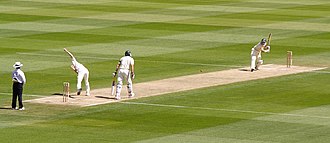
Cricket is also played, especially at the Bready Cricket Club Ground, which hosted its first big international match in June 2015 when Ireland played against Scotland.
Notable people
See also: Category:People from County Tyrone
County Tyrone has been home to many famous people from different fields. Some well-known names include Philomena Begley, an Irish country music singer, and Paul Brady, a musician. Tom Clarke was an important leader in the 1916 Easter Rising. Darren Clarke is a professional golfer, and Dennis Taylor was a former world snooker champion. Other notable figures include John Hughes, the first Archbishop of the Roman Catholic Diocese of New York, and William Carleton, a famous writer.
Images
Related articles


This article is a child-friendly adaptation of the Wikipedia article on County Tyrone, available under CC BY-SA 4.0.
Images from Wikimedia Commons. Tap any image to view credits and license.