 Safekipedia
Crisis of the Third Century
Adapted from Wikipedia · Discoverer experience
The Crisis of the Third Century was a very difficult time for the Roman Empire. It happened between the years 235 and 284, and during this period the empire nearly fell apart. Many problems came together to cause this crisis, including attacks from outside groups, fights for power among Roman leaders, and big problems with money and trade.
It all began in the year 235 when the emperor, Severus Alexander, was killed by his own soldiers. After that, many generals tried to become the new emperor. In fact, there were at least 26 different people who claimed to be the ruler of Rome. This led to many civil wars and made it hard for the empire to stay strong and organized.
The crisis also saw groups from outside the empire moving into Roman lands, and sometimes even setting up their own little empires. By the year 268, the big Roman Empire had split into three smaller parts: one in the west around Gaul and Britannia, another in the east around Syria Palaestina and Aegyptus, and the main part centered in Italy.
Luckily, things began to improve under the leadership of Aurelian, who worked hard to bring the three parts back together. Later, Diocletian made important changes to how the empire was run, which helped bring back some peace and order. This crisis was so big that it marked the end of the early days of Rome and the start of a new period called late antiquity.
History
Further information: Alemanni § Conflicts with the Roman Empire
Septimius Severus raised the pay of soldiers and gave gifts to keep their loyalty. But over time, the army needed more and more money to stay loyal. This caused big money problems for the empire.
Instead of fighting far away, Rome had to defend itself from enemies and civil wars. This hurt the economy and made the army weaker. Fighting on many fronts, paying more soldiers, and other problems made money very tight. Emperors took things from people to try to fix this.
Things got very bad in 235. Many Roman soldiers lost battles against Germanic peoples. Emperor Severus Alexander tried to make peace instead of fighting, but his soldiers killed him and made Maximinus Thrax the new emperor. Maximinus was just a soldier, not a noble, and many did not like him. This led to many fights for power.
In the next years, many generals fought for control. Enemies like the Goths, Vandals, and Alamanni attacked Roman lands. A big sickness also hurt the empire. By 260, the empire split into three parts. But by 274, emperor Aurelian brought it back together. It finally stabilized under Diocletian.
The crisis caused big changes in Rome, marking the shift from classical times to later Roman history. The empire lasted until 476 in the West and 1453 in the East.
Causes
Problem of succession and civil war
From the start of the Roman Empire, there were no clear rules about who would become the next emperor. Leaders were chosen by a mix of the Senate, the people, and the army, especially the elite soldiers called the Praetorian Guard. Having a family link to a past emperor helped, but it wasn’t the only way. Over time, as the Senate lost power and more generals came from faraway places, fights over who should be emperor became common. When it wasn’t clear who would lead, generals with big armies often tried to take power by force, leading to many civil wars. This happened often in the years before and during the Crisis of the Third Century.
Natural disasters
The Roman Empire faced serious problems from diseases and weather during this time. A sickness called the Antonine Plague hurt the army and the economy before the Crisis began. Later, from 249 to 262, another plague called the Plague of Cyprian made things much worse. Some cities lost over half their people. These diseases made it hard for Rome to defend itself and also caused food shortages, as many farms were left empty.
The weather also became more extreme during the third century. Drier summers and sudden storms made farming difficult. These changes may have also pushed nearby tribes to move into Roman lands, looking for better places to live.
Foreign invasions
Barbarian invasions of the 3rd century
Main article: Barbarian invasions of the 3rd century
As the empire struggled with inner problems, tribes from outside kept pushing into Roman lands. Some groups grew stronger, like the Alamanni and Franks, while others were pushed forward by new threats such as the Sarmatians. Although Rome managed to defend its borders for a while, more and more tribes kept entering the empire. At first, Rome watched them closely, but later whole groups entered with their weapons, only loosely obeying Roman rulers.
Rome also faced a big threat from the east. The Sassanid Persia was a much bigger danger than attacks from Germanic tribes. After taking over the Parthians in 224 and 226, the Persian ruler Ardashir I attacked Roman lands, taking important cities like Nisibis and Carrhae around 235/236.
Economic impact
The Roman Empire faced big money problems during this time. The value of coins dropped a lot because leaders kept making more and more coins that weren’t worth much. This made everything cost a lot more, and by the time Diocletian became leader, the old money system almost fell apart. Some taxes were paid in goods instead of money, and trade became very hard.
The usual trade routes across the empire broke down because it wasn’t safe to travel and the money system wasn’t working well. Big farms stopped sending goods far away and started growing food just for themselves. People in cities moved out to the countryside to find food and safety. Many lost their rights and had to work on farms for protection. This began changes that would later shape the Middle Ages. Some areas, like Egypt and Africa, still did well, but overall, trade and the economy weakened, especially in the western part of the empire.
Emperors
See also: List of Roman emperors § Crisis of the Third Century (235–285), and List of Roman usurpers
Usurpation, meaning taking the title of emperor without permission, happened often in Roman history. Because real power depended on controlling the army, many Roman generals tried to take over by force, just like Julius Caesar did long before. This habit grew stronger over time, especially during a difficult period called the military anarchy.
During this crisis, more than 50 people claimed to be emperor, but only about half were recognized as true emperors by the Roman Senate. Some tried to bring stability by naming their family members as heirs or co-emperors, but these attempts usually did not last long. Except for Claudius Gothicus, all of the recognized emperors met violent ends, often killed by their own soldiers.
The chronology follows Kienast 2017 and Peachin 1990 (see also Burgess 2014), with biographical information from Vagi 2000 and Adkins 2019.
Roman Empire (235–285)
(#) – Usurpers / claimants
(§) – Junior co-emperors
(§) – Heir-apparents
| Bust | Coin | Name | Approximate reign | |
|---|---|---|---|---|
| Maximinian dynasty (235–238) | ||||
| Maximinus I "Thrax" Gaius Julius Verus Maximinus | March 235 – June 238 (3 years and 3 months) | |||
| Magnus Gaius Petronius Magnus | late 235 (in Germania) | |||
| Titus Quartinus | late 235 / early 236 (in Mesopotamia) | |||
(possible) | Maximus Gaius Julius Verus Maximus | January/May 236 – June 238 (caesar under Maximinus I) | ||
| Gordian dynasty (238) | ||||
(possible) | Gordian I Marcus Antonius Gordianus Sempronianus Romanus "Africanus" | c. April – May 238 (22 days, in Africa) | ||
| Gordian II Marcus Antonius Gordianus Sempronianus Romanus "Africanus" | ||||
| Non-dynastic (238) | ||||
| Pupienus Marcus Clodius Pupienus Maximus | c. May – August 238 (99 days) | |||
| Balbinus Decimus Caelius Calvinus Balbinus | ||||
| Gordian dynasty (238–244) | ||||
| Gordian III Marcus Antonius Gordianus "Pius" | c. August 238 – February 244 (5 years and 6 months) | |||
| Sabinian Marcus Asinius Sabinianus | 240 (in Africa) | |||
| Philippian dynasty (244–249) | ||||
| Philip I "the Arab" Marcus Julius Philippus | February 244 – September 249 (5 years and 7 months) | |||
(possible) |  | Philip II "the Younger" Marcus Julius Severus Philippus | c. July 247 – September 249 (co-augustus under Philip I) | |
 | Pacatian Tiberius Claudius Marinus Pacatianus | c. 248 / 249 (Danube) | ||
| Jotapian Marcus Fulvius Ru(fus) Jotapianus | c. 249 (Levant) | |||
 | Silbannacus Mar(cius?) Silbannacus | c. 249 (?) (Gaul?) | ||
 | Sponsianus | c. 249 (??) (Balkans?) | ||
| Decian dynasty (249–251) | ||||
 | Decius Gaius Messius Quintus Traianus Decius | c. September 249 – June 251 (1 year and 9 months) | ||
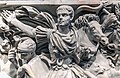 (possible) |  | Herennius Etruscus Quintus Herennius Etruscus Messius Decius | May/June – June 251 (less than a month, under Decius) | |
| Licinian Julius Valens Licinianus | c. 251 | |||
| Priscus Titus Julius Priscus | c. 251 | |||
| Vibian dynasty (251–253) | ||||
 | Trebonianus Gallus Gaius Vibius Trebonianus Gallus | June 251 – August 253 (3 years and 2 months) | ||
 | Hostilian Gaius Valens Hostilianus Messius Quintus | c. June – c. July 251 (1 month, under Gallus) | ||
(possible) | Volusianus Gaius Vibius Afinius Gallus Veldumnianus Volusianus | August 251 – August 253 (2 years, under Gallus) | ||
| Non-dynastic (253) | ||||
| Aemilianus Marcus Aemilius Aemilianus | c. July – c. September 253 (two months) | |||
| Licinian dynasty (253–268) | ||||
| Valerian Publius Licinius Valerianus | c. September 253 – c. June 260 (6 years and c. 9 months, East) | |||
| Gallienus Publius Licinius Egnatius Gallienus | c. September 253 – c. September 268 (15 years) | |||
| Valerian II Publius Licinius Cornelius Valerianus | 256–258 (caesar under Valerian and Gallienus) | |||
(possible) | Saloninus Publius Licinius Cornelius Saloninus Valerianus | Autumn 260 (co-augustus under Gallienus) | ||
| Uranius Antoninus Lucius Julius Aurelius Sulpicius Severus Uranius Antoninus | c. 253 / 254 (Syria) | |||
| Ingenuus | c. 260 (Pannonia) | |||
| Regalianus P(ublius) C(assius) Regalianus | c. 260 (Pannonia) | |||
| Macrianus Minor Titus Fulvius Junius Macrianus | c. 260 – 261 (in the East) | |||
| Quietus Titus Fulvius Junius Quietus | ||||
| Valens "Thessalonicus" | c. 261 (Achaia/Macedonia) | |||
| Aemilianus (II) Lucius Mussius Aemilianus "Aegippius" | c. 261 – 262 (Egypt) | |||
| Memor | c. 262 (?) | |||
| Aureolus (Manius Acilius) Aeolus | 268 (Northern Italy) | |||
| Gallic Empire (260–274) The Gallic Empire was breakaway part of the Roman Empire that, unlike most usurper-ruled territories, functioned de facto as a separate state from 260 to 274. It had its own capital (Trier), a clear succession of emperors, its own pair of yearly-elected consuls, and even its own usurpers. At its height, the Empire controlled all Western European provinces: Hispania, Gaul and Britannia. The term "Gallic Empire" and "Gallic Emperor" are modern conventions; its rulers continued to use the standard imperial titulature without changes. | ||||
| Postumus Marcus Cassianius Latinius Postumus | c. 260 – April/August 269 (about 9 years) | |||
| Laelian Ulpius Cornelius Laelianus | mid-269 (Germania, 2 months or less) | |||
| Marius Marcus Aurelius Marius | c. 269 (a few months, more than Laelian) | |||
| Victorinus Marcus Piavonius Victorinus | c. 269 – 271 (about 3 years) | |||
| Domitian (II) Domitianus | c. 271 (very shortly) | |||
| Tetricus I Gaius Esuvius Tetricus | c. 271 – 274 (about 3 years) | |||
| Tetricus II Gaius Esuvius Tetricus | c. 273 – 274 (caesar under Tetricus I) | |||
| Faustinus (?) | 274 | |||
| Claudian dynasty (268–270) | ||||
(possible) | Claudius II "Gothicus" Marcus Aurelius Claudius | c. September 268 – August (?) 270 (1 year or less) | ||
| Quintillus Marcus Aurelius Claudius Quintillus | 270 (17–77 days) | |||
| Palmyrene Empire (271–273) The Palmyrene Empire was a short-lived breakaway state centered around the city of Palmyra. It encompassed the Roman provinces of Syria Palaestina, Arabia Petraea, and Egypt, as well as large parts of Asia Minor. Chaos consumed the East following the capture of Valerian and the revolts of Macrianus, but the territories were eventually pacified by Odaenathus, who was named Dux Romanorum ("leader of the Romans") and Corrector totius orientis (essentially "governor of all the East") by Gallienus, effectively turning the territory into a semi-independent entity. Odaenathus was proclaimed "King of Kings" (rex regum), but remained loyal to the Emperor. He was murdered by his son Hairan in 267, who was in turn killed by his cousin Maeonius. The throne went to Odaenathus' young son Vaballathus, who reigned under the regency of her mother Zenobia. | ||||
| Vaballathus Lucius Julius Aurelius Septimius Vaballathus Athenodorus | c. March – June 272 (about 3 months) | |||
| Zenobia | ||||
| Antiochus | 273 (very briefly) | |||
| Non dynastic (270–282) | ||||
(possible) | Aurelian "Restitutor" Lucius Domitius Aurelianus | August (?) 270 – November (?) 275 (5 years and a few months) | ||
| Septimius | c. 271 | |||
| Urbanus (?) | unknown | |||
| Tacitus Marcus Claudius Tacitus | c. December 275 – c. June 276 (c. 6 months) | |||
| Florianus Marcus Annius Florianus | c. June – September 276 (80–88 days) | |||
| Probus Marcus Aurelius Probus | c. June 276 – c. September 282 (c. 6 years and 3 months) | |||
 | Bonosus | 280 (Germany) | ||
 | Procolus | |||
 | Saturninus Gaius Julius Sallustius Saturninus Fortunatianus | c. 281 (Egypt) | ||
| Caran dynastic (282–285) | ||||
(possible) | Carus Marcus Aurelius Carus | c. September 282 – c. July 283 (c. 10 months) | ||
 | Carinus Marcus Aurelius Carinus | Spring 283 – July 285 (2 years, West) | ||
(possible) | Numerian Marcus Aurelius Numerianus | c. July 283 – November 284 (1 year and 3/4 months, East) | ||
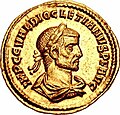 | Diocletian Gaius Valerius Diocletianus | 20 November 284 – July 285 (as a usurper in the East) | ||
 | Julian Marcus Aurelius Sabinus Julianus | c. November 284 – c. February 285 (Pannonia, 3 months or less) | ||
Timeline
!Timeline
- Red shows emperors.
- Blue shows Caesars, who were official heirs.
Related articles


This article is a child-friendly adaptation of the Wikipedia article on Crisis of the Third Century, available under CC BY-SA 4.0.
Images from Wikimedia Commons. Tap any image to view credits and license.