 Safekipedia
G
Adapted from Wikipedia · Discoverer experience
G (minuscule: g) is the seventh letter of the Latin alphabet. It is used in the modern English alphabet, as well as in many other western European languages and languages around the world. In English, we call this letter "gee," and we say it like /ˈdʒiː/.
The small, lowercase version of G can look different depending on how it is written. One way is called the "single-storey" or "opentail" g, which is often used in handwriting and in books for children. This shape is also common in many simple, clean-looking fonts, such as Helvetica. The other way is called the "double-storey" or "looptail" g, and it is used in more formal fonts like Times. Both ways are correct and both are used in writing.
History
The letter G comes from the Greek letter gamma. The Greeks used gamma for a specific sound, and the Etruscans and later the Latins adopted it. Over time, the Latin letter C started to represent a different sound, so a new letter was needed to show the original sound.
The letter G was added to the Latin alphabet around 230 BCE by Spurius Carvilius Ruga, an early Roman teacher. He added G to help show the difference between two similar sounds.
The lowercase g can be written in two ways: with one loop or two loops. These forms have been used in different kinds of writing over many years, and today they are used depending on the style of font being used.
Use in writing systems
See also: Hard and soft G
English
In English, the letter g can appear alone or together with other letters. When it stands alone, it can make different sounds. It often makes a hard g sound like in the words goose or game. It can also make a soft g sound, like in giant or ginger, especially when it comes before the letters i, e, or y.
Sometimes g makes a special sound in words we borrowed from French, like in rouge or beige.
Other languages
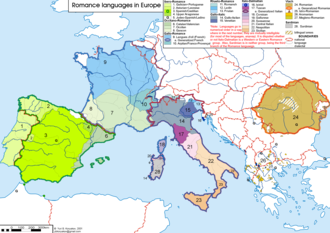
Many languages, like French and Spanish, also use g in two ways—hard and soft. The soft sound of g changes a bit depending on the language. For example, in French, it can sound like the j in judge.
Some languages, like Dutch, don’t use the hard g sound at all. Instead, their g makes a softer, friction-like sound.
Other systems
In a special alphabet used by linguists to describe sounds, g stands for a specific sound made at the back of the mouth. There is also a special version of g that represents a similar sound made even further back in the mouth.
| Orthography | Phonemes | Environment |
|---|---|---|
| Afrikaans | /χ/ | |
| Arabic romanization | /ɡ/ | A dialectal sound not found in Standard Arabic. However, the digraph gh is used to romanize the Standard Arabic sound /ɣ/. |
| Azeri | /ɟ/ | |
| Catalan | /ɡ/ | Except before e, i |
| /(d)ʒ/ | Before e, i | |
| Standard Chinese (Pinyin) | /k/ | |
| Danish | /k/ | Except word-initially |
| /ɡ/ | Word-initially | |
| Dutch | /ɣ/ or /χ/ | |
| English | /ɡ/ | Any |
| /dʒ/ | Before e, i, y | |
| /ʒ/ | Before e, i in more recent loanwords from French | |
| silent | Some words, initial , and word-finally before a consonant | |
| Esperanto | /ɡ/ | |
| Faroese | /j/ | soft, lenited; see Faroese phonology |
| /k/ | hard | |
| /tʃ/ | soft | |
| /v/ | after a, æ, á, e, o, ø and before u | |
| /w/ | after ó, u, ú and before a, i, or u | |
| silent | after a, æ, á, e, o, ø and before a | |
| Fijian | /ŋ/ | |
| French | /ɡ/ | Except before e, i, y |
| /ʒ/ | Before e, i, y | |
| Galician | /ɡ/ ~ /ħ/ | Except before e, i, see Gheada for consonant variation |
| /ʃ/ | Before e, i, obsolete, replaced by ⟨x⟩ | |
| Greek romanization | /ɡ/ | Ancient Greek |
| /ɣ/ | Modern Greek except before ai, e, i, oi, y | |
| /ʝ/ | Modern Greek before ai, e, i, oi, y | |
| Icelandic | /c/ | soft |
| /k/ | hard | |
| /ɣ/ | hard, lenited; see Icelandic phonology | |
| /j/ | soft, lenited | |
| Irish | /ɡ/ | Except after i or before e, i |
| /ɟ/ | After i or before e, i | |
| Italian | /ɡ/ | Except before e, i |
| /dʒ/ | Before e, i | |
| Malay | /g/ | |
| Norman | /ɡ/ | Except before e, i |
| /dʒ/ | Before e, i | |
| Norwegian | /ɡ/ | Except before ei, i, j, øy, y |
| /j/ | Before ei, i, j, øy, y | |
| Portuguese | /ɡ/ | Except before e, i, y |
| /ʒ/ | Before e, i, y | |
| Romanian | /ɡ/ | Except before e, i |
| /dʒ/ | Before e, i | |
| Romansh | /ɡ/ | Except before e, i |
| /dʑ/ | Before e, i | |
| Samoan | /ŋ/ | |
| Scottish Gaelic | /k/ | Except after i or before e, i |
| /kʲ/ | After i or before e, i | |
| Spanish | /ɡ/ | Except before e, i, y |
| /x/ | Before e, i, y | |
| Swedish | /ɡ/ | Except before ä, e, i, ö, y |
| /j/ | Before ä, e, i, ö, y | |
| Turkish | /ɡ/ | Except before e, i, ö, ü |
| /ɟ/ | Before e, i, ö, ü | |
| Vietnamese | /ɣ/ | |
| /z/ ~ /j/ | Before i |
Other uses
G is also used as a unit prefix, meaning 1,000,000,000 times.
Related characters
Ancestors, descendants and siblings
The letter G has many related symbols and letters from different writing systems. It comes from the ancient Semitic letter Gimel. The Latin letter C is the parent of G, and C itself comes from the Greek letter Gamma. There are many variations and related symbols, such as the script small G, modifier letter small script g, and several special letters used in phonetic studies like the reversed script g and turned g. The Cyrillic alphabet also has a similar letter called Ge. Other related letters include Yogh, Gamma, and Insular g, used in historic texts like the Ormulum. There are also special capital forms and hooked letters used in phonetic transcription to represent certain sounds.
Ligatures and abbreviations
Some symbols related to G are used as currency or unit signs. For example, ₲ stands for the Paraguayan guaraní, and ㎏ is the kilogram symbol used in the CJK Compatibility block.
Other representations
Computing
The letter G has special codes in Unicode that help computers understand it. These codes are the same as the older ASCII codes. Some of these codes include:
- U+0047 for the big G
- U+0067 for the small g
- U+0261 for a special small g shape
- U+A7AC for a special big G shape
- U+FF27 for a wide big G
- U+FF47 for a wide small g
There are also many other forms of G with special marks added to them, which can be shown in two different ways in Unicode.
Other
Related articles




This article is a child-friendly adaptation of the Wikipedia article on G, available under CC BY-SA 4.0.
Images from Wikimedia Commons. Tap any image to view credits and license.