 Safekipedia
Glacier National Park (U.S.)
Adapted from Wikipedia · Discoverer experience
Glacier National Park is a beautiful national park in the United States, located in northwestern Montana near the border with Canada. The park covers more than 1 million acres and includes parts of two mountain ranges from the Rocky Mountains, over 130 named lakes, and thousands of different plants and animals. It is part of a large protected area called the "Crown of the Continent Ecosystem."
The land was home to Native Americans long ago, mostly the Blackfeet and the Flathead. When the park was officially created on May 11, 1910, many hotels and special buildings were built, some of which are now important historic landmarks. A famous road called the Going-to-the-Sun Road was finished in 1932, making it easier for people to explore the park.
The park's mountains began forming around 170 million years ago, and the shapes of the mountains and lakes show evidence of past glaciers. Scientists say that most of the glaciers in the park may disappear by the year 2030 if the weather keeps changing. Glacier National Park is home to many large animals like grizzly bear, elk, and mountain goats, as well as many birds, fish, and insects.
The park shares a border with Waterton Lakes National Park in Canada, and together they form the world's first International Peace Park. Both parks are important for nature and were named World Heritage Sites by the United Nations in 1995.
History
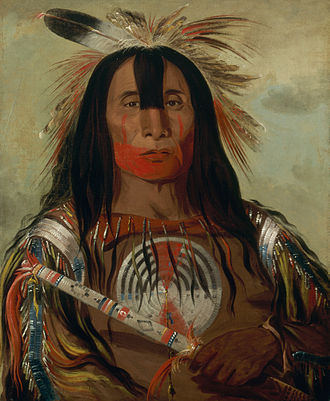
The Glacier area has been home to several Native American tribes for a very long time. The Flathead (Salish) and Kootenai, Shoshone, and Cheyenne were among the earliest known groups. The Blackfeet people lived on the eastern slopes and used the area for shelter and hunting. In 1855, the Blackfeet sold part of the land to the U.S. government, but they still had rights to hunt there.
Explorer George Bird Grinnell visited the area in the late 1800s and was so inspired that he worked for many years to protect it. His efforts helped lead to the creation of Glacier National Park in 1910. The park was established thanks to the support of many people, including members of the Boone and Crockett Club and Louis W. Hill, president of the Great Northern Railway.
The Great Northern Railway built several hotels and lodges in the park to attract visitors. These buildings were designed to look like Swiss architecture and included famous spots like Glacier Park Lodge and the Many Glacier Hotel. The railway also created trails for visitors to explore the park on foot or horseback.
Over time, more people began to visit the park by car. In 1932, the famous Going-to-the-Sun Road was completed, allowing visitors to drive through the park and cross the Continental Divide at Logan Pass. This road is also recognized as a historic landmark.
Park management
Glacier National Park is cared for by the National Park Service, with its main office in West Glacier, Montana. In 2019, about 3.5 million people visited the park, more than ever before. The park has welcomed at least 2 million visitors each year since 2012.
To get ready for the park’s 100th birthday in 2010, workers rebuilt the Going-to-the-Sun Road. The Federal Highway Administration worked with the National Park Service on this project. They also planned to improve visitor centers, hotels, wastewater systems, and campgrounds by the anniversary. The National Park Service studies fish in Lake McDonald to help protect them. They also worked on trails, education programs, and community events.
The National Park Service’s job is to protect the park’s nature and history. The Organic Act from August 25, 1916 created the National Park Service. This act says the park should be kept beautiful and natural for everyone to enjoy now and in the future. Because of this, hunting, mining, logging, and taking things from the park are not allowed. Oil and gas exploration are also forbidden. These rules sometimes cause disagreements with the nearby Blackfeet Indian Reservation, whose people had certain rights to the land when it was sold to the government.
In 1974, a report to Congress showed that 95% of the park could be a wilderness area. Even though Glacier National Park is not officially a wilderness yet, the National Park Service treats 93% of it as one, following the report’s suggestions.
Headwaters Podcast
In 2020, the park began making a podcast called Headwaters. This podcast teaches listeners about the science and history of the area. The first season of the podcast looks at different parts of the park. The second season talks about the work done to protect whitebark pine trees. The third season explores the history of the park.
Geography and geology
The park is next to Waterton Lakes National Park in Alberta and the Flathead Provincial Forest and Akamina-Kishinena Provincial Park in British Columbia. The Flathead River forms part of the park’s border, and the Blackfeet Indian Reservation is on the eastern side. The Lewis and Clark and Flathead National Forests are nearby, and the Bob Marshall Wilderness Complex is south of the park.
Glacier National Park has over 700 lakes, but only 131 have names. Lake McDonald, on the west side, is the longest and deepest lake in the park. Some smaller lakes change color because of tiny particles in the water. The park’s lakes stay very cold, which helps keep the water very clear.
The park’s rocks are very old, some over a billion years old. These rocks tell us about Earth’s early history. Many of these rocks were pushed upward to form the Rocky Mountains. There are also mountains over 10,000 feet tall, like Mount Cleveland. One special peak, Triple Divide Peak, sends water to three different places: the Pacific Ocean, Hudson Bay, and Gulf of Mexico.
Glaciers
Main article: Glaciers in Glacier National Park (U.S.)
Huge glaciers shaped the park’s mountains during the last ice age. Most of these glaciers have melted away over the past 12,000 years. We can still see evidence of glaciers in the park, like special valley shapes and lakes.
Scientists have been watching the remaining glaciers. By 2010, only 25 glaciers were still big enough to be active. Because the Earth is warming up, these glaciers are melting faster. Scientists think they may all be gone by 2030 if the weather keeps getting warmer. This melting affects plants and animals that need cold water and can also change the amount of water in streams during dry months.
Climate
The park has many different climates because of its high mountains and position along the Continental Divide. The western side is milder and wetter, while the eastern side is colder, especially in winter. Snow can fall any time of the year, and summers are generally mild with cool nights.
The park is a great place for studying climate change. Scientists are watching how warming affects glaciers, forests, plants, and water. The park’s air and water are very clean, but tiny bits of pollution can still get into the lakes. The park’s water quality is among the best in the world.
1938 1981 1998 2009 2015 2019 2021 |
Wildlife and ecology
See also: Ecology of the Rocky Mountains
Flora
Glacier National Park is part of a large preserved ecosystem called the "Crown of the Continent Ecosystem." Almost all the plants and animals that were there when explorers first arrived are still present today.
The park has over 1,132 different kinds of plants. The forests are mostly filled with coniferous trees like the Engelmann spruce, Douglas fir, subalpine fir, limber pine, and western larch. There are also deciduous trees such as cottonwood and aspen found near lakes and streams. The park has special conditions on the eastern side where the timberline is lower due to colder winds. West of the Continental Divide, the forest is denser with taller trees. Alpine tundra exists above the forests, with small plants surviving in areas with little snow cover. Some plants, like beargrass, are only found in the park and nearby forests. Wildflowers such as monkeyflower, glacier lily, fireweed, balsamroot, and Indian paintbrush are common.
The forests are divided into three main climate zones. The west and northwest have spruce and fir, the southwest has red cedar and hemlock, and areas east of the Continental Divide have a mix of pine, spruce, fir, and prairie. The whitebark pine has been damaged by a fungus called blister rust, leading to many trees dying.
Fauna
See also: List of birds of Glacier National Park (U.S.) and Mammals of Glacier National Park (U.S.)
Almost all the animal species that lived in the park historically are still there today. Two mammals, the grizzly bear and the lynx, are considered threatened because they are rare outside of Alaska. The park is home to many mammals including badger, river otter, porcupine, mink, marten, fisher, two types of marmots, six kinds of bats, and many others like the mountain goat, bighorn sheep, moose, elk, and mule deer.
Over 260 kinds of birds live in the park. You can see birds like the bald eagle, golden eagle, and peregrine falcon. The harlequin duck lives in the lakes, and great blue heron and Canada goose are also common. In the forests, you might spot the great horned owl and Steller's jay. Some birds like the Clark's nutcracker are less common now because of the decline in whitebark pines.
Because it is cold, there are very few reptiles, only two kinds of garter snake and the western painted turtle. There are six kinds of amphibians, including many western toads.
The park has 23 kinds of fish. Native fish include the westslope cutthroat trout, northern pike, and Arctic grayling. Some non-native fish like lake trout have hurt the native fish.
Fire ecology
For many years, forest fires were seen as dangerous. But we now know that fires are a natural part of the ecosystem. Glacier National Park has a plan to manage fires. Natural fires are watched closely, and efforts are made to stop them only if they danger people or buildings. The park works with nearby communities to make sure homes are safer from fires and to help prevent big wildfires.
Glacier National Park has about 14 fires each year that burn about 5,000 acres (20 km2). In 2003, a big fire burned 136,000 acres (550 km2) after a dry period.
Recreation
Glacier National Park is far from big cities. The nearest airport is in Kalispell, Montana. Trains called the Empire Builder stop at East Glacier, West Glacier, and Essex. Special old buses known as Red Jammers take visitors on tours throughout the park. These buses were updated in 2001 and now use cleaner fuel to help the environment.
Hiking is a big favorite here. Many visitors walk the park's many trails, including part of the Continental Divide National Scenic Trail. Some trails may be closed in winter because of snow. Campers can stay in places along the trails, but they need a permit. There are also places to camp in vehicles near the lakes.
People also enjoy climbing the mountains, fishing, and kayaking. In winter, cross-country skiing is allowed in safe areas, but snowmobiles are not permitted in the park.
Images
Related articles




This article is a child-friendly adaptation of the Wikipedia article on Glacier National Park (U.S.), available under CC BY-SA 4.0.
Images from Wikimedia Commons. Tap any image to view credits and license.