 Safekipedia
Hispanic
Adapted from Wikipedia · Discoverer experience
The term Hispanic (Spanish: hispano) refers to people, cultures, or countries related to Spain, the Spanish language, or Hispanidad broadly. In some contexts, especially within the United States, "Hispanic" is used as an ethnic or meta-ethnic term.
The term commonly applies to Spaniards and Spanish-speaking (Hispanophone) populations and countries in Hispanic America (the continent) and Hispanic Africa (Equatorial Guinea and the disputed territory of Western Sahara), which were formerly part of the Spanish Empire due to colonization mainly between the 16th and 20th centuries. The cultures of Hispanophone countries outside Spain have been influenced as well by the local pre-Hispanic cultures or other foreign influences.
Hispanic culture is a set of customs, traditions, beliefs, and art forms in music, literature, dress, architecture, cuisine, and other cultural fields that are generally shared by peoples in Hispanic regions, but which can vary considerably from one country or territory to another. The Spanish language is the main cultural element shared by Hispanic peoples.
Etymology
The word Hispanic comes from the Latin word Hispanicus, which relates to Hispania, an old name for the Iberian Peninsula. This word has been used in English since the 1500s.
The words Spain, Spanish, and Spaniard all share the same roots as Hispanicus.
Hispanus was a Latin term for someone from Hispania during Roman times. The area known as Hispania included what is now Spain, Portugal, parts of France, Andorra, and Gibraltar.
Here are some related terms:
- Hispania was the name for the Iberian Peninsula from 200 BC to 800 AD.
- Hispano-Roman describes the culture and people of Hispania during Roman and Visigothic times.
- Hispanic today refers to modern Spain, the Spanish language, and Spanish-speaking countries, especially in the Americas.
- Spanish refers to the people, language, and culture of Spain.
- Spaniard means a person from Spain.
Hispania was divided into different regions by the Romans. Before the 1400s, the Christian kingdoms in the Iberian Peninsula were called The Spains. The term Spain became more common later.
The growth of the Spanish Empire from 1492 to 1898 brought many Spanish people to new lands, especially in the Americas, creating many Hispanic communities today.
Culture
The Miguel de Cervantes Prize is given to Hispanic writers, while the Latin Grammy Award honors Hispanic musicians. Special awards also exist for Hispanic films.
Music
Main articles: Music of Spain, Music of Latin America, and Latin music (genre)
Music and dance styles vary widely among Hispanic groups. Spanish music differs from that of Hispanic America, but there is often sharing between the two areas. Spain has many different languages and music styles, such as Flamenco from Andalusia. In Hispanic America, music also varies a lot. For example, Mexican music mixes European and Native American influences. In the Caribbean, music often uses complex rhythms from African traditions. Many people around the world enjoy styles like Rock en español, Latin hip-hop, Salsa, Merengue, Bachata, Cumbia, and Reggaeton.
Literature
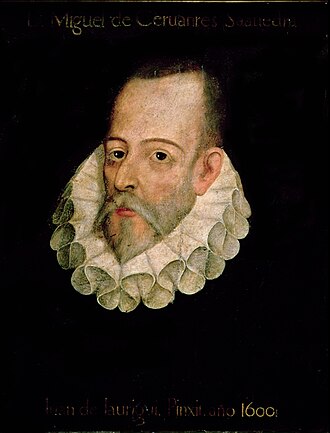
Hispanic literature is rich and comes from many countries and times. Some well-known Hispanic writers include Miguel de Cervantes Saavedra from Spain, Gabriel García Márquez from Colombia, and Pablo Neruda from Chile.
Sports
In most Hispanic countries, association football is the most popular sport. Teams from Argentina, Uruguay, and Spain have won the FIFA World Cup. baseball is very popular in places like Cuba, the Dominican Republic, and Puerto Rico. Many Hispanic athletes have become famous around the world, such as Lionel Messi in football and Rafael Nadal in tennis.
Religion
The Spanish and Portuguese brought the Catholic faith to many parts of the world they explored. Today, most Hispanics are Catholic, but some belong to other Christian groups like Protestant churches. There are also smaller groups of Muslims and Jews among Hispanics.
| Countries | Population Total | Christians % | Christian Population | Unaffiliated % | Unaffiliated Population | Other religions % | Other religions Population |
|---|---|---|---|---|---|---|---|
 Argentina Argentina | 43,830,000 | 85.4% | 37,420,000 | 12.1% | 5,320,000 | 2.5% | 1,090,000 |
 Bolivia Bolivia | 11,830,000 | 94.0% | 11,120,000 | 4.1% | 480,000 | 1.9% | 230,000 |
 Chile Chile | 18,540,000 | 88.3% | 16,380,000 | 9.7% | 1,800,000 | 2.0% | 360,000 |
 Colombia Colombia | 52,160,000 | 92.3% | 48,150,000 | 6.7% | 3,510,000 | 1.0% | 500,000 |
 Costa Rica Costa Rica | 5,270,000 | 90.8% | 4,780,000 | 8.0% | 420,000 | 1.2% | 70,000 |
 Cuba Cuba | 11,230,000 | 58.9% | 6,610,000 | 23.2% | 2,600,000 | 17.9% | 2,020,000 |
 Dominican Republic Dominican Republic | 11,280,000 | 88.0% | 9,930,000 | 10.9% | 1,230,000 | 1.1% | 120,000 |
 Ecuador Ecuador | 16,480,000 | 94.0% | 15,490,000 | 5.6% | 920,000 | 0.4% | 70,000 |
 El Salvador El Salvador | 6,670,000 | 88.0% | 5,870,000 | 11.2% | 740,000 | 0.8% | 60,000 |
 Equatorial Guinea Equatorial Guinea | 1,469,000 | 88.7% | 1,303,000 | 5.0% | 73,000 | 6.3% | 93,000 |
 Guatemala Guatemala | 18,210,000 | 95.3% | 17,360,000 | 3.9% | 720,000 | 0.8% | 130,000 |
 Honduras Honduras | 9,090,000 | 87.5% | 7,950,000 | 10.5% | 950,000 | 2.0% | 190,000 |
 Mexico Mexico | 126,010,000 | 94.1% | 118,570,000 | 5.7% | 7,240,000 | 0.2% | 200,000 |
 Nicaragua Nicaragua | 6,690,000 | 85.3% | 5,710,000 | 13.0% | 870,000 | 1.7% | 110,000 |
 Panama Panama | 4,020,000 | 92.7% | 3,720,000 | 5.0% | 200,000 | 2.3% | 100,000 |
 Paraguay Paraguay | 7,630,000 | 96.9% | 7,390,000 | 1.1% | 90,000 | 2.0% | 150,000 |
 Peru Peru | 32,920,000 | 95.4% | 31,420,000 | 3.1% | 1,010,000 | 1.5% | 490,000 |
 Philippines Philippines | 108,000,000 | 91% | 98,280,000 | 0.1% | 108,000 | 8.9% | 9,612,000 |
 Puerto Rico Puerto Rico | 3,790,000 | 90.5% | 3,660,000 | 7.3% | 80,000 | 2.2% | 40,000 |
 Spain Spain | 48,400,000 | 75.2% | 34,410,000 | 21.0% | 10,190,000 | 3.8% | 1,800,000 |
 Uruguay Uruguay | 3,490,000 | 57.0% | 1,990,000 | 41.5% | 1,450,000 | 1.5% | 50,000 |
 Venezuela Venezuela | 33,010,000 | 89.5% | 29,540,000 | 9.7% | 3,220,000 | 0.8% | 250,000 |
Related articles


This article is a child-friendly adaptation of the Wikipedia article on Hispanic, available under CC BY-SA 4.0.
Images from Wikimedia Commons. Tap any image to view credits and license.