 Safekipedia
Jet propulsion
Adapted from Wikipedia · Discoverer experience
Jet propulsion is a way to move something in one direction by shooting out a stream of fluid, like air or water, in the opposite direction. This works because of a basic rule of physics: when something pushes on another thing, that other thing pushes back with an equal force. This idea is called Newton's third law.
Many machines use jet propulsion. For example, jet engines power airplanes, helping them fly through the sky. In the water, pump-jets help boats and ships move quickly. Even rockets and special space engines called plasma thrusters use jet propulsion to travel through space.
Some sea animals also use jet propulsion to move. Octopuses and salps, which are tiny sea creatures, can squirt water out of their bodies to zoom away quickly. The flying squid is special because it can use jet propulsion not just underwater, but also in the air when it jumps out of the water.
Physics
Jet propulsion happens when something moves forward by shooting out a fast stream of fluid in the opposite direction. This works because of Newton's laws of motion, which tell us that every action has an equal and opposite reaction.
Some animals also use jet propulsion to move quickly, especially when they are large and moving through water or air. This method works best when the movement is quick and not steady.
Specific impulse measures how well a jet engine or rocket uses its fuel. A higher specific impulse means the engine uses fuel more efficiently, which is very important for rockets because it helps them go farther and faster with less fuel. Jet engines, which use air from outside, are even more efficient than rockets in this way.
Thrust, the force that pushes the engine forward, can be calculated using the speed of the exhaust and how much fuel is being used at any moment.
Types of reaction engine
Main article: Reaction engine
Reaction engines create movement by pushing out solid or liquid material. Jet propulsion specifically refers to engines that use liquid material for this purpose.
Jet engine
Main article: Jet engine
A jet engine is a type of reaction engine that uses the air around it, heating it and pushing it out through special openings to create movement. Most jet engines work like gas turbines, using a process called the Brayton Cycle. There are different kinds of jet engines, such as turbojets and turbofans, which use special parts to compress air before it burns. Other types, like ramjets and pulse jets, work best at very high speeds.
Rocket engine
Main article: Rocket engine
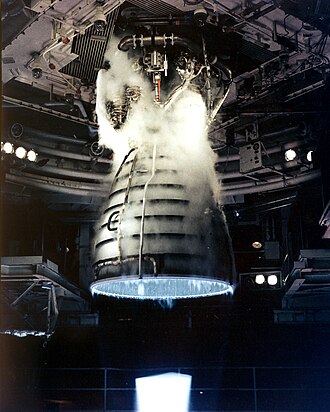
Rocket engines can work in the emptiness of space because they carry their own air or, in some cases, use special reactors to heat up other materials for movement.
Plasma engine
Main article: Plasma propulsion engine
Plasma engines push out a special type of material called plasma using electric forces.
Pump-jet
Main article: Pump-jet
Pump-jets are used to help boats move. They use water, pressed using special propellers or pumps, to create movement.
Jet-propelled animals
Main article: Aquatic locomotion § Jet propulsion
Some animals use jet propulsion to move quickly. Squids, for example, push water out of a tube to zoom away from danger. This water passes through their gills, helping them breathe and move at the same time.
Other sea creatures like sea hares and some small fish also use jet propulsion. Even tiny dragonfly babies and some jellyfish push water out to move. These methods help them travel efficiently through the water.
Images
Related articles


This article is a child-friendly adaptation of the Wikipedia article on Jet propulsion, available under CC BY-SA 4.0.
Images from Wikimedia Commons. Tap any image to view credits and license.