 Safekipedia
Martinus Beijerinck
Adapted from Wikipedia · Discoverer experience
Martinus Willem Beijerinck (16 March 1851 – 1 January 1931) was a Dutch microbiologist and botanist. He made important discoveries in the world of tiny living things and helped start the study of very small germs that make people sick.
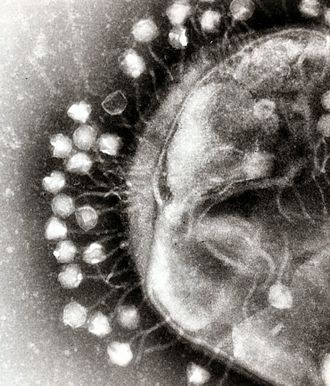
Beijerinck is especially known for being one of the first people to find and study viruses in 1898. He called these tiny germs "contagium vivum fluidum". His work helped scientists understand how these small germs can spread diseases.
He was also a leader in the study of environmental microbiology, learning how tiny living things grow and change in nature. Because of his important discoveries, Beijerinck is remembered as one of the founders of both virology and environmental microbiology. His ideas helped shape how we learn about tiny creatures and how they affect our world.
Life
Beijerinck was born in Amsterdam and studied biology at the Technical School of Delft, earning his degree in 1872. He received his Doctor of Science from the University of Leiden in 1877. He taught microbiology at schools in Wageningen and Delft, founding the Delft School of Microbiology. His work helped advance the study of biology, though he is sometimes less known than scientists like Robert Koch and Louis Pasteur because he did not study human diseases.
Beijerinck helped start the field of virology. In 1898, he showed that tobacco mosaic disease is caused by something smaller than a bacterium. He called this infectious agent a "contagium vivum fluidum". Later, it was proven to be a virus. Beijerinck also studied how certain bacteria can change nitrogen in the air into a form plants can use, which is important for soil fertility and agriculture. He discovered that some bacteria can live without oxygen by using sulfate instead. He also created a method called enrichment culture to study tiny living things in nature.
Personal life
Martinus Beijerinck was known for being a bit unusual in his personal life. He spoke harshly to his students, never got married, and worked with only a few colleagues. He believed that doing science and being married did not mix well. Beijerinck loved teaching biology but felt sad when students and their families did not like him. After he stopped working at the Delft School of Microbiology in 1921 when he was 70 years old, he went to live in Gorssel with his two sisters until the end of his life.
Recognition
Several things are named after Martinus Beijerinck. There is a group of bacteria called Beijerinckia, a family of bacteria called Beijerinckiaceae, and a crater on a planet named Beijerinck crater, all in his honor.
There is also a special prize called the M.W. Beijerinck Virology Prize that is given to remember his work.
Images
Related articles




This article is a child-friendly adaptation of the Wikipedia article on Martinus Beijerinck, available under CC BY-SA 4.0.
Images from Wikimedia Commons. Tap any image to view credits and license.