 Safekipedia
Matter
Adapted from Wikipedia · Discoverer experience
In physical science, matter is anything that has mass and takes up space by having volume. All objects we can touch are made of tiny building blocks called atoms, which are themselves made of even smaller parts known as subatomic particles. Matter can be found in many forms, such as solid, liquid, and gas. For example, water can be ice, liquid water, or gaseous steam.
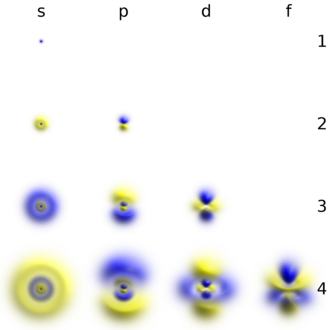
Atoms are often pictured with a central part called a nucleus made of protons and neutrons, surrounded by a "cloud" of moving electrons. However, these tiny parts behave in strange ways because of their quantum nature, acting sometimes like particles and sometimes like waves.
People have wondered about the nature of matter for a very long time. The idea that matter is made of tiny, separate pieces appeared in both ancient Greece and ancient India. Early thinkers such as the Indian philosopher Kaṇāda and the Greek philosophers Leucippus and Democritus were among those who suggested this idea.
Related concepts
Comparison with mass
Matter is a word we use to describe anything that takes up space and has weight. Long ago, people used the word "matter" to mean anything that you could touch or see, without knowing the differences between weight and other properties.
In science, mass is not a substance but a special property of matter. Scientists have different ways to talk about mass, like rest mass, inertial mass, and relativistic mass. Matter, especially tiny parts called particles, can act both like small balls and like waves at the same time. This is called wave-particle duality.
Definition
Based on atoms
Matter is made up of tiny building blocks called atoms. These atoms are the tiny pieces that make up everything around us, like the molecules in deoxyribonucleic acid (DNA). This idea of matter can also include things like plasmas and electrolytes, which are special types of gases and liquids.
Based on protons, neutrons and electrons
Matter can also be described as being made of smaller parts called protons, neutrons, and electrons. These tiny parts come together to form atoms and molecules. This way of looking at matter includes more than just atoms, like the beams of electrons in old cathode ray tube televisions.
Based on quarks and leptons
Matter is also made of even smaller parts called quarks and leptons. Quarks and leptons combine to form atoms and molecules. This means that matter can be described as anything made of these tiny building blocks.
Based on elementary fermions (mass, volume, and space)
A simple way to think about matter is that it is anything that has mass and takes up space, like a car. This idea goes back a long time, and scientists now understand that what makes matter take up space is related to how these tiny parts behave.
Structure
In particle physics, fermions are tiny parts of matter that follow special rules. Fermions can be simple, like the electron, or made of smaller parts, like the proton and neutron. The Standard Model describes two main types of simple fermions: quarks and leptons.
Quarks are heavy particles with a special kind of charge. They can have different charges compared to electrons and are part of the building blocks of larger particles. Quarks also change over time in certain ways.
Baryonic matter is the part of the universe made of particles called baryons, which include protons and neutrons found in atoms. This type of matter is different from other parts of the universe like dark energy or black holes.
Leptons are another type of particle that, like quarks, have a special kind of charge but do not act the same way in strong forces. They also change over time in certain ways and are affected by gravity.
| name | symbol | spin | electric charge (e) | mass (MeV/c2) | mass comparable to | antiparticle | antiparticle symbol |
|---|---|---|---|---|---|---|---|
| up-type quarks | |||||||
| up | u | 1⁄2 | +2⁄3 | 1.5 to 3.3 | ~5 electrons | antiup | u |
| charm | c | 1⁄2 | +2⁄3 | 1160 to 1340 | ~1 proton | anticharm | c |
| top | t | 1⁄2 | +2⁄3 | 169,100 to 173,300 | ~180 protons or ~1 tungsten atom | antitop | t |
| down-type quarks | |||||||
| down | d | 1⁄2 | −1⁄3 | 3.5 to 6.0 | ~10 electrons | antidown | d |
| strange | s | 1⁄2 | −1⁄3 | 70 to 130 | ~200 electrons | antistrange | s |
| bottom | b | 1⁄2 | −1⁄3 | 4130 to 4370 | ~5 protons | antibottom | b |
| name | symbol | spin | electric charge (e) | mass (MeV/c2) | mass comparable to | antiparticle | antiparticle symbol |
|---|---|---|---|---|---|---|---|
| charged leptons | |||||||
| electron | e− | 1⁄2 | −1 | 0.5110 | 1 electron | antielectron | e+ |
| muon | μ− | 1⁄2 | −1 | 105.7 | ~200 electrons | antimuon | μ+ |
| tau | τ− | 1⁄2 | −1 | 1,777 | ~2 protons | antitau | τ+ |
| neutrinos | |||||||
| electron neutrino | ν e | 1⁄2 | 0 | electron antineutrino | ν e | ||
| muon neutrino | ν μ | 1⁄2 | 0 | muon antineutrino | ν μ | ||
| tau neutrino | ν τ | 1⁄2 | 0 | tau antineutrino | ν τ | ||
Phases
Main article: Phase (matter)
See also: Phase diagram and State of matter
Matter can be found in different forms, called phases, depending on things like pressure, temperature, and volume. These phases have their own special properties. The most common phases are solids, liquids, and gases. There are also unusual phases like plasmas and superfluids. When conditions change, matter can shift from one phase to another. These changes are called phase transitions.
Antimatter
Main article: Antimatter
Antimatter is made from special particles called antiparticles that are different from the particles in regular matter. When a particle and its antiparticle meet, they disappear in a flash of energy, often turning into high-energy light called gamma rays or other particles. This happens because of a rule in physics: E = mc2.
We don’t find antimatter naturally on Earth except in tiny amounts made by radioactive decay, lightning, or cosmic rays. This is because any antimatter that appears would quickly meet regular matter and disappear. Scientists can create small amounts of antimatter, like antihydrogen, but only enough to study its basic properties.
One of the big questions in science is why the universe seems to be made almost entirely of regular matter and not antimatter. In the early universe, matter and antimatter were thought to be equal, so scientists are still trying to understand what caused this difference.
Conservation
In physics, matter is made of special building blocks called baryons and leptons. These blocks can come together or break apart, but the total amount of matter stays the same. When a baryon or lepton is created, an antibaryon or antilepton is also created, keeping the balance. Even though these pieces can change, the overall amount of matter doesn't disappear or appear out of nowhere.
This idea helps us understand how matter behaves in big reactions, like in nuclear bombs, where tiny bits of matter change form but aren't destroyed. The total amount of matter stays the same, even if it looks different.
Dark
Main articles: Dark matter, Lambda-CDM model, and WIMPs
See also: Galaxy formation and evolution and Dark matter halo
Ordinary matter, which makes up things we can see and touch, is actually a small part of the universe. Most of the universe is made of two mysterious types of stuff: dark matter and dark energy.
Dark matter is material that we cannot see because it does not give off or reflect light, but we know it is there because of how it affects the movement of stars and galaxies. Scientists think dark matter is made of particles that are different from the ones we usually study.
Dark energy is an even more mysterious force that is making the universe expand at a faster rate. We do not fully understand what it is, but it seems to come from the very space itself.
Exotic
Main article: Exotic matter
Exotic matter is an idea from particle physics. It might include things like dark matter and dark energy, but it also talks about materials that could have unusual properties, such as negative mass, which normal materials do not have.
Historical and philosophical study
The idea of what matter is has changed a lot over time as we learned more about the tiny parts that make up everything. Today, we think of matter as anything that has mass and takes up space. This includes all the things we can touch, like books, trees, and even the air we breathe.
Long ago, people had different ideas about matter. Some thought everything was made of just a few basic things, like water, air, or fire. Others believed that everything was made of tiny, unchanging particles called atoms. These early ideas helped shape how we think about the world today. Later scientists built on these thoughts, leading to our modern understanding of atoms and the even smaller parts inside them.
Images
Related articles




This article is a child-friendly adaptation of the Wikipedia article on Matter, available under CC BY-SA 4.0.
Images from Wikimedia Commons. Tap any image to view credits and license.