 Safekipedia
Muhammad Ali of Egypt
Adapted from Wikipedia · Discoverer experience
Muhammad Ali (4 March 1769 – 2 August 1849) was the ruler of Egypt from 1805 to 1848 and is known as the founder of modern Egypt. Born in a village in Albania, he moved to Kavala as a young boy. He became a military commander and was sent to Egypt to help remove the French occupation after Napoleon left. Through clever politics, he became the governor of Egypt in 1805.
As governor, Muhammad Ali worked hard to modernize Egypt. He made big changes in the military, economy, and culture. He also removed the power of the Mamluks, a group that had controlled Egypt before him. His rule turned Cairo into a major center of a large empire that included places like Sudan, Hejaz, and parts of Greece.
Muhammad Ali also fought in many wars. He helped the Ottoman sultan by taking back Arabian lands and tried to conquer Syria. Although he had some successes, European powers sometimes stopped his plans. In the end, his family was allowed to rule Egypt for many years, until the revolution of 1952 led to a new government.
Early life
Muhammad Ali was born in a village in Albania in the Ottoman Empire. He moved with his family to a place called Kavala when he was young. His father was a merchant and also served as a commander for the Ottoman forces there. After his father passed away, Muhammad was raised by his uncle. His uncle rewarded him for his hard work by giving him a position in charge of collecting taxes in Kavala.
Later, Muhammad married his cousin, Amina Hanim, who was a wealthy widow. He then joined an army unit made up of Albanian mercenaries that was sent to Egypt. This happened after French forces had left Egypt. The group landed at Aboukir in 1801 as part of a larger effort to retake the country.
Rise to power
Main article: Muhammad Ali's seizure of power
When French forces left Egypt, there was a struggle for power between different groups. Muhammad Ali used his loyal troops to gain support from both sides and the local people. In 1805, leaders of Egypt asked the Ottoman rulers to let Muhammad Ali become the governor, and they agreed.
Muhammad Ali wanted to control all of Egypt. He dealt with the Mamluks, who had ruled for many years, by inviting their leaders to a celebration. When they arrived, his troops surrounded and removed them. Later, his army went through Egypt to ensure his control. Muhammad Ali dreamed of building a large kingdom, seeing Egypt as a successor to the Ottoman Empire.
Building the Egyptian state
Sultan Selim III wanted to update the Ottoman military to match European styles, but he faced strong opposition and was eventually removed from power.
Muhammad Ali aimed to make Egypt independent from the Ottoman Empire and rule it with his own family. To achieve this, he needed to reorganize society, improve the economy, train skilled workers, and create a modern army.
He began by taking control of Egypt’s land and resources. He raised taxes on land owners, and when they couldn’t pay, he took their land. He also taxed funds meant for schools and charities, which helped fund his new military and weakened those who opposed him. He required all producers to sell their goods to the state, which then resold them for profit. This brought wealth to Egypt, especially through growing long staple cotton, a new type of cash crop. He also improved farming by expanding fields and updating irrigation, though this work was done by forcing peasants to labor.
Muhammad Ali also built factories to make weapons like muskets and cannons, and constructed a navy with a shipyard in Alexandria. He tried to build a textile industry to compete with European companies, which employed many people even if it wasn’t very successful. He brought in European experts to help train Egyptians and set up schools and hospitals. He sent young Egyptians to Europe to study and learn new skills, especially languages like French, to help build a strong army and government.
Law under Muhammad Ali
Muhammad Ali wanted to change the laws to help him rule when he was not around. In 1829, he made his first big change to the criminal laws. He wanted to create a strong and safe country where everyone, including Christians, felt protected. This helped him gain support from Europe. He also set up a police force in cities like Cairo and Alexandria to keep order and solve crimes. He made the courts more modern by using new kinds of evidence, like reports from doctors, instead of just following old rules.
Hakimas and the school of medicine for women
In 1832, Muhammad Ali allowed Antoine Clot, called "Clot Bey" in Egypt, to start a School of Medicine for women. Clot Bey had come to Egypt in 1827 to create a medical school at a hospital, which later moved to Cairo. This new school aimed to train women, called hakimas, to care for other women and children.
The school taught students to read in Arabic and then taught them many health skills, like helping with births, caring for new mothers, treating injuries, and giving vaccinations. The government provided housing, food, clothes, and money to the students. After finishing their training, hakimas worked in hospitals or health centers across Egypt. They helped reduce diseases like smallpox by giving many children vaccinations each month. Despite some success, it was hard to get enough students because many people at the time did not support educating women. The first students were often young girls who were slaves or orphans.
Role in the Arabic literary renaissance
In the 1820s, Muhammad Ali sent Egyptian students to Europe for the first time. This helped start a new period in Arabic literature called the Nahda.
Muhammad Ali also created schools to help improve industry and the military. He wanted French books to be translated into Arabic. Rifa'a al-Tahtawi led these translations, covering many subjects like history and military skills. In 1819 or 1821, his government started the first printing press in the Arab World, called the Bulaq Press. This press printed important government news.
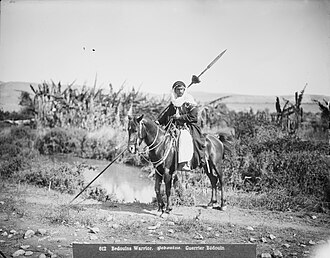
Muhammad Ali also loved collecting and breeding Arabian horses. He noticed the special qualities of horses raised by the Bedouin, especially those from the Anazeh in Syria and the Nejd. Later, his grandson Abbas I continued this work with great interest.
Military campaigns
Muhammad Ali wanted to build a strong army like those in Europe and to create his own empire. He first fought for the Ottoman Sultan in Arabia and Greece but later fought against the Ottoman Empire itself. He used new strategies to make his army strong and disciplined, such as isolating new soldiers and giving them strict rules.
Arabian campaign
Muhammad Ali’s first campaign was in the Arabian Peninsula. The holy cities of Mecca and Medina had been taken by the House of Saud, who followed a strict form of Islam. With the main Ottoman army busy in Europe, Muhammad Ali sent his son Tusun to recapture these areas in 1811. Though the first attack failed, a second attack in 1812 succeeded. Later, another of his sons, Ibrahim, defeated the Saudis completely.
Conquest of Sudan
Next, Muhammad Ali turned to Sudan, wanting its resources and land. In 1820, he sent an army led by his son Ismail into Sudan. Though they faced resistance, the Egyptian forces won and took control of the region.
Greek rebellion
While Muhammad Ali expanded into Africa, there was a rebellion in the Greek parts of the Ottoman Empire. The Ottoman army struggled to stop it, so the Sultan offered Muhammad Ali the island of Crete if he helped. Muhammad Ali sent troops to Greece, but they faced strong opposition from European powers who wanted to support Greek independence. A big battle at Navarino in 1827 ended with the destruction of Muhammad Ali’s navy, forcing him to withdraw from Greece.
War against the sultan
Muhammad Ali then asked the Ottoman Sultan for control of Syria. When the Sultan refused, Muhammad Ali attacked. His forces quickly took most of Syria, including the city of Acre after a long siege. They then moved toward the Ottoman capital. However, European powers worried about the stability of the Ottoman Empire intervened. Eventually, Muhammad Ali agreed to withdraw from most of his conquests but kept control of Egypt and Sudan, marking the beginning of his family's long rule there.
Final years
After 1843, Muhammad Ali's thoughts became unclear and he grew worried about many things. This change may have been because of old age or because of a medicine called silver nitrate that he had taken years before.
In 1844, officials found that Egypt owed a lot of money—80 million francs. When they told Muhammad Ali, he became very angry. Even his favorite daughter tried to help explain, but it took six days to calm him down.
In 1846, Muhammad Ali went to meet the leader of the Ottoman Empire, the Sultan, in Constantinople. He worried that after he died, his family might not be able to rule well. He wanted to make sure his family could continue to lead Egypt.
Eventually, Muhammad Ali became too weak and confused to rule. He died at Ras el-Tin Palace in Alexandria on 2 August 1849 and was buried in a mosque in the Cairo Citadel he had built.
Legacy
Muhammad Ali is often called the "Father of Modern Egypt" because he was the first ruler to reduce the power of the Ottoman rulers over Egypt. He worked hard to build a modern country, creating an army, a government system, schools, and new economic opportunities like growing cotton and making goods for the military. His family ruled Egypt and Sudan for nearly 150 years, and Egypt became almost independent under his leadership.
Some people see Muhammad Ali differently. Because he was from Albania, not Egypt, and used Ottoman Turkish instead of Arabic in his court, some think he used Egypt’s people and resources for his own benefit. They view him as just another foreign ruler, like those from ancient Persian times. However, most Egyptian and Arab historians and the public see him as a important leader who helped build modern Egypt.
The way people think about Muhammad Ali was shaped by political debates in the 20th century. In the 1930s, Fuad I of Egypt collected historical documents that showed Muhammad Ali as a nationalist and kind ruler. Later, Nasser and his government also called Muhammad Ali a nationalist but criticized him for caring more about himself and his family than the people of Egypt.
Images
Related articles


This article is a child-friendly adaptation of the Wikipedia article on Muhammad Ali of Egypt, available under CC BY-SA 4.0.
Images from Wikimedia Commons. Tap any image to view credits and license.