 Safekipedia
Navy
Adapted from Wikipedia · Discoverer experience
A navy is the part of a country's armed forces that operates on water. Navies are used for fighting at sea, moving soldiers to different places, and protecting important shipping routes. They include many types of ships, like big surface ships, special ships for landing on beaches, submarines, and airplanes that fly from ships.
Navies help keep the seas safe by stopping bad things like piracy. They can also send power far away from their home country to protect friends or to stop enemies. Some navies even have special submarines that can carry very big weapons to keep peace by showing they are ready to defend their country.
Naval work can happen in rivers, near coastlines, or far out in the open ocean. Each kind of water has its own challenges, so navies train to be ready for all of them. They do more than just fight; they also help with communication, training, and supporting other parts of the military.
Etymology and meanings
The word "navy" first appeared in English in the early 14th century. It came from Old French navie, meaning "fleet of ships," which itself came from the Latin word navigium, meaning "a vessel, a ship, bark, boat." This Latin word came from navis, also meaning "ship." Related words include the Greek ναῦς (naus), meaning "ship," and ναύτης (nautes), meaning "seaman, sailor."
Originally, the word "navy" could refer to both commercial and military ship fleets. Today, when we say "navy" by itself, it means a military fleet. However, the term "merchant navy" is still used for commercial fleets. This overlap happened because, in the past, the same ships could be used for both trade and war. In wartime, a country's ships became very important for protecting supplies and sometimes even ordinary ships were used for fighting by adding weapons and soldiers. This practice, known as privateering, is less common now with modern weapons, but it can still matter in certain types of naval battles near coastlines.
History
Main article: Naval warfare
Naval warfare began when people first fought from boats. Early battles involved ramming enemy ships or boarding them to fight hand-to-hand. In ancient times, like in ancient Greece and the Roman Empire, ships were long and narrow, powered by rowers, and used to attack enemies up close.
Over time, new technologies changed naval battles. Big sailing ships with cannons became important, and navies grew stronger. Famous battles, like the Spanish Armada in 1588, showed how new tactics could win wars. In the 1800s, ships got metal armor, and engines powered them instead of oars or sails.
The 20th century brought even more changes. Submarines and aircraft carriers became key parts of naval power. Big battles during World War II, like the Battle of Leyte Gulf, showed how these new ships could decide the outcome of wars. Today, navies continue to evolve with new technologies and strategies.
Operations
A navy usually works from one or more naval bases. These bases are special ports for navy activities. They have places for ships to dock, repair shops, and storage for supplies. In wartime, temporary bases might be built closer to important areas to help with patrols.
Navy ships can sail alone or in groups. Small groups are called squadrons, and larger groups are called naval fleets. The leader of a fleet sails in the flagship, the strongest ship in the group. Before radios existed, signals were sent using flags or special lights at night. Later, radios and flashing lights took over this job.
Some navies, called "blue water navy", travel far from their country's coast. These ships can stay out at sea for a long time and often need many supplies to keep going. Some even use special power to not need refueling. Other navies, called "brown water navy", work closer to shore or on rivers where big ocean ships cannot go. Some countries have a "green water navy" to show strength in their nearby waters. When blue water fleets are near the coast, they might need special ships like minesweepers to keep safe.
Traditions
Main article: Naval tradition
In many navies, all ships are called "ships" except for destroyers and submarines, which are called "boats". The name of a ship often starts with a special prefix to show it is part of the navy.
Naval ships have special traditions. Some ships use a bell to mark the time, give warnings in fog, and for ceremonies. Captains and senior officers are welcomed aboard using a special pipe made from a Boatswain's call. In the United States, there is a special flag called the First Navy Jack with the words "Don't Tread on Me" on it.
Historically, ships were referred to as "she". It was once believed that having women on board could bring bad luck, like storms that might wreck the ship. The only women welcomed were figureheads on the front of the ship. Firing a cannon as a salute showed respect. The number of cannons fired indicated the importance of the person being honored.
Naval organization
Ships
Main article: Naval ship
Historically, navy ships were built for fighting. They could take damage and also cause damage, but they only carried supplies for the trip, not goods for trade. Some ships not made for fighting, like the galleon or armed merchant ships in World War II, also had weapons.
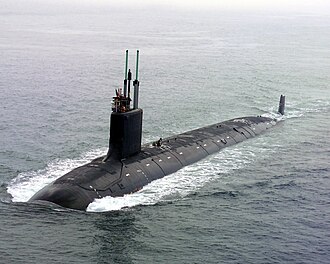
Today, navy ships do many different jobs. They include ships for fighting, but also ships for giving supplies, moving troops, fixing other ships, and carrying oil or other things. Modern fighting ships include aircraft carriers, cruisers, destroyers, frigates, corvettes, submarines, and amphibious assault ships. There are also ships that help others, like oil suppliers, minesweepers, and small patrol boats.
Today's warships can go faster and farther than older ships. They need less fuel and fewer sailors to run them. In World War II, ships had to stop often to get more fuel. Now, ships can travel long distances without stopping. When ships go on long trips, they are followed by support ships that give them fuel, weapons, and other things they need.
Boats
Navies use many small boats for different jobs. These boats are smaller than ships and can often be carried on bigger ships. They can be powered by diesel engines, gasoline engines, or waterjets. Some are made of aluminum, fiberglass, or steel.
Patrol boats watch over coasts, lakes, and big rivers. Landing craft carry soldiers, cars, or supplies from ships to land, even in fights. These boats are strong and fast, and some can fly above water like hovercraft. They have special ramps to let things off and carry engines and rooms for the crew.
Other boats help with jobs that are not fighting, like saving people, fixing things, or looking under the water.
Units
Naval forces group ships into units. One ship is the smallest unit. Groups of ships are called squadrons or flotillas, and many of these make a fleet. The whole navy can be the biggest unit.
Sometimes, ships from different fleets come together to do a special job. This group is called a task force.
Personnel
For a long time, women could not serve on submarines in some navies, like the U.S. Navy, because of the long trips and close spaces. But in April 2010, the U.S. Navy changed this rule. Other navies, like those of the United Kingdom, Australia, Canada, Norway, and Spain, also allowed women on submarines.
Ranks
Main article: Naval officer ranks
Navies have different ranks for people who are just sailors and for officers who lead. Here are some common officer ranks, from lowest to highest:
- Midshipman / Ensign / Corvette Lieutenant / Second Lieutenant
- Sub Lieutenant / Lieutenant Junior Grade / Frigate Lieutenant / First Lieutenant
- Lieutenant (Commonwealth & US)/ Ship-of-the-Line Lieutenant / Captain Lieutenant / Captain
- Lieutenant Commander (Commonwealth & US)/ Corvette Captain / Major
- Commander (Commonwealth & US)/ Frigate Captain / Lieutenant Colonel
- Captain (Commonwealth & US)/ Ship-of-the-Line Captain / Colonel
- Commodore / Flotilla Admiral (in US only: Rear Admiral (lower half))
- Rear Admiral (in US only: Rear Admiral (upper half))
- Vice Admiral (Commonwealth & US)
- Admiral (Commonwealth & US)
- Admiral of the Fleet (Commonwealth) / Fleet Admiral (US) / Grand Admiral
Higher ranks like admiral usually lead big groups of ships instead of just one ship. The top rank in a navy depends on how big the navy is and whether it is during war or peace.
Naval infantry
Main article: Marines
Naval infantry, often called marines, are special soldiers who work with a country's navy. They can fight both on land and at sea, especially during operations that need ships and land forces to work together.
Long ago, during the time of the Roman Empire, there were soldiers called legionaries who sailed with ships to fight on other ships or near coastlines. Later, during the time when ships were powered only by wind, marines were soldiers carried on ships. They could fight when ships met enemy ships, shoot accurately from ships, or raid places along the shore.
The Spanish Infantería de Marina was created in 1537 and is the oldest marine force still around today. The British Royal Marines are trained for very special kinds of fighting, sometimes working apart from their navy. In most countries, the marine force is part of the navy, but this is not always true. For example, the French Troupes de marine belong to the French Army, and the United States Marine Corps is its own separate part of the U.S. Navy, with its own leaders.
Naval aviation
Main article: Naval aviation
Naval aviation means using airplanes and helicopters for the navy. These can fly from ships or from land bases.
In the first World War, navies used special planes that could land on water for looking out for enemies. In the second World War, big ships called aircraft carriers could carry bombers to attack enemies and fighters to protect themselves. After that, smaller ships started carrying helicopters for jobs like finding hidden submarines and moving troops. Some navies also use land-based planes for watching the ocean and for training.
Related articles


This article is a child-friendly adaptation of the Wikipedia article on Navy, available under CC BY-SA 4.0.
Images from Wikimedia Commons. Tap any image to view credits and license.