 Safekipedia
Nuclear Regulatory Commission
Adapted from Wikipedia · Discoverer experience
The United States Nuclear Regulatory Commission (NRC) is an agency of the United States government that works to keep people safe from the dangers of nuclear energy. It was created in 1975 after a law called the Energy Reorganization Act, taking over some jobs from an older group called the United States Atomic Energy Commission.
The NRC has many important tasks. It checks that nuclear reactors are safe and secure, helps people get permission to build or run reactors, and watches over places that handle nuclear fuel. It also makes sure rules are followed for using radioactive materials, which are substances that can be harmful if not handled properly. The NRC also looks after the storage and disposal of used nuclear fuel, called spent fuel, to protect public health and safety.
History
Before 1975, the Atomic Energy Commission managed everything about radioactive materials. But people felt it was too close to the industry it was supposed to watch over. So, it was replaced by the Nuclear Regulatory Commission (NRC), an independent group to handle nuclear energy, nuclear medicine, and nuclear safety and security.
After a serious nuclear accident in Fukushima in 2011, the NRC made new plans called "Diverse and Flexible Coping Strategies (FLEX)" to help nuclear power plants stay safe even during unexpected events like earthquakes or floods. These plans are now used at all nuclear power plants in the United States.
The NRC has published several books about its history and policies, and it continues to adapt its processes to improve safety and efficiency. In 2026, it began reorganizing to make decisions faster and approve new nuclear technology more quickly.
Mission and commissioners
The NRC protects public health and safety by making sure nuclear energy and radioactive materials are used safely. It watches over nuclear reactors, the use of nuclear materials in medicine and industry, and the handling and disposal of nuclear waste.
The NRC is led by five commissioners who are chosen by the president of the United States and approved by the United States Senate. One of these commissioners is picked to be the chairman, who speaks for the NRC. The current chairman is Ho Nieh, appointed by President Trump on January 8, 2026.
Current commissioners
The current commissioners as of January 8, 2026:
List of chairpersons
List of commissioners
| Position | Name | Party | Took office | Term expires |
|---|---|---|---|---|
| Chair | Ho Nieh | Republican | December 4, 2025 | June 30, 2029 |
| Member | Bradley Crowell | Democratic | August 26, 2022 | June 30, 2027 |
| Member | Matthew Marzano | Democratic | January 8, 2025 | June 30, 2028 |
| Member | David A. Wright | Republican | August 1, 2025 | June 30, 2030 |
| Member | Doug W. Weaver | Republican | December 22, 2025 | June 30, 2026 |
| No. | Name (chair) | Photo | Term of office | Appointed by | |
|---|---|---|---|---|---|
| 1 | Bill Anders |  | January 19, 1975 | April 20, 1976 | Gerald Ford |
| 2 | Marcus A. Rowden |  | January 19, 1975 | January 15, 1977 | |
| 3 | Joseph M. Hendrie |  | March 3, 1977 | December 7, 1979 | Jimmy Carter |
| 4 | John F. Ahearne |  | December 7, 1979 | March 2, 1981 | |
| 5 | Nunzio J. Palladino |  | July 1, 1981 | June 30, 1986 | Ronald Reagan |
| 6 | Lando W. Zech Jr. | 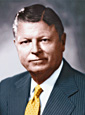 | July 1, 1986 | June 3, 1989 | |
| 7 | Kenneth Monroe Carr | 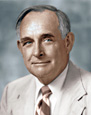 | July 1, 1989 | June 30, 1991 | George H.W Bush |
| 8 | Ivan Selin |  | July 1, 1991 | June 30, 1995 | |
| 9 | Shirley Ann Jackson |  | July 1, 1995 | June 30, 1999 | Bill Clinton |
| 10 | Greta Joy Dicus |  | July 1, 1999 | October 29, 1999 | |
| 11 | Richard Meserve |  | October 29, 1999 | March 31, 2003 | |
| 12 | Nils J. Diaz |  | April 1, 2003 | June 30, 2006 | George W. Bush |
| 13 | Dale E. Klein |  | July 1, 2006 | May 13, 2009 | |
| 14 | Gregory Jaczko |  | May 13, 2009 | July 9, 2012 | Barack Obama |
| 15 | Allison Macfarlane |  | July 9, 2012 | December 31, 2014 | |
| 16 | Stephen G. Burns |  | January 1, 2015 | January 23, 2017 | |
| 17 | Kristine Svinicki |  | January 23, 2017 | January 20, 2021 | Donald Trump |
| 18 | Christopher T. Hanson | 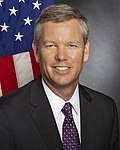 | January 20, 2021 | January 20, 2025 | Joe Biden |
| 19 | David A. Wright |  | January 20, 2025 | June 30, 2025 | Donald Trump |
| August 1, 2025 | January 8, 2026 | ||||
| 20 | Ho Nieh |  | January 8, 2026 | Present | |
| Portrait | Commissioner | Took office | Left office |
|---|---|---|---|
| Marcus A. Rowden | January 19, 1975 | April 20, 1977 | |
| Edward A. Mason | January 19, 1975 | January 15, 1977 | |
| Victor Gilinsky | January 19, 1975 | June 30, 1984 | |
| Richard T. Kennedy | January 19, 1975 | June 30, 1980 | |
| Joseph Hendrie | August 9, 1977 | June 30, 1981 | |
| Peter A. Bradford | August 15, 1977 | March 12, 1982 | |
| John F. Ahearne | July 31, 1978 | June 30, 1983 | |
| Nunzio J. Palladiono | July 1, 1981 | June 30, 1986 | |
| Thomas M. Roberts | August 3, 1981 | June 30, 1990 | |
| James K. Asselstine | May 17, 1982 | June 30, 1987 | |
| Frederick M. Bernthal | August 4, 1983 | June 30, 1988 | |
| Lando W. Zech Jr. | July 3, 1984 | June 30, 1989 | |
| Kenneth Monroe Carr | August 14, 1986 | June 30, 1991 | |
| Kenneth C. Rogers | August 7, 1987 | June 30, 1997 | |
| James R. Curtiss | October 20, 1988 | June 30, 1993 | |
| Forrest J. Remick | December 1, 1989 | June 30, 1994 | |
| Ivan Selin | July 1, 1991 | June 30, 1995 | |
| E. Gail de Planque | December 16, 1991 | June 30, 1995 | |
| Shirley Ann Jackson | May 2, 1995 | June 30, 1999 | |
| Greta J. Dicus | February 15, 1996 | June 30, 2003 | |
| Nils J. Diaz | August 23, 1996 | June 30, 2006 | |
| Edward McGaffigan Jr. | August 28, 1996 | September 2, 2007 | |
| Jeffrey S. Merrifield | October 23, 1998 | June 30, 2007 | |
| Richard Meserve | October 29, 1999 | March 31, 2003 | |
| Gregory Jaczko | January 21, 2005 | July 9, 2012 | |
| Peter B. Lyons | January 25, 2005 | June 30, 2009 | |
| Dale E. Klein | July 1, 2006 | March 29, 2010 | |
| Kristine Svinicki | March 28, 2008 | January 20, 2021 | |
| George Apostolakis | March 29, 2010 | June 30, 2014 | |
| William D. Magwood IV | March 29, 2010 | August 31, 2014 | |
| William C. Ostendorff | March 29, 2010 | June 30, 2016 | |
| Allison Macfarlane | July 9, 2012 | December 31, 2014 | |
| Jeff Baran | October 14, 2014 | June 30, 2023 | |
| Stephen G. Burns | November 4, 2014 | April 30, 2019 | |
| Annie Caputo | May 29, 2018 | June 30, 2021 | |
| David A. Wright | May 30, 2018 | June 30, 2025 | |
| Christopher T. Hanson | June 8, 2020 | June 13, 2025 | |
| Annie Caputo | August 9, 2022 | August 1, 2025 | |
| Bradley Crowell | August 26, 2022 | Present | |
| Matthew Marzano | January 8, 2025 | Present | |
| David A. Wright | August 1, 2025 | Present | |
| Ho Nieh | December 4, 2025 | Present | |
| Doug W. Weaver | December 22, 2025 | Present |
Organization
The NRC is made up of a commission and several offices led by an executive director. The commission has committees and boards, along with eight staff offices that handle different tasks.
Christopher T. Hanson is the chairman of the NRC. There are 14 main offices that help run daily activities, including watching over nuclear materials and reactors. Two of these offices are especially important for the NRC's work.
The NRC's budget for the year 2024 was planned to be $9.949 million, with many workers supported by fees from others. The main offices are in North Bethesda, Maryland, and there are four regional offices across the country.
Regions
Main article: Regions of the Nuclear Regulatory Commission
The NRC divides its work into four regions:
- Region I, in King of Prussia, Pennsylvania, watches over the northeastern states.
- Region II, in Atlanta, Georgia, watches over most of the southeastern states.
- Region III, in Lisle, Illinois, watches over the Midwest.
- Region IV, in Arlington, Texas, watches over the western and south central states.
In these regions, the NRC watches over 94 power reactors and 31 research reactors. Inspectors visit these places regularly to make sure they are safe.
Agreement States
Some states have agreements with the NRC that let them give out licenses and check on certain materials used in their area. If someone in one of these states wants to use such materials, they should contact the state officials for help with their application.
Recordkeeping system
The Nuclear Regulatory Commission (NRC) has a library with many documents, including ones online. In 1984, it started a system called ADAMS to store public reports, letters, and other technical papers. This system was updated in 2010 to work on the web, and in 2025, it got an even better search tool. Documents from 1980 to 1999 often only have summaries, while older papers are kept on microfiche or paper. People can ask for copies of these older or special documents using a FOIA request.
Training and accreditation
The NRC checks training and gives approvals, and also watches meetings of a group called the National Nuclear Accrediting Board and suggests some members for it.
After a big event at Three Mile Island accident in 1980, a report suggested that the nuclear energy industry should make and follow its own high standards. Soon after, the industry started the Institute of Nuclear Power Operations (INPO) to help train workers. Later, they created the National Academy for Nuclear Training, which helps make sure training is the same everywhere and offers scholarships.
In 1982, a law asked the NRC to create rules about training for nuclear plant workers. Because the industry already had good training, the NRC agreed with their plan in 1985. The NRC works together with INPO and watches their activities.
In the 1990s, the NRC let nuclear plant companies test and approve their own workers more often, instead of doing it all themselves. Since the year 2000, meetings between the NRC and companies are open for anyone to see.
Prospective nuclear units
Main article: Nuclear renaissance in the United States
Between 2007 and 2009, 13 companies asked the Nuclear Regulatory Commission to build 25 new nuclear power reactors in the United States. But with lots of natural gas available, many of these plans were stopped or cancelled because they were not the cheapest energy choice. In 2013, four reactors closed permanently: San Onofre 2 and 3 in California, Crystal River 3 in Florida, and Kewaunee in Wisconsin. Vermont Yankee shut down in 2014. New York state closed the Indian Point Energy Center in 2021.
In 2019, the NRC allowed Turkey Point units 3 and 4 to operate for another 20 years, making their total lifetime 80 years. More reactors may get similar extensions in the future, which means fewer new ones need to be built.
Controversy, concerns, and criticisms
Some people have said that the group in charge of watching over nuclear power in the United States sometimes favors the companies that run these plants instead of strictly following safety rules. They worry that this group doesn’t always make sure these plants are super safe.
There have been worries about safety, especially after big events like storms and earthquakes damaged nuclear plants far away. Some people are concerned that not all plans are safe enough to stop bad things from happening. After one big accident in Japan, the group in charge made some new rules to try to make plants safer, but some still think more needs to be done.
There have also been questions about whether this group is doing all it can to keep everyone safe and if it sometimes listens too much to the companies running the plants instead of thinking about what’s best for everyone.
Images
Related articles


This article is a child-friendly adaptation of the Wikipedia article on Nuclear Regulatory Commission, available under CC BY-SA 4.0.
Images from Wikimedia Commons. Tap any image to view credits and license.