 Safekipedia
Perpetual Union
Adapted from Wikipedia · Discoverer experience
The Perpetual Union is an important idea found in the Articles of Confederation and Perpetual Union. These articles were the first rules that helped create the United States of America as a special kind of group of states. They explained what the states could and could not do together.
Later, the idea of Perpetual Union was changed and made stronger in the U.S. Constitution. This constitution was written in 1787 at the Constitutional Convention because many leaders, like George Washington, thought the first set of rules wasn’t strong enough. The new constitution made sure that states could not leave the United States.
Historical origins
The idea of a union of the American states started in the 1770s during the fight for independence. In his first speech as leader on March 4, 1861, Abraham Lincoln said the union began even before the Constitution. He explained it started with the Articles of Association in 1774, grew with the Declaration of Independence in 1776, and became permanent with the Articles of Confederation in 1778. The Constitution in 1787 aimed to improve this union.
A big step happened on June 12, 1776, when the Second Continental Congress decided to create the Articles of Confederation. This document defined how the states would work together and said the union would last forever. The states started approving it in 1777, but it only became official in 1781 when all states agreed. Maryland took longer to agree because of disagreements over land, but after Virginia gave up its claims, Maryland approved it on March 1, 1781. This final approval created the United States of America.
Significance
The Perpetual Union has always been very important in the country's history. During the American Revolutionary War, there was a big rush to finish setting up the legal Union. One state, Maryland, said that if it didn’t join, the enemy might think the United States could break apart.
Later, from the 1830s until the American Civil War, people argued a lot about what the Union really meant. During the Civil War, the states that stayed together and did not leave to join the Confederates were called “the Union.”
Constitutional basis
When the United States Constitution replaced the Articles of Confederation, it did not clearly say that states could not leave the United States. Even after the Civil War, when the U.S. fought to keep states from leaving, some people still wondered if states could leave under the new Constitution.
The United States Supreme Court decided this question in 1869 in the case Texas v. White. The Court said that when states joined the United States, they entered into a lasting union that could not be broken. During the time when states were deciding whether to accept the Constitution, some states said they might leave if they felt it was not fair. But important leaders like James Madison and Alexander Hamilton thought that states should not have the right to leave.
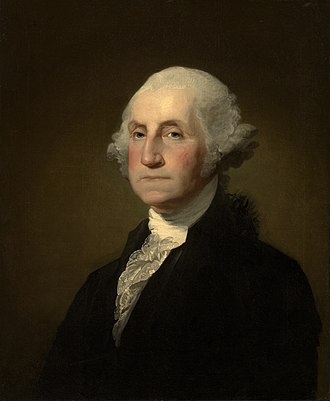
In his speeches, George Washington talked about the union of states as something that should last forever and bring happiness to all Americans.
Similar principles
The idea of a perpetual union goes back a long way in European history. In 1532, Francis I of France signed a treaty to protect the freedom and rights of the Duchy of Brittany within the Kingdom of France. Much later, in 1713, a plan was shared for lasting peace in Europe, talking about a "permanent and perpetual Union" between leaders.
The word "perpetual" itself has been used even longer. Coins made in 44 B.C. showed Julius Caesar with writing that meant "Caesar forever in charge."
Some later unions, like the one between Scotland and England in 1707, also used similar words but allowed changes over time. For example, what is now the Republic of Ireland left its union with Great Britain in 1922.
Images
Related articles


This article is a child-friendly adaptation of the Wikipedia article on Perpetual Union, available under CC BY-SA 4.0.
Images from Wikimedia Commons. Tap any image to view credits and license.