 Safekipedia
Photograph
Adapted from Wikipedia · Discoverer experience
A photograph (also known as a photo, or more generically referred to as an image or picture) is an image created by light falling on a photosensitive surface, usually photographic film or an electronic image sensor. The process and practice of creating such images is called photography.
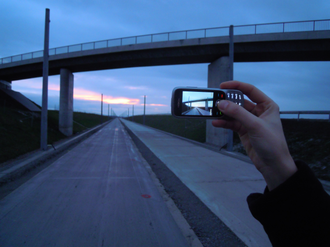
Photographs are now created using a smartphone or camera, which uses a lens to focus the scene's visible wavelengths of light into a reproduction of what the human eye would perceive.
Today, photographs help us remember important moments, share experiences with friends and family, and learn about the world. They are used in many places, from books and newspapers to websites and social media. Because photographs can capture real moments, they help us understand history, nature, and everyday life in a way that words alone cannot.
Etymology
The word photograph was created in 1839 by Sir John Herschel. It comes from the Greek words φῶς (phos), meaning "light," and γραφή (graphê), meaning "drawing" or "writing." Together, they mean "drawing with light."
This word can talk about the actual picture—like a printed photo—or the act of taking a photo, even before you see the image.
History
Main article: History of photography
The first lasting photograph was made in 1822 by Nicéphore Niépce using a method called heliography. Early photos of real scenes took many hours because the methods were not very sensitive. In 1839, Louis Daguerre created a better way called the daguerreotype, which needed only minutes of light to make a picture. This made photography practical and popular.
As time went on, new methods made photos easier to see and copy. By the 1850s, glass plates were used to create images on paper. Color photography began in the 1800s but did not become common until the 1930s with new films like Kodachrome. These films allowed people to take and share colorful pictures easily.
Types of photographs
Old photographs were made using a special chemical process. First, a film would capture a flipped image called a negative. Then, this negative was printed onto special paper to create a normal picture, called a positive. Another way was to flip the negative image directly, making it into a transparency, which could be viewed through a frame called a slide.
For a long time, most photos were in black and white, even though color photography existed. It wasn’t until the 1940s and 1950s that color photos became common, and by the 1960s, color photos became the norm. Some special cameras could take wide, sweeping photos called panoramic images.
With the arrival of computers and digital cameras, photos could be stored and printed using different types of printers. The internet also became a place where people share photos, with sites like Flickr, PhotoBucket, and 500px being very popular. The idea of taking a photo of oneself, called a “selfie,” started way back in 1839 and is now very common.
Preservation
To keep photographs safe, it is best to store each one in its own folder made from special, acid-free paper. This helps protect the photo from damage. Photos should be placed vertically inside the folder and kept in a larger box, with each folder labeled so you can find the photos easily.
Another way to protect photos is by using polyester sleeves. These sleeves keep photos safe from moisture and dirt, but they can sometimes trap these things close to the photo. It is important to store photos in polyester sleeves horizontally to prevent them from bending. However, these sleeves can attract dust and may scratch the photo over time. When looking at photos, it is best to leave them flat and not pick them up by the corners. If you need to handle a photo, use gloves to keep oils and dirt from damaging it.
Myths and beliefs
Some people have special ideas about photographs. In the past, when pictures were made on a shiny surface, some spiritual groups thought they could see into a person’s soul. They also worried that this might let unwanted spirits in. In some religions, like among some Muslims, it is not liked to pray in a place with many photographs.
Sometimes, strange things that happen in photography make people think they have captured spirits in a picture. A few people even make their living by taking photos that seem to show ghosts. There are also old beliefs that taking certain kinds of photos can bring bad luck, like photographing a pregnant woman or someone who has passed away.
Legality
Some kinds of photographs are not allowed by law. This includes pictures of government buildings, secret places, private property, and certain copyrighted works. Laws about photography differ in different places.
In some public places owned by the government, like courts or libraries, you need permission to take pictures. It is also against the law to take photos in places like cinemas without permission. In some countries, people can choose not to have their picture taken, but if they don’t say anything against it, it’s okay to photograph them.
In South Africa, it is legal to take photos of people in public places. You can also sell these photos for some uses, but there are limits to how they can be used commercially. In the United Kingdom, you can take photos of private property from a public place. However, taking photos of one person too often might be seen as harassment. The UK also has laws about privacy that can limit where and how photos can be shared.
Images
Related articles


This article is a child-friendly adaptation of the Wikipedia article on Photograph, available under CC BY-SA 4.0.
Images from Wikimedia Commons. Tap any image to view credits and license.