 Safekipedia
Rapa Nui people
Adapted from Wikipedia · Discoverer experience
The Rapa Nui are the Indigenous Polynesian peoples of Easter Island. They are the easternmost Polynesian culture, and today, their descendants make up about 60% of the island's population. Many Rapa Nui people also live in mainland Chile. They speak their own language called Rapa Nui as well as Chilean Spanish.
In 2017, about 7,750 people lived on Easter Island, and nearly all of them lived in a village named Hanga Roa on the west coast of the island.
Today, tourism is very important to the Rapa Nui people. Many visitors come to see the huge stone sculptures called moai, which are a famous part of the island's history.
In recent years, Rapa Nui activists have worked hard to protect their lands and culture. They have spoken up about wanting control over their own territory, especially when new rules are made about the island's resources. This has sometimes led to disagreements with the Chilean police.
History
Further information: History of Easter Island
The Rapa Nui people are thought to have settled on Easter Island between the years 300 and 1200 CE. Earlier guesses placed their arrival around 700–800 CE, but newer evidence from radiocarbon dating suggests they may have arrived as late as 1200 CE. Studies of old bones show that the Rapa Nui came from Polynesia.
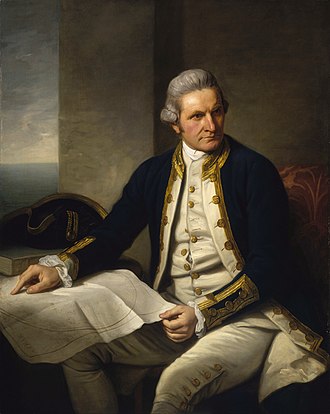
In 1722, the first European, Jacob Roggeveen, arrived on the island, which was Easter Sunday. He stayed for about a week. In 1770, Felipe González de Ahedo visited and claimed the island for Spain. Later, famous explorer James Cook and another explorer also visited the island.
Culture
Language
Main article: Rapa Nui language
The Rapa Nui people speak both Spanish and their traditional Rapa Nui language, also called Pascuan. Rapa Nui is an Eastern Polynesian language written with the Latin alphabet, but most people use Spanish daily. Spanish is the main language used in schools and government on Easter Island. The Rapa Nui language is slowly changing to sound more like Spanish. There is also a special system of symbols called Rongorongo, found in the 1800s, which might be an old way of writing the Rapa Nui language, but we are still learning about it.
Mythology
Main article: Rapa Nui mythology
Rapa Nui mythology includes stories about Hotu Matu'a, who is believed to have been the first person to settle on Easter Island, and the Tangata manu. The Tangata manu stories are about a religion and a competition where eggs were used to choose a special person each year. More recent stories tell of a big battle between two groups, the Hanau Epe and the Hanau Momoko. The dwarf planet Makemake is named after a god from these stories.
Moai
Main article: Moai
The most famous part of Rapa Nui culture is the moai—large human figures carved from rock between 1250 and 1500 CE. These statues were thought to be the living faces of ancestors. All of the moai were knocked down by 1868. They stand on stone platforms called ahu, with Ahu Tongariki being the largest. Some moai have red stone hats called Pukao. Today, the Rapa Nui people and the Chilean government work to protect and restore these statues. Rapa Nui National Park, which has many moai, is a World Heritage site.
Art
The Rapa Nui people have made beautiful things like feather headdresses, bark cloth, wood carvings, and stone carvings. They used special stones called adzes to finish their carvings. A special feature of Rapa Nui statues is that they used shell or coral with obsidian to make the eyes.
Music
Main article: Music of Easter Island
Traditional Rapa Nui music includes singing and chanting with instruments like conch shell trumpets, dancers who hit rhythmically, accordions, and kauaha, a percussion instrument made from a horse’s jaw bone. Today, Rapa Nui music mixes with Latin American styles, creating new kinds of music like a Rapa Nui version of tango. Matato'a is a well-known group that helps keep traditional dancing and music alive.
Tattoos
Main article: Rapa Nui tattoos
Tattoos were very important in Rapa Nui culture. They showed a person’s social status, with priests, warriors, and chiefs having more tattoos. Both men and women were tattooed. Tattoos mixed images of people and animals. Today, young Rapa Nui people are bringing back these traditional tattoos. The tattoos were made using bone needles called Uhi and ink made from burned Ti leaves and sugar cane.
Cuisine
Main article: Pascuense cuisine
Rapa Nui cuisine combines traditional foods with influences from Latin America. Popular foods include fish, octopus, eel, sea snails, lobster, sweet potato, taro, banana, pineapple, coconut, pumpkin, and meats like poultry, pork, and lamb. Traditional meals are cooked in an earth oven called umu pae, where meat, fish, vegetables, and fruit wrapped in banana leaves are roasted. Other dishes include po'e, a pudding made from mashed bananas, pumpkin, and flour, and tunu ahi, fish grilled on hot stones. Ceviche is also enjoyed.
Interaction with the environment
Some people think that the Rapa Nui people, the original people of Easter Island, may have faced big changes before Europeans arrived in 1722. They believe this happened because the island’s trees were cut down, which made it hard to grow food and build things like the famous stone statues called moai. However, studies show that the population did not suddenly drop before Europeans came.
The island’s plants and animals changed over time. Some plants and birds are no longer there, possibly because of human activity and natural changes like droughts. Scientists think many of these changes happened slowly and were caused by a mix of factors.
Agriculture
Farming on Easter Island was challenging because of strong winds and little rain. People used clever methods to help their crops grow. They built systems to hold water and protect plants from wind. They also used stones in special patterns to help the soil keep moisture and stop erosion. The main crops included sweet potatoes, yams, taro, bananas, and sugarcane. Chickens were the only animals raised by the Rapa Nui people.
Images
Related articles


This article is a child-friendly adaptation of the Wikipedia article on Rapa Nui people, available under CC BY-SA 4.0.
Images from Wikimedia Commons. Tap any image to view credits and license.