 Safekipedia
State Research Center of Virology and Biotechnology VECTOR
Adapted from Wikipedia · Discoverer experience
The State Research Center of Virology and Biotechnology VECTOR of Rospotrebnadzor is a special science lab in Koltsovo, Novosibirsk Oblast, Russia. It studies viruses and other tiny germs that can make people very sick. The lab has very safe buildings to keep dangerous germs locked away, using cameras, motion sensors, fences, and strong safety systems to protect everyone.
This lab is one of only two places in the world that kept the smallpox virus, a very dangerous sickness that doctors have stopped completely. During a time long ago, the lab also worked on research about very powerful germs that could be used to hurt many people, but today it focuses on keeping people healthy.
Today, the Vector Institute helps the World Health Organization by studying a type of flu called H5N1 that can spread among birds and sometimes to people. This work is very important for getting ready if a big flu sickness happens somewhere in the world.
History
The State Research Center of Virology and Biotechnology VECTOR was organized in 1974. It has a long history of studying viruses and made important contributions to research on diseases like smallpox. The center also worked on projects in genetic engineering, creating viruses that can produce harmful substances and studying substances that affect the nervous system.
In more recent times, the center has worked on many health projects. These include developing a vaccine for Hepatitis A, influenza vaccines, and vaccines for the Ebola virus. They also created antiviral medicines and tests to diagnose HIV and Hepatitis B. VECTOR is one of only two labs in the world allowed to keep the now-eradicated smallpox virus.
COVID-19 vaccine development
Main article: EpiVacCorona
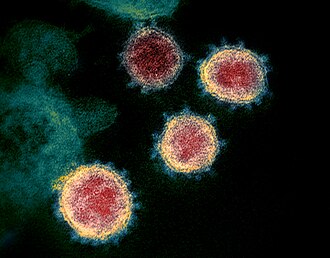
In March 2020, scientists at VECTOR began testing vaccine prototypes for the new coronavirus disease, COVID-19. They planned to present the best one in June. The prototypes were made, and testing on animals started.
In July 2020, research from the center showed that the SARS-CoV-2 virus that causes COVID-19 can be destroyed in room temperature water after 72 hours. This helped with studying the disease during the pandemic.
Tasks
The main work at VECTOR is to study very dangerous and important viral infections, understand how they change and spread, and be ready to diagnose these infections. They also work on creating new medicines to treat and prevent diseases. Additionally, they train students and researchers in virology, molecular biology, and biotechnology through advanced schooling and higher education programs.
Related articles


This article is a child-friendly adaptation of the Wikipedia article on State Research Center of Virology and Biotechnology VECTOR, available under CC BY-SA 4.0.
Images from Wikimedia Commons. Tap any image to view credits and license.