 Safekipedia
Wolves in heraldry
Adapted from Wikipedia · Discoverer experience
The wolf has been an important symbol in many cultures, especially during the Middle Ages. Even though wolves were sometimes seen as dangerous animals that hurt livestock or people, they were also respected for their strength and bravery. Because of this, wolves often appeared on the coats of arms and crests of many noble families.
In heraldry, which is the art of designing these special symbols for families and places, the wolf usually stood for things like patience and hard work. It reminded people of the importance of keeping going, even during long and difficult times, such as sieges or tough jobs. This meaning made the wolf a popular choice for families who wanted to show these qualities.
Wolves in heraldry show how people in the past saw animals not just as threats, but also as symbols of good qualities. By putting a wolf on their coat of arms, families told others about their courage and determination. This tradition has helped us learn about the values that were important to people many years ago.
wolf
heraldry
Middle Ages
man-eater
arms
crests
History
British Isles and other Anglophone heraldries
Wolves often appear in English heraldry, either as a main symbol or as a supporter on coats of arms. In Scottish heraldry, wolf heads are especially common. Early drawings of wolves could sometimes be confused with other animals like lynxes or foxes.
Edward IV used a white wolf as one of his symbols to show his family ties. Wolves also appear in the names of many families, like Videlou and Wolseley.
Wolves can be seen in many ways in coats of arms, such as standing proudly, with just their heads shown, or even with wings. They also serve as supporters for some town symbols.
The "Enfield beast", a made-up creature with a fox’s head, an eagle’s front legs, and a wolf’s body and tail, is used by some families and towns.
Continental Europe
Wolves are also important in the heraldry of many European countries. In Spanish heraldry, wolves are often shown carrying lambs, which is a special pose called ravissant.
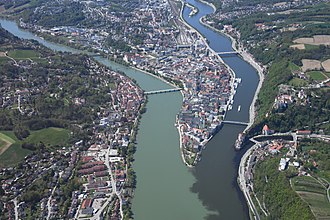
In German heraldry, towns and families use wolves in their symbols. For example, Passau shows a red wolf on a white shield.
In Italian heraldry, the story of Romulus and Remus includes a famous symbol called the Capitoline Wolf.
In French heraldry, there was an official position called the Wolfcatcher Royal that used two wolf heads as its symbol.
Today, wolves are also a proud symbol for the Chechen people, representing freedom and equality.
Examples of wolves in heraldry
Wolves have appeared in many symbols and coats of arms. They are shown in the Basque region, like in Salazar and Navarre. In Finland, both the Sipoo municipality and the Valtimo municipality feature wolves in their designs. In Spain, the town of Busturia in the Basque Country also uses a wolf. The noble house Balšić and the 1st CBRN Regiment 'Valencia' of the Spanish Army both have wolves in their emblems. The Chechen people, known as Ichkeria, used a wolf as a symbol. There is also a proposed coat of arms for Turkey that includes the wolf Asena.
Images
Related articles


This article is a child-friendly adaptation of the Wikipedia article on Wolves in heraldry, available under CC BY-SA 4.0.
Images from Wikimedia Commons. Tap any image to view credits and license.