 Safekipedia
Baroque architecture
Adapted from Wikipedia · Explorer experience
Baroque Architecture
Baroque architecture is a very fancy and detailed style of building. It started in Italy in the late 1500s. People loved its grand and beautiful look. This style spread all over Europe and even to places like Russia, the Ottoman Empire, and the Spanish and Portuguese colonies in Latin America.
Baroque buildings took ideas from earlier Renaissance architecture, like domes and colonnades, and made them taller, grander, and more decorated. Inside, artists used special painting and sculpture to make it look beautiful. There were lots of golden decorations, twisted columns, and beautiful paintings on the ceilings and walls. In palaces, big staircases became very important parts of the design.
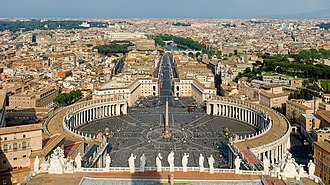
The style grew and changed over time. In the early days, famous buildings like the Church of the Gesù and St. Peter's Basilica showed this new way of building. Later, great artists like Gian Lorenzo Bernini created amazing works such as the colonnade of St. Peter's Square. By the late 1600s, Baroque style could be seen in many countries, with each place adding its own special touch.
Baroque architecture is known for its grand and dramatic style. It used special effects to create a sense of wonder and beauty. Buildings had painted ceilings that looked like the sky, filled with angels and light. There were also grand stairways designed to impress, and mirrors used to make spaces feel bigger and brighter. Artists used strong contrasts of light and dark to add drama. These elements made Baroque buildings feel lively and full of movement.
Images
Related articles


This article is a child-friendly adaptation of the Wikipedia article on Baroque architecture, available under CC BY-SA 4.0.
Images from Wikimedia Commons. Tap any image to view credits and license.