 Safekipedia
Savanna
Adapted from Wikipedia · Explorer experience
What is a Savanna?
A savanna is a special kind of land where trees and grasses grow together. The trees in a savanna are spaced far apart, so their leaves do not form a thick roof over the ground. This lets sunlight reach the grasses and other plants below.
Savannas can look different depending on where they are. Some have many trees with thin leaves, while others have only a few scattered trees or just shrubs.
Where Are Savannas Found?
Savannas are found in many warm places around the world, such as Africa, Australia, South America, and India. They cover about 20% of the Earth's land, acting like a bridge between deserts and forests.
In Africa, you can see animals like giraffes, elephants, and zebras in the savanna. In Australia, you might spot kangaroos and wallabies.
The Word "Savanna"
The word "savanna" comes from the Spanish word sabana. The Taíno people used this word to mean "treeless grassland" in the West Indies. Over time, the spelling changed to "savannah."
Different Kinds of Savannas
Savannas are special places where grass and trees grow together. In some savannas, there are very few trees and lots of grass. In others, there are more trees close together. There are different kinds of savannas around the world.
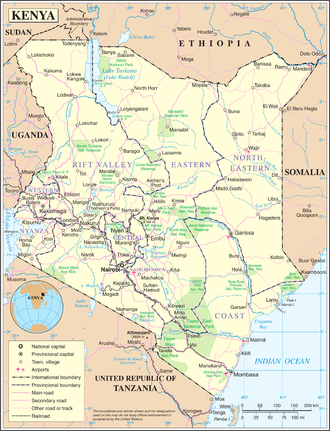
Some savannas are found in warm places, like Kenya and Brazil. Others are in cooler areas, like New South Wales. Some have trees that lose their leaves in winter, like in Portugal. There are also savannas that flood during certain times of the year, like the Nile Delta flooded savanna. And some savannas are high up in the mountains, like in the Colombian Andes.
Images
Related articles




This article is a child-friendly adaptation of the Wikipedia article on Savanna, available under CC BY-SA 4.0.
Images from Wikimedia Commons. Tap any image to view credits and license.