 Safekipedia
Non-Aligned Movement
Adapted from Wikipedia · Adventurer experience
The Non-Aligned Movement (NAM) is a group of 121 countries that are not formally aligned with or against any major power bloc. It was created to help developing countries during the Cold War, when the world was split into two big groups led by different powers.
The movement started after the Korean War, when some nations wanted to stay independent and not join either side. One side was led by the Soviet Union and included the Warsaw Pact, while the other was led by the United States and included NATO. In 1961, the Non-Aligned Movement was officially formed in Belgrade, Yugoslavia. Key leaders who started it were Yugoslav president Josip Broz Tito, Egyptian president Gamal Abdel Nasser, Indian prime minister Jawaharlal Nehru, Ghanaian president Kwame Nkrumah, and Indonesian president Sukarno.
The main goal of the Non-Aligned Movement was to protect the independence and security of its member countries. It worked against things like colonialism, foreign control, and interference from big powers. Today, the movement includes many countries and represents over half of the world’s population, many of which are developing countries. It continues to focus on building strong connections among developing nations, especially those in the Global South.
History
See also: Cold War
Origins and the Cold War
The term 'Non-Alignment' started in 1950 at the United Nations by India and Yugoslavia. Both nations chose not to join any big powers during the Korean War. The Non-Aligned Movement began in 1956 on the Brijuni islands in Yugoslavia. Leaders from Yugoslavia, India, and Egypt signed the Declaration of Brijuni on July 19, 1956. They wanted peace through working together, not by letting one nation control another.
The movement gave developing countries another choice during the Cold War, instead of choosing between Western and Eastern powers. The idea of "non-alignment" became official at the first meeting of non-aligned leaders in 1961. In 1955, a big meeting in Bandung, Indonesia, helped grow the movement. Leaders from many Asian and African countries agreed to stay neutral in the Cold War. In 1961, the first official meeting of non-aligned countries was in Belgrade, Yugoslavia.
In 1975, some members supported a United Nations statement that compared a country's policies to unfair treatment. This led to disagreements. Some members, like India and Pakistan, also had conflicts with each other.
Cuba's role
In the 1970s, Cuba tried to become a leader in the Non-Aligned Movement. Cuba helped other countries with advice and programs. In 1976, a big meeting praised Cuba for helping a country. Cuba was set to host a meeting in 1979. But when the Soviet Union went into Afghanistan's war in 1979, many members disagreed. Cuba supported the Soviet Union and lost its leadership role in the movement.
Post-Cold War
After the Cold War ended, the Non-Aligned Movement changed. Yugoslavia, one of the founding members, broke apart in the early 1990s, which affected the group. Some of its parts still have a connection but most aren't active members. India focused less on the movement.
New members joined over time, like Azerbaijan and Fiji in 2011. The movement focused on helping poorer countries work together and stand up for their interests. It talked about problems like unfair economic rules and poverty.
The 16th meeting happened in Tehran, Iran, in 2012. Leaders from many countries attended, and Iran became the leader of the movement until 2015. Venezuela hosted the next meeting in 2016. Azerbaijan hosted in 2019, and Uganda hosted in January 2024. The next meeting is expected to be in Uzbekistan.
Organizational structure and membership
The Non-Aligned Movement was created so countries could stay neutral and not join any big groups. Because of this, it doesn’t have a very strict organization. Important rules were set in 1996. The biggest meeting is where leaders of these countries decide things, and the leader changes each time to the country hosting the meeting.
To join the Non-Aligned Movement, a country must follow the ten "Bandung principles" from 1955. These include respecting human rights, respecting each country’s land and independence, and solving problems peacefully. They also must treat all nations equally, no matter how big or small.
Policies and ideology
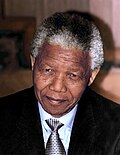
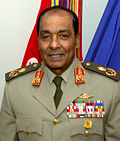
The Non-Aligned Movement includes leaders with many different ideas, such as Suharto, Nelson Mandela, Mohamed Morsi, Josip Broz Tito, and Ernesto Samper. Despite their differences, these leaders and their countries share a common goal of working for world peace and safety.
In the 1970s and 1980s, the movement worked to improve trade between richer and poorer countries. They also started a way for news agencies to share information better. The Non-Aligned Movement supports working together in groups to help everyone. Most of its members are also part of the United Nations. The movement has helped with important issues like ending unfair treatment of people and supporting groups fighting for their rights in places such as Rhodesia and South Africa.
Current activities and positions
The Non-Aligned Movement talks about how powerful countries use groups like the United Nations in ways that don’t follow the rules. It wants changes to give smaller countries more say and make decisions fairer.
The movement supports people in places like Puerto Rico and Western Sahara to decide their own future. It also works hard for sustainable development, meaning ways to help countries grow without harming the environment or people. It points out problems like unfair trade, heavy debts, and not enough help from other countries.
In recent years, the movement has talked about concerns with some actions by the United States. It believes every country should have the right to peaceful activities.
The movement has special centers to help countries work together, like one in Jakarta, Indonesia, that focuses on sharing knowledge and skills. There is also a youth group that brings together young people from member countries to discuss important issues. The movement values cultural diversity and human rights, wanting to protect different traditions and histories.
The movement has many working groups and committees led by different countries to handle topics like reforming the United Nations, human rights, and peace-building.
Summits
The main meeting of the Non-Aligned Movement is called the Non-Aligned Movement Summit. Leaders from member countries meet every few years at these summits.
Between summits, there are many meetings of ministers. Some focus on special topics, like peace and understanding between different beliefs. There is also a big meeting of foreign ministers every three years. Recent meetings were in Bali, Indonesia, and Algiers, Algeria.
The movement celebrated its 50th anniversary in Belgrade in 2011 and its 60th anniversary there in 2021. An online summit in May 2020 focused on working together to fight the COVID-19 disease.
| Date | Host country | Host city | Slogan | |
|---|---|---|---|---|
| 1st | 1–6 September 1961 |  Yugoslavia Yugoslavia | Belgrade | |
| 2nd | 5–10 October 1964 |  United Arab Republic United Arab Republic | Cairo | |
| 3rd | 8–10 September 1970 |  Zambia Zambia | Lusaka | |
| 4th | 5–9 September 1973 |  Algeria Algeria | Algiers | |
| 5th | 16–19 August 1976 |  Sri Lanka Sri Lanka | Colombo | |
| 6th | 3–9 September 1979 |  Cuba Cuba | Havana | |
| 7th | 7–12 March 1983 |  India India | New Delhi | |
| 8th | 1–6 September 1986 |  Zimbabwe Zimbabwe | Harare | |
| 9th | 4–7 September 1989 | Yugoslavia | Belgrade | |
| 10th | 1–6 September 1992 |  Indonesia Indonesia | Jakarta | |
| 11th | 18–20 October 1995 |  Colombia Colombia | Cartagena | |
| 12th | 2–3 September 1998 |  South Africa South Africa | Durban | |
| 13th | 20–25 February 2003 |  Malaysia Malaysia | Kuala Lumpur | |
| 14th | 15–16 September 2006 | Cuba | Havana | |
| 15th | 11–16 July 2009 |  Egypt Egypt | Sharm el-Sheikh | International Solidarity for Peace and Development |
| 16th | 26–31 August 2012 |  Iran Iran | Tehran | Lasting peace through joint global governance |
| 17th | 13–18 September 2016 |  Venezuela Venezuela | Porlamar | Peace, Sovereignty and Solidarity for Development |
| 18th | 25–26 October 2019 |  Azerbaijan Azerbaijan | Baku | Upholding the Bandung principles to ensure a concerted and adequate response to the challenges of the contemporary world |
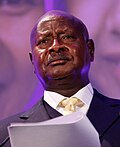
| 19th | 15–20 January 2024 |  Uganda Uganda | Kampala | Deepening Cooperation for Shared Global Affluence |
| 20th | 2029 |  Uzbekistan Uzbekistan |
Chair
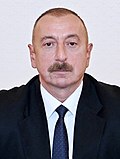
The Non-Aligned Movement has a special leader called the chair. This leader changes every few years. The chair helps guide the work of the movement and talks about shared goals.
The current chair is Brazil. They were chosen in 2024.






Coordinating Bureau
The Coordinating Bureau is at the United Nations. It helps guide the Non-Aligned Movement. The Bureau watches over task forces, committees, and working groups. These groups handle the daily work of the movement.
Members, observers and guests
The Non-Aligned Movement is a group of countries that do not officially support any major global power blocs. It was created to help developing countries during the Cold War. Today, it is one of the largest groups of nations after the United Nations.
Current members
Many countries from Africa, the Americas, Asia, Europe, and Oceania are members of the Non-Aligned Movement. These nations joined at different times.
Observers
Several countries and organizations have observer status in the Non-Aligned Movement. These include nations like Argentina, Armenia, and Brazil, as well as groups such as the African Union and the United Nations.
Images
Related articles


This article is a child-friendly adaptation of the Wikipedia article on Non-Aligned Movement, available under CC BY-SA 4.0.
Images from Wikimedia Commons. Tap any image to view credits and license.