 Safekipedia
Planets in astrology
Adapted from Wikipedia · Adventurer experience
In astrology, planets have a meaning different from the astronomical understanding of what a planet is. Long ago, before telescopes were invented, people looked up at the night sky and saw two kinds of things: the fixed stars, which stayed in the same place, and moving objects, called "wandering stars" in Ancient Greek. These wandering stars changed their position over time.
The Ancient Greeks learned from the Babylonians and were the first to name the five planets that can be seen without special equipment, along with the Sun and Moon. They called these seven bodies the Sacred 7 Luminaires or 7 Heavens. Many cultures, including the Babylonians, Greeks, and Romans, thought of these seven classical planets as gods and even named their days of the week after them. Today, astrologers still use these seven classical planets in their work.
To ancient astrologers, these planets were believed to carry the will of the deities and directly affect human life. Modern astrologers see the planets as representing basic human drives or energies. They believe the planets show different qualities depending on the signs of the zodiac and the houses they occupy. The way planets relate to each other, called aspects, is also important in astrology.
Planetary symbolism
Main article: Astrological symbols
This table shows the planets used in astrology. These are different from the planets scientists study. Each planet is linked to a god or goddess from old Greek and Roman stories. Most planet names we use today come from these Roman gods and goddesses. Sometimes, the same god has a different name in Greek and Roman cultures.
Daily motion
| Celestial body | Symbol | Roman deity | Greek God | Babylonian God | Armenian God | Hindu God | Egyptian God | Connection | Meaning (European) | Meaning (Vedic) |
|---|---|---|---|---|---|---|---|---|---|---|
| Sun |  | Sol | Ἥλιος (Helios) Ἀπόλλων (Apollo) | 𒀭𒌓 (Shamash) | Արև (Arev) | सूर्य (Surya) | Ra Horus | ancient | God of Prophecy and Solar Incarnation Helios means "sun." | The Sun God. Associated with ego, sense of purpose, and vitality. Son of Aditi and sage Kashyapa; Surya means "the supreme light." |
| Moon |  | Luna Diana | Σελήνη (Selene) Ἄρτεμις (Artemis) | 𒂗𒍪 (Sin) | Լուսին (Lusin) | चंद्र (Chandra) | Khonsu | ancient | Goddess of Hunting and Lunar Incarnation Selene means "moon." | The Moon God. Associated with emotions, the mother, and motherly instincts. Chandra means "shining." |
| Mercury |  | Mercury | ʽἙρμῆς (Hermes) | 𒀭𒀝 (Nabu) | Լուծ (Luć) | बुध (Budha) | Thoth | ancient | God of messengers, travel, and/or commerce. | A planet god known for his preserving and protecting nature to mankind and manhood. Associated with communication, wit, and cleverness. |
| Venus |  | Venus | Ἀφροδίτη (Aphrodite) [Κύπριδα (Cypris)] [Κυθέρεια (Cytherea)] | 𒀭𒈹 (Inanna) | Եղջերու (Yełjeru) | शुक्र (Shukra) | Isis Hathor | ancient | Goddess of romance and lust; Venus means "love" and/or "sexual desire." | The mentor of Asuras. Associated with fertility, beauty, and enthusiasm. Always helped demons in the war against gods; Shukra means "clear, pure, brightness, or clearness." |
| Mars |  | Mars | Ἀρης (Ares) | 𒀭𒄊𒀕𒃲 (Nergal) | Ծկրավորի (Ćkravori) | मंगल (Mangala) | Anhur | ancient | God of War | Son of Earth. Associated with auspicious occasions. Also associated with strength, aggression and anger. |
| Ceres |  | Ceres | Δημήτηρ (Demeter) | 𒀭𒊩𒌆𒂟 (Nisaba) | Անահիտ (Anahit) | देवी (Shakti) | Isis Renenutet | modern | Goddess of agriculture, fertility, and the seasons. | Divine Mother principle; nurturing, nourishment, and the sustaining power of nature. |
| Jupiter |  | Jupiter Jove | Δίας (Dias) | 𒀭𒀫𒌓 (Marduk) | Փառազնոտ (Þaŕaznot) | गुरु (Guru) बृहस्पती (Brihaspati) | Amun | ancient | Leader, King and Father of the Olympian Gods; Jupiter means "Jovial King" and/or "Father of Thunder." | Mentor and teacher of gods. Always helped gods in war against demons. Guru means "teacher" or "priest." Brihaspati means "lord of prayer or devotion." Associated with luck and expansion. |
| Saturn |  | Saturn | Κρόνος (Cronus) Ἥλιος (Helios) | 𒀭𒊩𒌆𒅁 (Kajamanu) | Արտախույր (Artakhuyr) | शनि (Shani) | Horus-Horkapet | ancient | God of Agriculture and the Father of Jupiter. Leader and ruler of the Titans; Saturn means "God of Seeds", "Father of the Harvest", and/or "Father Time." | Shani Dev, Son of Surya (Sun);God of Karma and Justice;Gives consequences for a person's deeds during life. Associated with status, equitable punishment, wisdom, ambition, patience, honor, toughness, but with pessimism, hardships, and fatalism. |
| Uranus |  | Caelus | Ουρανός (Ouranos) | 𒀭𒀭 (Anu, Anshar) | Երկնակ (Yerknak) | अरुण (Aruna) | Horus | modern | God of the Sky, Father of Saturn and Grandfather of Jupiter; "Uranus" and "Caelus" both mean "Sky" and/or "Father Sky." | Charioteer of Sun and half-brother of mythological snake king Vasuki in the Puranas. Vasuki means "of divine being." Associated with originality, eccentricity, electricity, and sudden changes. |
| Neptune | 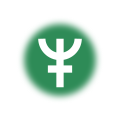 | Neptune | Ποσειδῶν (Poseidon) | 𒀭𒂗𒆠 (Enki) | Մոսմոռակ (Mosmoŕak) | वरुण (Varuna) | Khnum | modern | God of the Sea | God of rain in Indian mythology; Varuna means "God of the sea." Associated with dreams, illusions, and psychic receptivity, but sometimes with vagueness and uncertainty as well. |
| Pluto |  | Pluto | Πλούτων (Plouton) Ἅδης (Hades) | 𒀭𒊩𒌆𒆠𒃲 (Ereshkigal) | Հեռակ (Heŕak) | यम (Yama) | Osiris | modern | God of the Underworld and Death; Hades means "the unseen" and Pluto means "wealth." | God of Death and Rebirth. Associated with subconscious forces, ruling all that is 'below the surface' (Abyss). |
| Eris |  | Discordia Bellona | Ἔρις (Eris) | 𒀭𒅗𒊏 (Erra) 𒀭𒉆𒋻 (Namtar) 𒀭𒀭𒅎 (Anzu) | Սպանդարամետ (Spandaramet) | काली (Kali) | Set | modern | Goddess of discord, rivalry, and conflict that exposes hidden tensions. | Force that breaks illusion and provokes transformation through crisis. |
| Planet | Average speed (geocentric) | Highest speed (geocentric) | Lowest speed (geocentric) |
|---|---|---|---|
| Sun | 00°59'08" | 01°03'00" | 00°57'10" |
| Moon | 13°10'35" | 16°30'00" | 11°45'36" |
| Mercury | 01°23'00" | 02°25'00" | −01°30'00" |
| Venus | 01°12'00" | 01°22'00" | −00°41'12" |
| Mars | 00°31'27" | 00°52'00" | −00°26'12" |
| Ceres | 00°12'40" | 00°30'00" | −00°16'00" |
| Jupiter | 00°04'59" | 00°15'40" | −00°08'50" |
| Saturn | 00°02'01" | 00°08'48" | −00°05'30" |
| Uranus | 00°00'42" | 00°04'00" | −00°02'40" |
| Neptune | 00°00'24" | 00°02'25" | −00°01'45" |
| Pluto | 00°00'15" | 00°02'30" | −00°01'48" |
| Pallas | 00°12'20" | 00°40'30" | −00°22'30" |
| Juno | 00°14'15" | 00°39'00" | −00°18'00" |
| Vesta | 00°16'15" | 00°36'00" | −00°17'32" |
| Chiron | 00°02'00" | 00°10'00" | −00°06'00" |
History
Long ago, people wrote books about how planets might affect people born under them. These books, called "planet books," became popular in Germany around the mid-1400s and stayed popular for a long time. They often shared stories from old myths about gods and goddesses linked to each planet.
Each planet was connected to pairs of ancient gods. For example, Saturn was linked to Cronus and Rhea, Jupiter to Eurymedon and Themis, and others too. People thought children born under each planet would have special qualities. Saturn's children were seen as hard-working, Jupiter's as friendly, Mars' as strong, the Sun's as musical, the Moon's as gentle, Mercury's as clever, and Venus' as loving.
Classical planets
The seven classical planets are those easily seen with the naked eye, and were thus known to ancient astrologers. They are the Moon, Mercury, Venus, Sun, Mars, Jupiter, and Saturn. Sometimes, the Sun and Moon were referred to as "the lights" or the "luminaries". Vesta and Uranus can also just be seen with the naked eye, though no ancient culture appears to have taken note of them. The classical planets fit neatly into the theories of Aristotle and Ptolemy, with each being part of a Celestial sphere. The order of the classical planets is determined by the speed. The Moon moves the fastest and so is considered to form the first celestial sphere above Earth. Everything below the Moon is part of the sublunary sphere. Mercury moves the second fastest and so rules the next highest sphere. Next is Venus, which takes about 260 days to revolve around the Sun. Following that is the Sun, then Mars, Jupiter and Saturn.
The astrological descriptions attached to the seven classical planets have been preserved since ancient times. Astrologers call the seven classical planets "the seven personal and social planets", because they are said to represent the basic human drives of every individual. The personal planets are the Sun, Moon, Mercury, Venus and Mars. The social or transpersonal planets are Jupiter and Saturn. Jupiter and Saturn are often called the first of the "transpersonal" or "transcendent" planets as they represent a transition from the inner personal planets to the outer modern, impersonal planets.
Sun
The Sun is the ruling planet of Leo and is exalted in Aries. In classical Greek mythology, the Sun was represented by the Titans Hyperion and Helios (Roman Sol, and later by Apollo or Helios, the god of light). The Sun is the star at the center of the Solar System, around which the Earth and other planets revolve and provides us with heat and light. The arc that the Sun travels in every year, rising and setting in a slightly different place each day, is therefore in reality a reflection of the Earth's own orbit around the Sun. The Sun travels through the twelve signs of the zodiac on its annual journey, spending about a month in each. The Sun's position on a person's birthday therefore determines what is usually called their "sun" sign.
In astrology, the Sun is usually thought to represent the conscious ego, the self and its expression, personal power, pride and authority, leadership qualities and the principles of creativity, spontaneity, health and vitality. One of the first recorded references to Sun worship is from the Mesopotamian Religion and described in the Epic of Gilgamesh. In medicine, the Sun is associated with the heart, circulatory system, and the thymus. Additionally, humans depend on the sun to produce and obtain vitamin D; an important supplement aiding the body's immune system and bone health.
Moon
The Moon is the ruling planet of Cancer and is exalted in Taurus. In classical Roman mythology, the Moon was Luna, at times identified with Diana (Artemis and Selene in Greek Mythology). The Moon is large enough for its gravity to affect the Earth, stabilizing its orbit and producing the regular ebb and flow of the tides. The lunar day syncs up with its orbit around Earth in such a manner that the same side of the Moon always faces the Earth.
In astrology, the Moon is associated with a person's intuition, emotions, unconscious habits, rhythms, memories, moods, instincts and their ability to react and adapt to those around them. It is associated for some with the mother or the urge to nurture, the home, the need for security and the past, especially early experiences and childhood. In medicine, the Moon is associated with the digestive system, stomach, breasts, the ovaries and menstruation and the pancreas.
Mercury
Mercury is the ruling planet of Gemini and Virgo and is exalted in Virgo. In classical Roman mythology, Mercury is the messenger of the gods, noted for his speed and swiftness.
In astrology, Mercury represents the principles of communication, mentality, thinking patterns, rationality/reasoning, adaptability and variability. Mercury governs schooling and education, the immediate environment of neighbors, siblings and cousins, transport over short distances, messages and forms of communication such as post, email and telephone, newspapers, journalism and writing, information gathering skills and physical dexterity. In medicine, Mercury is associated with the nervous system, the brain, the respiratory system, the thyroid and the sense organs.
Venus
Venus is the ruling planet of Libra and Taurus and is exalted in Pisces. In classical Roman mythology, Venus is the goddess of love and beauty, famous for the passions she could stir among the gods. Her cults may represent the religiously legitimate charm and seduction of the divine by mortals, in contrast to the formal, contractual relations between most members of Rome's official pantheon and the state.
Venus orbits the Sun in 225 days, spending about 18.75 days in each sign of the zodiac. Venus is the second-brightest object in the night sky, the Moon being the brightest. It is usually beheld as a twin planet to Earth.
In astrology, Venus is associated with the principles of harmony, femininity, the female principle and beginning, the maiden and the female body, beauty, refinement, affections, love, and the urge to sympathize and unite with others. It is involved with the desire for pleasure, comfort and ease. It governs romantic relations, marriage and business partnerships, the arts and fashion.
Mars
Mars is the ruling planet of Aries, the traditional ruling planet of Scorpio, and is exalted in Capricorn. Mars is the Roman god of war and bloodshed, whose symbol is a spear and shield. Both the soil of Mars and the hemoglobin of human blood are rich in iron and because of this they share its distinct deep red color.
Mars orbits the Sun in 687 days, spending about 57.25 days in each sign of the zodiac. It is also the first planet that orbits outside of Earth's orbit, making it the first planet that does not set along with the Sun. Mars has two permanent polar ice caps. During a pole's winter, it lies in continuous darkness, chilling the surface and causing the deposition of 25–30% of the atmosphere into slabs of CO2 ice (dry ice).
In astrology, Mars is associated with aggression, confrontation, masculinity, the male body, the warrior, the man, courage, energy, strength, ambition and impulsiveness. Mars governs sports, competitions and physical activities in general. In medicine, Mars presides over the genitals, head, the muscular system, the gonads and adrenal glands. It was traditionally held to be hot and excessively dry and rules the choleric humor. It was associated with fever, accidents, trauma, pain and surgery.
Jupiter
Jupiter is the traditional ruling planet of Sagittarius and Pisces. It is exalted in Cancer. In classical Roman mythology, Jupiter is the sky god, ruler of the gods, and their guardian and protector; his symbol is the thunderbolt. The Romans believed that Jupiter granted them supremacy because they had honored him more than any other people had. Jupiter was "the fount of the auspices upon which the relationship of the city with the gods rested." He personified the divine authority of Rome's highest offices, internal organization, and external relations.
In the same way, the planet Jupiter is the king of the other planets, a giant in size with spectacular, brightly colored clouds and intense storms. It plays an important protecting role in using its massive gravity to capture or expel from the solar system many comets and asteroids that would otherwise threaten Earth and the inner planets. Jupiter takes 11.9 years to orbit the Sun, spending almost an earth year (361 days) in each sign of the zodiac. Furthermore, Jupiter is usually the fourth-brightest object in the sky (after the Sun, the Moon and Venus).
In astrology, Jupiter is associated with the principles of growth, expansion, adventures, healing, prosperity, good fortune, and miracles. Jupiter governs long distance and foreign travel, big business and wealth, higher education, religion, and the law. It is also associated with the urge for freedom and exploration, as well with gambling and merrymaking.
Saturn
Saturn is the traditional ruling planet of Capricorn and Aquarius and is exalted in Libra. In classical Roman mythology, Saturn is the god of seeds, crops, husbandry, and the harvest (agriculture), leader of the titans, father and founder of civilizations, social order, and conformity. The glyph is shaped like a scythe, but it is known as the "crescent below the cross", whereas Jupiter's glyph is the "crescent above the cross". Famous rings of the planet Saturn that enclose and surround it, reflect the idea of human limits. Saturn takes 29.5 years to orbit the Sun, spending about 2.46 years in each sign of the zodiac. During ancient Roman society, the Romans worshipped Saturn as the highest ranking and most important god among their pantheon of deities, sharing that same prestige with Jupiter.
In astrology, Saturn is associated with focus, precision, nobility, ethics, the father, civility, lofty goals, career, great achievements, dedication, authority figures, stability, virtues, productiveness, valuable hard lessons learned, destiny, structures, protective roles, balance, meritocracy, conservatism, and karma but with limitations, restrictions, boundaries, anxiety, tests, practicality, reality, and time. It concerns a person's sense of duty, commitment, responsibility, including their physical and emotional endurance in times of hardships. Saturn is fundamentally economical. It also represents concern with long-term planning or foresight. The Return of Saturn is said to mark significant events in each person's life. According to the 1st-century poet Manilius, Saturn is sad, morose, and cold.
Western astrology appraises Saturn as the primary native ruler of the tenth house. In traditional Hindu astrology however, Saturn ruled both the first and eighth houses, and had its joy in the twelfth house of mischief and bad luck.
Saturn rules over Saturday, which was named after the deity Saturn. In Chinese astrology, Saturn is ruled by the element earth. In Indian astrology, Saturn is called Shani or "Sani", representing a noteworthy career and longevity. He is also the bringer of obstacles and hardship.
Major planets discovered in the modern era
Since the telescope was invented, Western astrology added Uranus, Neptune, and Pluto to its methods. These planets are sometimes called outer planets. Indian and Chinese astrologers usually use the older seven-planet system. Modern astrologers give meanings to these planets based on big events that happened when they were discovered. These planets are thought to affect whole groups of people rather than just individuals.
Ceres
Ceres is a dwarf planet between Mars and Jupiter. It was found in 1801 by Giuseppe Piazzi. In stories, Ceres is the goddess of farming and growing food.
In astrology, Ceres is linked to caring for others, growing food, and feeling love and loss. It is sometimes thought to rule Virgo ♍️ and is strong in Gemini ♊️.
Some astrologers say Ceres shows how people care for and support each other, and how they deal with nutrition and health.
Uranus
Uranus is the modern ruling planet of Aquarius ♒️ and is strong in Scorpio ♏️. Uranus was found to be a planet in 1781 by Sir William Herschel.
Astrologers connect Uranus to new ideas, progress, inventions, and big changes. Uranus is also linked to freedom and being original.
Uranus rules groups that work for progress and change. In medicine, it is thought to relate to the nervous system and sudden health changes.
Neptune
Neptune is the modern ruling planet of Pisces ♓️ and is strong in Leo ♌️. Neptune was discovered in 1846.
In astrology, Neptune is linked to dreams, creativity, and feelings. It is also connected to confusion and unclear situations.
Neptune rules the twelfth house and is linked to the sea and deep water.
Pluto
Pluto is the modern ruling planet of Scorpio ♏️. It is strong in Aquarius ♒️. Pluto was discovered in 1930.
Astrology sees Pluto as a force that brings big changes and transforms people. It is linked to power, deep secrets, and major events.
Pluto rules the eighth house and is thought to be connected to intense feelings and deep changes.
Eris
Eris is a dwarf planet found in 2005 by a team led by Michael E. Brown. Its discovery led to Pluto being called a dwarf planet in 2006.
In astrology, Eris is linked to conflict, challenges to rules, and showing hidden problems.
Some modern astrologers think Eris rules Libra ♎️, focusing on balance and justice. Others think it is strong in Sagittarius ♐️, but this idea is new and not part of older astrology.
Other Solar System bodies
See also: Asteroids in astrology
Some large asteroids like Pallas (.svg)) and Vesta (.svg)) can sometimes be seen with binoculars, and Vesta can even be spotted without equipment. When Ceres (dwarf planet), Juno (.svg)), Pallas, and Vesta were found in the early 1800s, they were first thought to be planets before being grouped as asteroids. Ceres has since been reclassified again as a dwarf planet.
Since 1977, when Chiron (.svg)) was discovered, some people who study astrology have started using it in their charts, even though scientists call it a centaur, a type of object that orbits between Jupiter and Neptune.
In recent years, many more distant dwarf planets have been found, such as Sedna (.svg)), Quaoar (.svg)), Orcus (.svg)), Gonggong (.svg)), Haumea (.svg)), Makemake (.svg)), and Eris (.svg)). While they are not commonly used in everyday astrology, some new approaches try to include them.
Comets and novae have been watched for thousands of years. In the past, many cultures saw comets as signs of big events. Because comets appear and disappear quickly, they are usually not part of most modern astrology charts.
Fictitious and hypothetical planets
Some astrologers have thought about planets that we cannot see or have not discovered yet. These ideas are different from what scientists know about space. In 1918, an astrologer named Sepharial talked about something called Earth's "Dark Moon" Lilith, and some astrologers still use this idea today. This name is also used to describe the path of the real Moon's orbit.
Some astrologers believe that each of the twelve zodiac signs should have its own planet ruler. They think that two more planets might be waiting to be found—one for the sign Gemini and one for Taurus. They have suggested names like Pallas for Taurus and Apollo for Gemini. Another astrologer, Dane Rudhyar, thought that the true ruler of Taurus might be a planet beyond Neptune that he called Proserpine.
Ruling planets of the astrological signs and houses
Main article: Domicile (astrology)
In Western astrology, planets are linked to the zodiac signs and houses of the horoscope. For example, Mars is seen as strong and active. Aries is ruled by Mars and also has these qualities. The first house, also ruled by Mars, is about a person's health and how they show themselves to others.
Table 1: Modern signs, houses and planetary associations
Note: The planets in the table rule the signs on the same row, and the houses match the signs on the same row. This linking of planets to houses in this order is a modern idea.
Table 2: Traditional Chaldean houses and planetary relationships.
| Sign | House | Ruling ancient | Ruling modern | Domicile | Exaltation | Detriment | Fall |
|---|---|---|---|---|---|---|---|
| Aries | 1st House | Mars | Pluto | Mars | Sun | Venus, Eris | Saturn |
| Taurus | 2nd House | Venus | Venus | Moon | Pluto, Mars | Uranus | |
| Gemini | 3rd House | Mercury | Mercury | Ceres | Jupiter, Neptune | Eris | |
| Cancer | 4th House | Moon | Moon | Jupiter | Saturn | Mars | |
| Leo | 5th House | Sun | Sun | Neptune | Uranus | Pluto | |
| Virgo | 6th House | Mercury | Ceres | Ceres, Mercury | Mercury | Neptune, Jupiter | Venus |
| Libra | 7th House | Venus | Eris | Venus, Eris | Saturn | Mars, Pluto | Sun |
| Scorpio | 8th House | Mars | Pluto | Pluto, Mars | Uranus | Venus | Moon |
| Sagittarius | 9th House | Jupiter | Jupiter, Neptune | Eris | Mercury | Ceres | |
| Capricorn | 10th House | Saturn | Saturn | Mars | Moon | Jupiter | |
| Aquarius | 11th House | Saturn | Uranus | Uranus | Pluto | Sun | Neptune |
| Pisces | 12th House | Jupiter | Neptune | Neptune, Jupiter | Venus | Mercury, Ceres | Mercury |
Images
Related articles


This article is a child-friendly adaptation of the Wikipedia article on Planets in astrology, available under CC BY-SA 4.0.
Images from Wikimedia Commons. Tap any image to view credits and license.