 Safekipedia
Quebec
Adapted from Wikipedia · Adventurer experience
Quebec (French: Québec) is Canada's largest province by area. It is in Central Canada and is the only Francophone-majority province, where most people speak Québécois French. Quebec touches Ontario to the west, Newfoundland and Labrador to the northeast, New Brunswick to the southeast, and Nunavut along a coastal border. To the south, it borders the United States. Quebec is Canada's second-most populous province, with around eight million people.
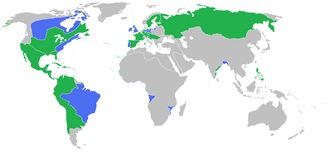
From 1534 to 1763, the land that is now Quebec was a French colony called Canada, the biggest part of New France. After the Seven Years' War, it became a British colony and later joined Canada in 1867. For a long time, the Catholic Church had strong influence, but this shifted during the Quiet Revolution in the 1960s and 1970s when the Government of Quebec took on more roles.
Quebec’s government follows a Westminster system and is both a liberal democracy and a constitutional monarchy, with the Premier of Quebec as the head of government. The province is known for its special culture and language laws like the Charter of the French Language. Its legal system mixes civil-law and common-law traditions.
Quebec’s economy is strong in services and many industries, such as aeronautics, hydroelectricity, mining, and pharmaceuticals. The province is famous around the world for its maple syrup, its fun comedy scene, and its passion for hockey, which is one of the most popular sports in Canada. Quebec also has a rich tradition of literature, music, films, TV shows, and many lively festivals.
Etymology
The name Québec comes from an Algonquin word meaning 'narrow passage' or 'strait'. It described the area around Quebec City where the Saint Lawrence River gets narrow. Early spellings of the name included Québecq and Kébec. In 1608, French explorer Samuel de Champlain chose the name Québec for the new settlement he built there, which became important for New France.
History
Main article: History of Quebec
For a chronological guide, see Timeline of Quebec history.
Indigenous peoples and European expeditions (pre-1608)
Main articles: Peopling of the Americas, Indigenous peoples in Quebec, and Exploration of North America
The first people in Quebec lived there thousands of years ago. By the 1500s, eleven groups lived there, including the Inuit and ten First Nations such as the Abenaki, Algonquin, and Huron-Wendat.
In the 1500s, European explorers searched for new sea routes to Asia. In 1534, Jacques Cartier became the first European to reach Quebec. More explorers came after that, but France focused on other areas for many years.
New France (1608–1763)
Main articles: Canada (New France) and New France
In 1608, Samuel de Champlain founded Quebec City, making it the capital of New France. The settlement became a center for trading furs with Indigenous peoples. More settlers arrived, and the colony grew.
New France grew large, stretching from Hudson Bay to the Gulf of Mexico. Tensions with Britain over control of North America led to several wars. The last war, the Seven Years' War, ended in 1763 with Britain winning control of New France.
British North America (1763–1867)
Main articles: Province of Quebec (1763–1791), Lower Canada, and Canada East
After Britain took control in 1763, they created a new government for Quebec. The Quebec Act of 1774 let French settlers keep some of their traditions and laws.
As Britain faced challenges elsewhere, some American colonies tried to convince Quebec to join them, but most Quebec residents stayed neutral. In 1791, Britain split Quebec into two parts: Upper Canada and Lower Canada.
Traditional Quebec (1867–1960)
In 1867, Quebec became one of the founding provinces of Canada. Montreal grew into a major city, adopting new technologies and becoming a center of business and culture.
During this time, Quebec expanded its borders several times. The province also saw movements to protect French language and culture, especially in response to English-speaking communities in other parts of Canada.
Modern Quebec (1960–present)
The 1960s brought major changes known as the Quiet Revolution, where Quebec modernized its government and society. New laws were created to support education, language rights, and economic development.
Quebec has continued to balance its unique French identity within Canada. There have been debates about Quebec's political future, including referendums on independence. Despite these discussions, Quebec remains an important part of Canada, with a strong focus on preserving its language and culture.
Geography
Main article: Geography of Quebec
See also: List of rivers of Quebec and List of lakes of Quebec
Quebec is in the eastern part of Canada and is the country's largest province. It is about 1.5 million square kilometres, which is nearly three times the size of France. Most people live in the Great Lakes–St. Lawrence Lowlands area, where the soil is rich and the climate is warm, good for farming.
Quebec's land changes depending on the area. Most of the province is part of the Canadian Shield, with flat land and some mountains like the Laurentian Mountains. In the far north, near Ungava Bay, there is flat Arctic tundra. Quebec has many lakes and rivers, with the Saint Lawrence River being very important. The province has lots of fresh water, including lakes and rivers that flow into the Atlantic and Arctic Oceans.
Quebec has a cold climate with lots of snow in winter and rain during the year. Temperatures change a lot, with warm summers and very cold winters. The south is milder, while the north is much colder.
Quebec has many plants and animals. In the north, there is tundra with few plants. Further south, there are forests with coniferous trees, mixed forests, and deciduous forests with many types of trees. Wildlife includes deer, moose, bears, wolves, and many birds.
Quebec's forests cover a large area and have trees like spruce, fir, pine, and maple. Rivers and lakes have fish such as salmon, trout, and bass. Birds like robins, sparrows, eagles, and geese are found across the province. Large animals like caribou and polar bears live in the north, while smaller animals like squirrels and beavers are common everywhere in Quebec.
Government and politics
Main articles: Government of Quebec and Politics of Quebec
Quebec follows the Westminster system, and it is a liberal democracy and a constitutional monarchy with a parliamentary regime. The leader of Quebec is the premier, who heads the biggest party in the unicameral National Assembly (Assemblée Nationale). The lieutenant governor stands for the King of Canada.
Quebec sends 78 members of Parliament to the House of Commons of Canada. Quebec also has 24 senators in the Senate of Canada.
Quebec looks after its own matters, like police and laws. The National Assembly has many parties, such as Coalition Avenir Québec, Parti libéral du Québec, Québec solidaire, and Parti Québécois.
Quebec has offices in different cities in Canada to help it work better with the rest of the country.
Subdivisions
Main article: Administrative divisions of Quebec
Quebec is split into 17 areas, like Montréal and Capitale-Nationale. It also has territories, districts, and many towns and cities to help organize its land and people.
Ministries and policies
Quebec has many groups that help with different jobs, like taking care of the environment, helping workers, and supporting families. These groups make rules and help people in many ways.
Quebec helps new people come to live there, especially if they know French and have useful skills.
Quebec’s health services help all its people, and it offers affordable childcare for young children. Schools in Quebec are managed by special groups to make sure everyone gets a good education.
External relationships
Quebec works closely with the United States and France. It has offices in many countries to help it share ideas and work together with other places around the world. Quebec is part of groups that help countries that speak French.
Law
Quebec law is a shared job between the federal and provincial government. The federal government takes care of criminal law, foreign affairs, and laws about trade between provinces and communication systems. The provincial government looks after areas such as health care, education, and natural resources.
Quebec law mixes two legal traditions (civil law and common law). Private law, which deals with relationships between people, is mostly under the control of the Parliament of Quebec. Public law, which involves the government and its actions, follows the common law tradition. Both English and French can be used in courts and government meetings, even though French is the main language in Quebec.
Courts
Quebec has a court system organized like England's, with courts that handle many types of cases. The main courts are the municipal courts, the Court of Quebec, and the Superior Court of Quebec. Decisions from these courts can be appealed to the Quebec Court of Appeal, and very important cases can go to the Supreme Court of Canada.
Law enforcement
The main police force in Quebec is the Sûreté du Québec, which works with other police groups when needed. Some cities, like Montreal and Quebec City, have their own police forces. Indigenous communities also have their own police. Courts handle crimes, with some cases tried by the federal government for specific laws.
Demographics
Main articles: Demographics of Quebec and Demographic history of Quebec
In the 2021 census, Quebec had 8,501,833 people. This is about 23% of Canada's total population. The province covers a large area of 1,356,625.27 km2 (523,795.95 sq mi). It is the biggest province in Canada. Its largest cities are Montreal, Quebec City, Laval, and Gatineau.
Quebec's population mainly speaks French. In 2021, 93.7% of people could understand and speak French, and 74.8% spoke it as their first language. Many people in Quebec also learn English, with 42.2% of French-speaking people able to have a conversation in English.
Religion
Main article: Religion in Quebec
Religion in Quebec (2021 census)
Most people in Quebec follow Christianity, but many say they have no religion. Other religions include Islam, Judaism, Buddhism, Hinduism, and Sikhism.
Language demographics of Quebec
See also: French language in Canada
Quebec is special because French is the main language, unlike the rest of Canada where English is more common. The government has special rules to protect the French language.
There are also many people in Quebec who speak English as their first language, especially in areas like Montreal. Quebec is also home to many Indigenous languages and languages brought by immigrants from around the world.
Indigenous peoples
Main article: Indigenous peoples in Quebec
In 2021, about 205,010 Indigenous people lived in Quebec. They include Inuit, First Nations, and Métis communities. Many of these groups have their own governments and agreements with Quebec to protect their rights and lands.
Acadians
The subject of Acadians in Quebec is important. Many people in Quebec have Acadian ancestors, because Acadians fled to Quebec during the Great Upheaval.
Quebec has Acadian communities. Acadians mainly live on the Magdalen Islands and in Gaspesia, but there are also communities in the Côte-Nord and Centre-du-Québec regions.
Economy
Main article: Economy of Quebec
Quebec has a strong and open economy. In 2022, the value of goods and services was very high, about US$50,000 for each person. Quebec’s economy is the 46th largest in the world and helps Canada a lot.
Most of Quebec’s economy is based on services, but it also uses natural resources and good roads. Quebec is good at science and technology, with many companies doing research. The province spends more on these areas than many other places.
Some big companies in Quebec include Bombardier, Desjardins, the National Bank of Canada, and Hydro-Québec. Quebec makes a lot of electricity from water, which helps keep energy clean. The province is also known for mining, farming, and forestry.
Quebec is a leader in making airplanes, with many important airplane companies based in Montreal. Quebec also has a big tourism industry, with many visitors each year. People can enjoy beautiful cities and nature.
The technology sector in Quebec is growing fast, especially in video games and computer services. Many famous game companies have offices in Quebec.
Thanks to trade agreements, Quebec’s exports have grown a lot. In 2008, Quebec sent out about 157 billion Canadian dollars worth of goods and services. Most of these went to the United States, but many also went to Europe, Asia, and other places.
Quebec brought in about 178 billion Canadian dollars worth of goods and services in 2008. Most came from the United States, Europe, and Asia.
Quebec makes a lot of electricity from water, more than any other place in Canada. In 2019, almost all of Quebec’s electricity came from hydroelectric power, with a little from wind. The company Hydro-Québec runs most of the electricity stations and networks. Quebec wants to use even more clean energy in the future.
Quebec’s mining industry is important too. It makes money from metals like gold, iron, and copper, as well as other minerals. The farming and food industry is also big, creating many jobs.
Quebec’s airplane industry is one of the biggest in the world. Many top airplane companies work there, and Montreal is a major center for aviation. The pulp and paper industry is also important, even though it has faced some challenges.
Quebec does not have much oil, so it imports most of its fuel. The province makes a lot of aluminum, using its strong electricity to produce it.
Many people in Quebec work in banking, insurance, and other financial services. The banking industry started in Montreal, and many banks still have offices there.
Tourism is very important to Quebec. Millions of visitors come each year to see the cities, nature, and attractions. The tourism industry creates jobs for many people in hotels, restaurants, and other businesses.
Quebec has many scientists and technology workers. The government supports new ideas and inventions to help the economy grow.
Quebec’s technology sector includes many companies in telecommunications, video games, and computer services. Montreal is a top place for these industries, with many famous game companies and tech workers.
Montreal is also a key place for medicine and health-related jobs.
Education
Main article: Education in Quebec
See also: List of universities in Quebec, List of colleges in Quebec, and List of schools in Quebec
Quebec has a special way of organizing schools that is different from other parts of Canada. Children in Quebec go through five main levels of school: preschool, primary school, secondary school, college, and then university. At each level, there are public schools paid for by taxes and private schools that students pay for themselves.
All universities in Quebec were created by laws passed in 1967. Most of their money comes from public taxes.
Quebec is known around the world for its important work in science. Many smart people from Quebec have won big awards for their discoveries. Quebec is especially good at studying space, computers, medicine, and making new medicines.
Quebec has sent people into space and helped make satellites that orbit the Earth. The province is also a leader in studying life sciences.
Infrastructure
Transportation
Main articles: List of airports in Quebec, List of Quebec railways, and List of Quebec provincial highways
Transportation in Quebec is managed by several groups. Transports Québec handles land travel, while the Canadian Coast Guard and Nav Canada take care of sea and air travel. The road network in Quebec is very large, with many highways and bridges, such as the Quebec Bridge.
Quebec has many ports along the Saint Lawrence River where goods are moved. The province also has a big railway system used for carrying goods and people. There are also 43 airports with daily flights.
Healthcare
Quebec has a public health system where everyone can get care no matter their income. The government pays for most of the health services through taxes. There are many hospitals and health centers across Quebec to help people stay healthy.
Housing
Main article: Housing crisis in Quebec
In Quebec, many people own their homes, but some rent. Over the past years, home prices have gone up, making it harder for people to buy homes. Some cities in Quebec have very few homes available for rent.
Culture
Main article: Culture of Quebec
Quebec has its own special culture that grew from its history as part of New France. This culture is unique because it is a French-speaking area surrounded by larger English-speaking areas.
The Quartier Latin in Montreal and Vieux-Québec in Quebec City are important places for culture. Life in cafes and outdoor restaurant areas shows a Latin influence in Quebec’s culture. The théâtre Saint-Denis in Montreal and the Capitole de Québec theatre in Quebec City are main attractions.
Government and non-government groups help support culture in Quebec. The Conseil des arts et des lettres du Québec supports creation and shows for all cultural fields. The Société de développement des entreprises culturelles helps people working in cultural jobs. The Prix du Québec is an award for people with exceptional achievements in culture. Other awards include the Athanase David Awards for literature, Félix Awards for music, Gémeaux Awards for television and film, Jutra Awards for cinema, Masques Awards for theatre, Olivier Guimond Awards for humour, and the Opus Awards for concert music.
Performing arts
Main articles: Music of Quebec, Dance in Quebec, and Comedy in Quebec
Traditional music in Quebec includes dances like the jig, quadrille, reel, and line dancing. Traditional instruments include harmonica, fiddle, spoons, jaw harp, and accordion. The First Nations and Inuit of Quebec also have their own traditional music. Popular artists from the last century include singers Félix Leclerc, Gilles Vigneault, Kate and Anna McGarrigle, and Céline Dion. The Orchestre symphonique de Québec and the Montreal Symphony Orchestra perform at the Opéra de Québec and Opéra de Montreal.
Important dance groups include the Ballets Jazz de Montreal, the Grands Ballets, and La La La Human Steps. Theatre groups include the Compagnie Jean-Duceppe, the Théâtre La Rubrique, and the Théâtre Le Grenier. Venues include the Monument-National and the Rideau Vert Theatre in Montreal, and the Trident Theatre in Quebec City. Training centres include the National Theatre School of Canada and the Conservatoire de musique et d'art dramatique du Québec.
Circus groups such as the Cirque du Soleil are important. Other groups include Les 7 Doigts de la Main, Cirque Éloize, Cavalia, Kosmogonia, Saka, and Cirque Akya. Training centres include the National Circus School and the École de cirque de Québec. Tohu, la Cité des Arts du Cirque opened in 2004 to show circus arts.
Comedy is important in Quebec. Festivals such as the Just for Laughs festival in Montreal and the Grand Rire festivals in Quebec, Gatineau, and Sherbrooke are popular. The Association des professionnels de l'industrie de l'humour (APIH) promotes humour, and the National School of Humour trains future comedians.
Media
Main articles: Cinema of Quebec and Television in Quebec
The Cinémathèque québécoise promotes Quebec’s film and television history. The National Film Board of Canada supports film across Canada. Groups like the Association of Film and Television in Quebec (APFTQ) and the Association of Producers and Directors of Quebec (APDQ) help the film industry. Montreal has studios like Cité du cinéma and Mel's.
Television and radio stations such as Télé-Québec, CBC, and private channels broadcast Quebec shows, news, and more. Festivals like Les Rendez-vous du cinéma québécois and the Jutra Awards celebrate Quebec cinema. Other events include the Artis and Gemini Awards, the Film Festival of the 3 Americas, the Festival of International Short Film, the World Film Festival, and the Festival of New Cinema.
Literature and folklore
Quebec has many folktales, influenced by stories brought from France. These tales often include Christian ideas and beliefs. Characters like the Bogeyman, Chasse-galerie, and the Giant Beaupré appear in these stories.
Quebec literature began with explorers’ accounts. Writers like François-Xavier Garneau, Octave Crémazie, Honoré Beaugrand, Émile Nelligan, Lionel Groulx, Gabrielle Roy, Hubert Aquin, Michel Tremblay, Marie Laberge, and Gaston Miron are well known. The Terroir novel is a special type of story from Quebec.
Art and architecture
Main article: Architecture of Quebec
See also: List of art schools in Quebec
Quebec’s art developed from its landscapes and history. Artists such as Louis-Philippe Hébert, Cornelius Krieghoff, Alfred Laliberté, Marc-Aurèle Fortin, Marc-Aurèle de Foy Suzor-Coté, Jean Paul Lemieux, Clarence Gagnon, Alfred Pellan, Jean-Philippe Dallaire, Charles Daudelin, Arthur Villeneuve, Jean-Paul Riopelle, Paul-Émile Borduas, and Marcelle Ferron have created important works.
Art can be seen at the Quebec National Museum of Fine Arts, the Montreal Museum of Contemporary Art, the Montreal Museum of Fine Arts, and many galleries. The Montreal School of Fine Arts trains artists.
Quebec’s architecture includes many styles like Classical, Neo-Gothic, Roman, Neo-Renaissance, Greek Revival, Neo-Classical, Victorian, Second Empire, Modern, Post-modern, and Skyscrapers.
Early buildings along the Saint Lawrence River were Canadien-style houses and barns with tall, steep roofs. Canadien-style churches are also common in rural areas.
Heritage
See also: List of museums in Quebec
Historical sites in Quebec include the Village Québécois d'Antan, the village of Val-Jalbert, Fort Chambly, the Chicoutimi pulp mill, the Lachine Canal, and the Victoria Bridge. Museums such as the Museum of Civilization, the Museum of French America, the McCord Museum, and the Montreal Museum of Archaeology and History in Pointe-à-Callière show Quebec’s history. Schools like the Conservatoire de musique et d'art dramatique du Québec and groups such as the Bibliothèque et Archives nationales du Québec help protect Quebec’s culture. The Association Quebecoise des Loisirs Folkloriques keeps Quebec’s folklore alive.
Cuisine
Main article: Cuisine of Quebec
Quebec’s traditional food comes from 16th-century French cuisine, the fur trade, and hunting. It was also influenced by First Nations, English cuisine, and American cuisine. Popular dishes include tourtière, pâté chinois, poutine, and St. Catherine's taffy. In spring, many Quebecers visit sugar shacks (cabane à sucre) for a special meal.
Quebec is the world’s largest producer of maple syrup. It also makes beer, wine (including ice wine and ice cider), and cheese.
Sports
Sports are important in Quebec culture. Ice hockey is the national sport, first played in Montreal in 1875. Other sports include Canadian football with the Montreal Alouettes, soccer with Club de Foot Montréal, Grand Prix du Canada racing with drivers like Gilles Villeneuve and Jacques Villeneuve, and baseball with the former Montreal Expos. Quebec has hosted events like the 1976 Summer Olympics, Fencing World Championships, track cycling, and the Transat Québec-Saint-Malo race.
Quebec athletes have done well in recent Winter Olympics, winning many medals for Canada.
Holidays and symbols
Main article: Symbols of Quebec
St-Jean-Baptiste Day is a big holiday on June 24. It honours John the Baptist, the patron saint of French Canada. The song Gens du pays by Gilles Vigneault is often heard. Other traditions include National Patriots' Day, which honours the patriotes, and Moving Day on July 1.
Other holidays include the Réveillon, a big feast on Christmas Eve and New Year's Eve. Traditional dishes and music are part of the celebration. April Fools' Day is called Poisson d'Avril, where people play tricks and stick fish-shaped paper cutouts on others’ backs.
Quebec’s symbols include its coat of arms, the motto Je me souviens, the fleur-de-lis, and the Great Seal of Quebec. The snowy owl, yellow birch, and iris versicolor are official emblems representing Quebec’s climate, resources, and diversity.
Quebec's diaspora
Many people from Quebec moved to other places, especially to the Canadian prairies. These early movers were mostly French Canadians, and today many people in places like Franco-Albertans, Fransaskois, and Franco-Manitobans come from them.
Between the mid-1800s and the Great Depression, many people left Quebec in an event called the Grande Hémorragie. Some of them later came back to Quebec, while others stayed in places like New England in the United States.
Some efforts tried to keep people in Quebec by helping them move to new areas within Quebec itself, like Saguenay-Lac-St-Jean and Val-d'Or, or even to places like Northeastern Ontario. Today, people in towns such as Timmins, Hearst, Moosonee, and Sault Sainte Marie have family roots in Quebec.
In recent times, many people from Quebec, called snowbirds, travel to warm places like Florida during the winter. This has created small communities where lots of Quebec people live temporarily, like in Hollywood.
Images
Related articles



This article is a child-friendly adaptation of the Wikipedia article on Quebec, available under CC BY-SA 4.0.
Images from Wikimedia Commons. Tap any image to view credits and license.