 Safekipedia
St. John's, Newfoundland and Labrador
Adapted from Wikipedia · Adventurer experience
St. John's, Newfoundland and Labrador
St. John's is the capital and largest city of the Canadian province of Newfoundland and Labrador. It is located on the eastern tip of the Avalon Peninsula on the island of Newfoundland and covers an area of 446.04 square kilometres. It is the easternmost city in North America if we don’t count Greenland.
The city’s name may come from the idea that John Cabot arrived in the harbour on the birthday of John the Baptist in 1497, though this is likely a story made up later. Another chance is that there was already a small fishing village with the same name there long before it became an official city. It became a city in 1888 and, as of January 2025, the area around it had about 239,316 people, making it Canada’s 22nd-largest city area.
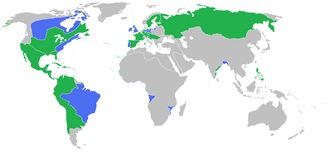
St. John's has an interesting history. It was important during big wars like the Seven Years' War, the American Revolutionary War, and the War of 1812. Famous inventor Guglielmo Marconi also received the first signal for talking across the Atlantic Ocean here. Because of its history and culture, many people visit St. John's as a tourist spot.
History
Further information: Timeline of St. John's history
Early history (1500–1799)
St. John's started as a place where fishermen set up camps in the early 1500s. Explorers named it after John the Baptist when they first saw its harbour in 1494. Ships from many countries, like France, Spain, and Portugal, came to fish in its waters.
The town became more permanent after 1630. It grew slowly, with more people arriving in the summer to fish. By the late 1600s, it had some defenses to protect it. There were attacks from other countries, but St. John's often defended itself.
Modern history (1800–present)
In the 1800s, St. John's kept growing. It became important for fishing, government, and trade. During big wars like the American Revolutionary War and the War of 1812, it was a key naval base.
In 1901, an important radio signal was received there, and in 1919, it was the starting point for the first nonstop flight across the Atlantic Ocean.
During the Second World War, St. John's was a busy port for navy ships and had air bases. After the war, the city had hard times when the cod fishery collapsed in the 1990s. Finding oil nearby helped the city's economy grow again.
Fires
St. John's had several big fires over the years. The most famous was the Great Fire of 1892, which destroyed much of the city. Other fires in 1816, 1817, 1819, and 1846 also caused damage.
Geography
St. John's is a city along the coast of the Atlantic Ocean, on the northeast of the Avalon Peninsula in southeast Newfoundland. It is the easternmost city in North America, not counting Greenland, and the largest city in the province of Newfoundland and Labrador. It is also the second-largest city in the Atlantic Provinces, after Halifax, Nova Scotia. The city's downtown area is near St. John's Harbour, and the city spreads out from there in all directions. It covers a large area, larger than Montreal, Quebec, but much of it is still covered in natural woods.
The area around St. John's has many types of trees, including black spruce, white spruce, and balsam fir. Other trees such as white birch, alder, and cherry are also common. Some trees that were brought in from other places, like sycamore maple and Norway maple, grow well there too.
St. John's has a humid continental climate, which means it has cold winters and warm summers. The Gulf Stream, a warm ocean current, helps keep the temperature changes smaller than usual for its location. The city's temperatures range from about −4.7 °C in February to 16.5 °C in August. St. John's gets a lot of rain and is one of the wettest cities in Canada outside of British Columbia. It is also very windy and foggy. The city can sometimes get strong storms from the Atlantic Ocean. Snow is common in winter. The warmest temperature ever recorded was 33.9 °C, and the coldest was −29.4 °C.
Downtown architecture
Main articles: Architecture of St. John's, Newfoundland and Labrador and List of tallest buildings in St. John's, Newfoundland and Labrador
Downtown St. John's has a special style of buildings. It started as a place where fishermen from Europe would come to catch fish. The buildings were mostly wooden houses, sheds, and wharves. When the Industrial Revolution brought new ways to build, the city changed and grew. A big fire in 1892 destroyed most of the downtown area, so many buildings there were built after that.
The buildings in St. John's are often brightly colored, which is why some call it the "Jelly Bean Row." Long ago, the city was covered in coal soot, so people used dark colors like green, red, brown, and grey. In the 1970s, when coal was no longer used, bright colors became popular.
The city council has rules to protect the old buildings in downtown St. John's, including limits on how tall buildings can be. These rules have caused debates, especially when the city needed more office space. To help with this, the council changed the rules in one area to allow taller buildings. The first of these new taller buildings is a 12-storey office building with shops and parking.
Neighbourhoods
See also: Neighbourhoods in St. John's, Newfoundland and Labrador
St. John's has many different neighbourhoods. Georgestown was the first suburb of the city. The Goulds and Kilbride were separate communities before they joined St. John's. The Battery is an area near the water. Quidi Vidi is a small village close to the city.
Demographics
In the 2021 Canadian census done by Statistics Canada, St. John's had 110,525 people. The city covers 446.02 km2 (172.21 sq mi). In 2021, there were 247.8 people per km2 (641.8 per sq mi).
The St. John's census metropolitan area (CMA) includes 12 other places like Mount Pearl, Conception Bay South, and Paradise. The CMA had a total of 212,579 people.
Most people in St. John's speak English (92.9%). About 70.6% of people aged 25 to 65 went to school beyond high school.
Ethnicity
In 2021, about 86.5% of the city was white, 10.1% were visible minorities and 3.3% were Indigenous. The biggest visible minority groups were South Asian Canadian (2.8%), followed by Black Canadians (2.3%), Chinese Canadians and Arab Canadians (1.3% each).
Language
English is the main language for most people in St. John's (92.9%). In the whole province, Chinese is the second most common language. French is spoken by 0.6% of the population. Almost everyone (99.5%) speaks French or English or both.
Religion
From the 2021 census, religion groups in St. John's included:
- Christianity (75,965 people or 70.6%)
- No religion (26,170 people or 24.3%)
- Islam (3,215 people or 3.0%)
- Hinduism (890 people or 0.8%)
- Sikhism (475 people or 0.4%)
- Buddhism (285 people or 0.3%)
- Judaism (175 people or 0.2%)
- Indigenous Spirituality (25 people or 0.1%)
- Other (470 people or 0.4%)
The information below is from the 2001 Canadian Census and the National Household Survey 2011.
St. John's used to have groups of people divided by religion, but this has lessened in recent years. The city is home to the Roman Catholic Archbishop of St. John's and the Anglican Bishop of Eastern Newfoundland and Labrador. All major Christian groups lost members from 2001 to 2011, while the number of people with no religion grew from 3.9% to 11.1%.
| Ethnic origin, 2016 | |
|---|---|
| Ethnic origin | percentage |
| Canadian | 42.3 |
| English | 40.4 |
| Irish | 32.7 |
| Scottish | 9.3 |
| French | 5.4 |
| Aboriginal | 4.9 |
| German | 2.9 |
| Panethnic group | 2021 | 2016 | 2011 | 2006 | 2001 | |||||
|---|---|---|---|---|---|---|---|---|---|---|
| Pop. | % | Pop. | % | Pop. | % | Pop. | % | Pop. | % | |
| European | 93,160 | 86.53% | 96,310 | 89.93% | 96,995 | 93.35% | 95,365 | 95.92% | 95,235 | 97.29% |
| Indigenous | 3,585 | 3.33% | 3,250 | 3.03% | 2,705 | 2.6% | 1,110 | 1.12% | 685 | 0.7% |
| South Asian | 2,985 | 2.77% | 1,640 | 1.53% | 1,195 | 1.15% | 875 | 0.88% | 700 | 0.72% |
| African | 2,510 | 2.33% | 1,495 | 1.4% | 930 | 0.9% | 520 | 0.52% | 240 | 0.25% |
| Middle Eastern | 1,895 | 1.76% | 1,270 | 1.19% | 335 | 0.32% | 245 | 0.25% | 230 | 0.23% |
| East Asian | 1,550 | 1.44% | 1,750 | 1.63% | 1,100 | 1.06% | 870 | 0.88% | 535 | 0.55% |
| Southeast Asian | 1,140 | 1.06% | 710 | 0.66% | 310 | 0.3% | 105 | 0.11% | 165 | 0.17% |
| Latin American | 515 | 0.48% | 485 | 0.45% | 130 | 0.13% | 285 | 0.29% | 45 | 0.05% |
| Other | 325 | 0.3% | 185 | 0.17% | 205 | 0.2% | 55 | 0.06% | 40 | 0.04% |
| Total responses | 107,660 | 97.41% | 107,095 | 98.38% | 103,905 | 97.86% | 99,425 | 98.79% | 97,885 | 98.69% |
| Total population | 110,525 | 100% | 108,860 | 100% | 106,172 | 100% | 100,646 | 100% | 99,182 | 100% |
| Religion | 2001 (%) | 2011 (%) | 2011 (Total) |
|---|---|---|---|
| Roman Catholic | 48.9% | 48.4% | 50,370 |
| Anglican | 22.8% | 16.1% | 16,745 |
| United Church | 15.0% | 12.8% | 13,345 |
| Pentecostal | 2.3% | 2.3% | 2,390 |
| No religion | 3.9% | 11.1% | 11,505 |
Economy
See also: List of companies headquartered in St. John's, Newfoundland and Labrador
St. John's is the capital of Newfoundland and Labrador. Its economy is tied to the ocean and to being a government center. Many jobs come from government work, which helps keep the economy stable and supports shops, services, and businesses. After the fishing industry declined in the 1990s, the focus shifted to oil and gas under the ocean. St. John's is a major center for oil and gas in Eastern Canada, with big companies like ExxonMobil Canada, Chevron, Husky Energy, Suncor Energy, and Statoil having important operations there. Several major oil fields, including Hibernia, Terra Nova, White Rose, and Hebron, produce oil off the coast.
The city's economy has grown quickly. In 2010 and 2011, the area's economy grew faster than almost anywhere else in the country. By 2010, the amount each person earned was among the highest in Canada. The city is also known for supporting small businesses and new ideas. Tourism is also important, with many cruise ships visiting the Port of St. John's.
Tourism
Tourism helps the local economy, especially with many cruise ships stopping at the Port of St. John's.
Culture
Main article: Newfoundland and Labrador § Culture
The downtown area of St. John's is a fun place where people come to enjoy culture and visit. Water Street and Duckworth Street are famous for their colorful old buildings. These buildings have shops, places to buy clothes, and restaurants.
George Street is a smaller street nearby. Many people go there to have fun at night. It holds special events like the George Street Festival in August and the Mardi Gras Festival in October. This street has helped many musicians start their careers, and it is busy almost every night.
The LSPU Hall supports the arts. The St. John's Arts and Culture Centre has an art gallery, libraries, and a big theatre for shows.
St. John's also has a symphony orchestra, music school groups, and many music festivals. There are dance groups, like the Kittiwake Dance Theatre. The city has museums, such as the Provincial Museum of Newfoundland and Labrador, and important historic places like Signal Hill.
Parks
Pippy Park is a large park in the east part of the city. It covers more than 1,400 hectares and has many fun things, like two golf courses, a big campground, walking and skiing trails, and a special area to protect plants and animals. The park also has the Fluvarium, where you can learn about nature and see inside a small river.
Bowring Park is a pretty park in the Waterford Valley. You can enter the park through a road that passes a pond with ducks and a statue of Peter Pan. The park was given to the city long ago and opened in 1914.
Bannerman Park is a park near the downtown area. It has a swimming pool, a playground, a place to play baseball, and lots of open grass. The park is used for many festivals and sports events, like the Newfoundland and Labrador Folk Festival. It is also where people finish the Tely 10 Mile Road Race.
Nearby, the home of the Lieutenant-Governor is in a park that everyone can visit.
Botanical Garden
The Memorial University of Newfoundland runs a large garden called the Botanical Garden where you can see many different plants.
Johnson Geo-Vista Park
Connected to the Johnson Geo Centre is a small park on the lower slopes of Signal Hill. This park has a special wet area called a fen, a small lake named Deadman's Pond, and many paths for walking.
Sport
Hockey
St. John's has had many professional hockey teams. The St. John's Maple Leafs played there from 1991 to 2005. They moved to Toronto after that.
The St. John's Fog Devils played in St. John's from 2005 to 2008. They left because of problems with their arena and not enough fans.
From 2011 to 2017, St. John's had the St. John's IceCaps. They moved closer to their main teams.
In 2018, St. John's got the Newfoundland Growlers. They won a big championship in their first season. But they stopped playing in April 2024.
In December 2024, a new team called the Newfoundland Regiment moved to St. John's. They started playing in January 2025.
Other sports
The St. John's Edge was a basketball team that started in 2017. They stopped playing in 2021.
In 2021, a new basketball team called the Newfoundland Rogues came to St. John's. They now play in a different league.
The Atlantic Rock is a rugby team that plays in St. John's. They play at Swilers Rugby Park.
St. John's has a big yearly race called the Tely 10 Mile Road Race.
St. John's is where the Canada men's national soccer team qualified for the FIFA World Cup in 1985.
Curling is popular in St. John's. The city has two curling clubs.
The St. John's Avalon Harps play hurling and Gaelic football.
Law and government
See also: St. John's City Council and List of mayors of St. John's, Newfoundland and Labrador
St. John's is run by a mayor and a group of elected leaders called a council. The mayor and council members are chosen by people in the city every four years. The current mayor is Danny Breen. City meetings and offices are in City Hall, which opened in 1970.
St. John's has been an important city for a long time. It was the capital of Newfoundland before it became part of Canada in 1949. Now, it is the capital of the province of Newfoundland and Labrador. The main government building for the province, called the Confederation Building, is in St. John's. The city elects nine representatives to the provincial government and three members to the national government in Ottawa.
Police services for the city are provided by the Royal Newfoundland Constabulary.
| Year | Liberal | Conservative | New Democratic | Green | |||||
|---|---|---|---|---|---|---|---|---|---|
| 2021 | 51% | 23,622 | 16% | 7,334 | 31% | 14,475 | 0% | 0 | |
| 2019 | 43% | 23,774 | 15% | 8,204 | 39% | 21,498 | 2% | 1,070 | |
| 2015 | 55% | 19,793 | 5% | 1,785 | 39% | 13,795 | 1% | 324 | |
| Year | Liberal | PC | New Democratic | ||||
|---|---|---|---|---|---|---|---|
| 2019 | 42% | 17,178 | 32% | 13,268 | 23% | 9,647 | |
| 2015 | 50% | 19,142 | 22% | 8,566 | 28% | 10,745 | |
Transportation
St. John's has a big harbor for ships. The city has an airport close to downtown. Many people fly from there to places like Toronto, Halifax, London, and Cancún.
St. John's is where the Trans-Canada Highway ends. This is a long road that links many parts of the country. The city has paths for walking and biking, such as the Grand Concourse, which goes through parks and along lakes. There are also special paths for bikers and runners on the White Hills.
Public buses, called Metrobus Transit, help people travel around the city. They stop at schools, shops, and important buildings. Long ago, St. John's had a railway, but it stopped in 1988.
Medical centres and hospitals
St. John's has important hospitals, such as the Health Sciences Centre, St. Clare's Mercy Hospital, Waterford Hospital, and the Janeway Children's Health and Rehabilitation Centre. These places are part of NL Health Services, which helps people stay healthy in all of Newfoundland and Labrador.
Education
St. John's has many schools for children and young adults. There are 32 primary and secondary schools, including two private ones. The city also has schools for French-speaking students and two private schools named St. Bonaventure's College and Lakecrest Independent.
The main campus of Atlantic Canada's largest university, Memorial University of Newfoundland, is in St. John's. There are smaller learning centers nearby, and the Fisheries and Marine Institute of Memorial University of Newfoundland is also in the city. The College of the North Atlantic has two main campuses in St. John's and offers many different programs for students.
Media
Main article: Media in St. John's, Newfoundland and Labrador
St. John's has one daily newspaper called The Telegram. Other local papers include The Muse, The Gazette, Le Gaboteur, The Scope, The Business Post, and The Current. The city also receives the national newspaper The Globe and Mail.
There is an independent TV station called CJON-DT, known as "NTV". Rogers Cable has its headquarters in St. John's and runs a community channel called Rogers TV. CBC Television also has its Newfoundland and Labrador headquarters in the city, with its station CBNT-DT broadcasting from University Avenue.
The city has 15 AM and FM radio stations, including two that broadcast in French.
Notable people
Main article: List of people from St. John's, Newfoundland and Labrador
St. John's is home to many famous people who have done great things in many different areas. These people come from all kinds of places and have become successful in politics, the arts, sports, and more. Their stories show the many talents and successes that come from this lively city.
Sister cities
St. John's has sister cities around the world. These include Ílhavo in Portugal and Waterford in Ireland. Sister cities work together to help each other and learn.
Images
Related articles



This article is a child-friendly adaptation of the Wikipedia article on St. John's, Newfoundland and Labrador, available under CC BY-SA 4.0.
Images from Wikimedia Commons. Tap any image to view credits and license.