 Safekipedia
Visegrád Group
Adapted from Wikipedia · Adventurer experience
The Visegrád Group (also known as the Visegrád Four or the V4) is a cultural and political alliance of four Central European countries: the Czech Republic, Hungary, Poland, and Slovakia. This group works together to improve cooperation in areas like military, economy, culture, and energy. All four countries are also part of the European Union, the North Atlantic Treaty Organization, and the Three Seas Initiative.
The group started with meetings of leaders from Czechoslovakia, Hungary, and Poland in the town of Visegrád, Hungary, on February 15, 1991. They chose this place to remember an old meeting from 1335. After Czechoslovakia split into two countries in 1993, the Czech Republic and Slovakia joined, making four members.
In 2004, all four countries joined the European Union, which was one of their main goals. During a time when many people were moving between European countries in 2015, the Visegrád Group helped stop some plans. Even though the group sometimes disagrees on important issues, it still helps people and organizations in these countries work together.
History
The Visegrád Group gets its name from a meeting in 1335. Leaders from the Czech, Polish, and Hungarian areas planned trade routes and talked about important ideas.
In 1991, the group started with the Czech and Slovak Federative Republic, Poland, and Hungary. They wanted to support democratic changes and join big European groups like NATO and the EU. After Czechoslovakia split in 1993, the Czech Republic and Slovakia joined, making four countries. All four became EU members in 2004.
Since joining the EU, the group has worked on cultural projects and shared knowledge. It got more attention during the 2015 European Migration Crisis when the countries had different ideas about EU plans. More recently, they disagreed on how to support Ukraine after Russia’s invasion in 2022. Even with these differences, the group still helps its members work together in Europe.
Economies
All four countries in the Visegrád Group are wealthy nations with a very high standard of living. They have had steady economic growth for a long time.
The Visegrád countries changed from planned economies to market economies after 1989. They joined the European Union and focused on making things for other European countries, especially Germany. This helped them grow their economies.
Only Slovakia uses the euro as its money. All four countries will eventually use the euro when they meet certain rules.
If you combine the economies of the four countries, they would be among the largest in Europe and the world. The Czech Republic has the highest income per person, followed by Slovakia, Hungary, and Poland.
The Visegrád countries support using nuclear power and want to build more nuclear power plants.
Czech Republic
The Czech Republic has the second largest economy in the group.
Hungary
Hungary has the third largest economy in the group. It has attracted a lot of investment from other countries. Its main industries include making machines, cars, chemicals, and food products.
Poland
Poland has the largest economy in the region. It is one of the fastest-growing economies in Europe. Its main industries include mining, making machines, cars, and metals. The service sector is also very important.
Slovakia
Slovakia has the smallest economy in the group but is still strong. It makes many cars and has many international companies. Its main industry is services.
Demographics
The Visegrád Group has about 64 million people. Poland has the most people, about 38 million. The Czech Republic has about 11 million, Hungary has about 10 million, and Slovakia has about 5.5 million. The number of people in the group is going down because there are fewer babies being born, more people are passing away, and some people are moving away. There are also rules about who can move into the group. People are working to help families have more children.
V4 capitals
- Warsaw (Poland) – 1,790,658 inhabitants (metro – 3,105,883)
- Budapest (Hungary) – 1,779,361 inhabitants (metro – 3,303,786)
- Prague (Czech Republic) – 1,318,688 inhabitants (metro – 2,647,308)
- Bratislava (Slovakia) – 432,801 inhabitants (metro – 659,578)
Current leaders
The Visegrád Group has four countries: the Czech Republic, Hungary, Poland, and Slovakia. Each country has a leader who helps guide the group.
-
Hungary
Péter Magyar
Prime Minister -
Poland
Donald Tusk
Prime Minister -
Slovakia
Robert Fico
Prime Minister
Initiatives
International Visegrád Fund
Main article: International Visegrád Fund
The International Visegrád Fund (IVF) is the main way the Visegrád Group countries work together. It helps connect people and groups in Central and Eastern Europe by supporting projects that bring them together.
Defence cooperation
Visegrád Battlegroup
Main article: Visegrád Battlegroup
In 2011, Poland agreed to lead a group of soldiers from the Visegrád Group. This group became ready to help in 2016. The countries also plan to practice their skills together regularly. Another group was formed later, including Croatia, and more groups are planned.
Other cooperation areas
In 2014, after events in Ukraine, the countries agreed to work more closely on defence. They decided to team up on many defence tasks, like planning, training, buying equipment together, and protecting each other’s skies.
The V4 Joint Logistics Support Group Headquarters was set up in 2020 and will be fully ready by early 2023.
Visegrád Patent Institute
Main article: Visegrad Patent Institute
In 2015, the countries signed an agreement to create this institute. It helps with checking new inventions under international rules starting in 2016.
Neighbour relations
See also: Schengen Area
European Union
All members of the V4 have been member states of the European Union since the EU's enlargement in 2004, and members of the Schengen Area since 2007.
Austria
Austria is next to the Visegrád Group to the southwest. The Czech Republic, Slovakia, and Austria started a special meeting group called the Slavkov format in early 2015. The first meeting happened on January 29, 2015, in Slavkov u Brna in the Czech Republic. A leader from the Czech Republic said this group was extra help, not a replacement for the Visegrád Group.
Germany
Germany is a major partner for the Visegrád Group. By 2018, Germany traded more with the V4 countries than with China.
Romania
On April 24, 2015, Bulgaria, Romania, and Serbia created a group inspired by the Visegrád Group. Greece joined later in 2017.
Romania has been asked to join the Visegrád Group before, but some problems made this hard.
Non-EU
Hungary, Poland, and Slovakia share a border with Ukraine. Poland also borders Belarus and Russia's Kaliningrad Oblast. The Czech Republic is surrounded by EU countries. Hungary borders Serbia, which wants to join the EU.
Ukraine
See also: Accession of Ukraine to the European Union and Ukraine–European Union relations
Ukraine, a neighbour to the east, gets help from the Visegrád Group to join closer to Europe. Ukraine joined a special trade deal with the EU, including the V4, in 2016.
The 2022 Russian invasion of Ukraine caused some disagreements in the Visegrád Group. Hungary had different views from the other countries, while the Czech Republic, Slovakia, and Poland supported Ukraine more. In November 2022, the Czech leader said this was a tough time for the group because of Hungary's different views.
Since Robert Fico returned to lead Slovakia in 2023, Hungary and Slovakia have worked closely together, sharing similar ideas about some EU decisions. Slovakia has become a strong partner for Hungary in EU meetings.
Country comparison
| Name | Czech Republic(Česká republika) | Hungary (Magyarország) | Poland | Slovakia |
|---|---|---|---|---|
| Official name | Republic of Poland (Rzeczpospolita Polska) | Slovak Republic (Slovenská republika) | ||
| Coat of arms |  |  |  | |
| Flag | 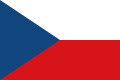 | 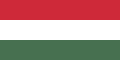 |  | 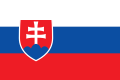 |
| Population |  10,649,800 (2019) 10,649,800 (2019) |  9,772,756 (2019) 9,772,756 (2019) | 37,972,812 (2019) | 5,450,421 (2019) |
| Area | 78,866 km2 (30,450 sq mi) | 93,028 km2 (35,918 sq mi) | 312,696 km2 (120,733 sq mi) | 49,035 km2 (18,933 sq mi) |
| Population Density | 134/km2 (350/mi2) | 105.9/km2 (274/mi2) | 123/km2 (320/mi2) | 111/km2 (290/mi2) |
| Government | Unitary parliamentary constitutional republic | Unitary parliamentary constitutional republic | Unitary parliamentary constitutional republic | Unitary parliamentary constitutional republic |
| Capital |  Prague – 1,318,688 (2,647,308 Metro) Prague – 1,318,688 (2,647,308 Metro) |  Budapest – 1,779,361 (3,303,786 Metro) Budapest – 1,779,361 (3,303,786 Metro) |  Warsaw – 1,783,321 (3,100,844 Metro) Warsaw – 1,783,321 (3,100,844 Metro) |  Bratislava – 429,564 (659,578 Metro) Bratislava – 429,564 (659,578 Metro) |
| Largest City | ||||
| Official language | Czech (de facto and de jure) | Hungarian (de facto and de jure) | Polish (de facto and de jure) | Slovak (de facto and de jure) |
| First Leader | Bořivoj I, Duke of Bohemia (first historically documented Duke of Bohemia, 867–889) | Grand Prince Árpád (traditional first leader of tribal principality, 895–907)King St. Stephen (of Christian kingdom, 997–1038) | Duke Mieszko I (traditional first leader of unified state, 960–992) | Pribina (traditional ancestor, ?–861) |
| Current Head of Government | Prime Minister Andrej Babiš (ANO 2011; 2017–2021, since 2025) | Prime Minister Péter Magyar (TISZA; since 2026) | Prime Minister Donald Tusk (Civic Platform; 2007–2014, since 2023) | Prime Minister Robert Fico (Smer; 2006–2010, 2012–2018, since 2023) |
| Current Head of State | President Petr Pavel (independent; since 2023) | President Tamás Sulyok (independent; since 2024) | President Karol Nawrocki (Law and Justice; since 2025) | President Peter Pellegrini (independent; since 2024) |
| Main religions | 44.7% undeclared, 34.5% irreligious, 10.5% Roman Catholic, 2% other Christians, 0.7% others | 38.9% Catholicism (Roman, Greek), 13.8% Protestantism (Reformed, Evangelical), 0.2% Orthodox, 0.1% Jewish, 1.7% other, 16.7% Non-religious, 1.5% Atheism, 27.2% undeclared | 87.58% Roman Catholic, 7.10% Opting out of answer, 1.28% Other faiths, 2.41% Irreligious, 1.63% Not stated | 62% Roman Catholic, 5.9% Evangelical Church of the Augsburg Confession in Slovakia, 3.8% Slovak Greek Catholic Church, 1.8% Reformed churches, 0.9% Czech and Slovak Orthodox Church, 0.3% Jehovah's Witnesses, 0.2% Evangelical Methodist, 10.6% not specified, 13.4% no religion |
| Ethnic groups | 64.3% Czechs, 25.3% unspecified, 5% Moravians, 1.4% Slovaks, 1.0% Ukrainians, 3.0% Other | 83.7% Hungarian, 3.1% Roma, 1.3% German, 14.7% not declared | 98% Poles, 2% other or undeclared | 80.7% Slovaks, 8.5% Hungarians, 2.0% Roma, 0.6% Czechs, 0.6% Rusyns, 0.1% Ukrainians, 0.1% Germans, 0.1% Poles, 0.1% Moravians, 7.2% unspecified |
| GDP (nominal) | ||||
| External debt (nominal) | $77.786 billion (2019 Q2) – 31.6 % of GDP | $112.407 billion (2019 Q2) – 66.6 % of GDP | $281.812 billion (2019 Q2) – 47.5 % of GDP | $51.524 billion (2019 Q2) – 46.9 % of GDP |
| GDP (PPP) | ||||
| Currency | Czech koruna (Kč) – CZK | Hungarian forint (Ft) – HUF | Polish złoty (zł) – PLN | Euro (€) – EUR |
| Human Development Index |
Images
Related articles


This article is a child-friendly adaptation of the Wikipedia article on Visegrád Group, available under CC BY-SA 4.0.
Images from Wikimedia Commons. Tap any image to view credits and license.