 Safekipedia
Edward Jenner
Adapted from Wikipedia · Discoverer experience
Edward Jenner (17 May 1749 – 26 January 1823) was an English physician and scientist who pioneered the concept of vaccines and created the smallpox vaccine, the world's first vaccine. The words vaccine and vaccination come from the name he gave to the protection he discovered using cowpox.
In Jenner's time, smallpox was a terrible disease that killed around 10% of the world's population, even more in crowded towns and cities. His discovery helped protect many people from this deadly illness. In 1821, he became a doctor for King George IV and also served as mayor of Berkeley and a justice of the peace. He was a member of the Royal Society.
Jenner is often called "the father of immunology" because his work saved so many lives. In 2002, he was named one of the top 100 great people in British history by the BBC in their list of the 100 Greatest Britons. He also made important discoveries in zoology, such as describing how the cuckoo lays its eggs in other birds' nests, a behavior noted long before by Aristotle in his History of Animals.
Early life
Edward Jenner was born on 17 May 1749 in Berkeley, Gloucestershire, England, as the eighth of nine children. His father, the Reverend Stephen Jenner, was the vicar of Berkeley, so Jenner received a strong basic education.
When Jenner was young, he went to school in Wotton-under-Edge at Katherine Lady Berkeley's School and in Cirencester. During this time, Jenner was inoculated (by variolation) for smallpox. At age 13 he was apprenticed for seven years to Daniel Ludlow, a surgeon of Chipping Sodbury, South Gloucestershire.
In 1770, at age 21, Jenner became apprenticed in surgery and anatomy under the surgeon John Hunter and others at St George's Hospital, London. Returning to his native countryside by 1773, Jenner became a successful family doctor and surgeon. In 1792, Jenner obtained the degree of MD from the University of St Andrews.
Zoology
Edward Jenner was elected a fellow of the Royal Society in 1788 after studying the life of the nested cuckoo. He showed that baby cuckoos push their host's eggs and chicks out of the nest, not the adult cuckoos. Jenner found that baby cuckoos have a special shape on their backs that helps them do this. His work was published in Philosophical Transactions of the Royal Society.
Jenner's study of animals helped him later when he began his work on vaccines. His knowledge of both human and animal biology was important for his discoveries. Today, many vaccines still use parts from animals like cows, rabbits, and chicken eggs, thanks to the work started by Jenner.
Marriage and human medicine
Edward Jenner married Catherine Kingscote in March 1788. Sadly, she passed away from a sickness in 1815. They had three children together. Jenner finished his medical studies and earned his doctor’s degree in 1792 from the University of St Andrews. He also helped learn more about heart health.
Invention of the vaccine
Inoculation was a common practice in some parts of the world, but it carried serious risks. In 1721, Lady Mary Wortley Montagu brought this method to Britain after seeing it in Constantinople.
Edward Jenner discovered that a person who had cowpox, a milder disease, would not get smallpox. On May 14, 1796, Jenner tested this idea on James Phipps, an eight-year-old boy. He used material from cowpox blisters to protect Phipps from smallpox. Later tests showed that Phipps and others were safe from smallpox. Jenner's work led to the creation of the first vaccine, which saved many lives. His discovery was shared widely and helped protect people around the world from smallpox.
Later life
Edward Jenner was honored by many important groups for his work. In 1802, he became a foreign honorary member of the American Academy of Arts and Sciences. Two years later, in 1804, he joined the American Philosophical Society. By 1806, he was also a foreign member of the Royal Swedish Academy of Sciences.
In 1803, Jenner became president of the Jennerian Society in London, which worked to help stop smallpox by sharing information about vaccination. However, the society stopped working together in 1809. Jenner also joined the Medical and Chirurgical Society when it began in 1805, which later became the Royal Society of Medicine. He shared many ideas there.
In 1808, a new group called the National Vaccine Establishment was created with help from the government. But Jenner felt he was not treated fairly by the leaders of this group and left his position there.
Later, in 1811, Jenner returned to London and noticed that people who had been vaccinated still got sick with smallpox, but their illness was much less severe. In 1821, he was named a special doctor for King George IV and also became the mayor of Berkeley and a magistrate (a justice of the peace). Jenner kept studying nature throughout his life. In 1823, the year he passed away, he shared his ideas about bird migration with the Royal Society.
Jenner was also a Freemason.
Death
Edward Jenner was found unwell on 25 January 1823, and he passed away the next day at the age of 73. He was buried in the family vault at the Church of St Mary in Berkeley.
Religious views
Edward Jenner was a Christian who often showed his faith in his personal letters. Just before he passed away, he told a friend that he wasn't surprised people weren't always thankful to him, but he did wonder why they weren't more thankful to God for the good he had been able to share with others.
Legacy
In 1980, the World Health Organization announced that smallpox was no longer a threat thanks to efforts by many people and the help of vaccines. Some old samples of the disease are still kept safe in special labs in the Centers for Disease Control and Prevention in Atlanta, United States, and at the State Research Center of Virology and Biotechnology VECTOR in Koltsovo, Novosibirsk Oblast, Russia.
Edward Jenner’s work helped scientists understand how our bodies can fight off diseases. In 2002, people in the United Kingdom voted him as one of the 100 Greatest Britons. He has been honored on stamps and even has a crater on the moon named after him, called the Jenner crater. In 2025, a play about his life called POX was performed in the garden of his old home.
Monuments and buildings
Edward Jenner’s house in the village of Berkeley, Gloucestershire is now a small museum, and it holds special items related to his work, including horns from a cow named Blossom. There are statues of Jenner in places like Gloucester Cathedral and Kensington Gardens. Near the village of Uley, a hill is called “Smallpox Hill” because it might have been important for Jenner’s studies.
Many places around the world are named after Jenner, such as villages in Somerset County, Pennsylvania, United States, and a road in Stoke Newington, London. There are also health centers, hospital units, and even a garden named after him. In Tokyo, Japan, a statue was placed in a museum to honor the 100th anniversary of Jenner’s discovery. The minor planet 5168 Jenner is also named in his honor.
Publications
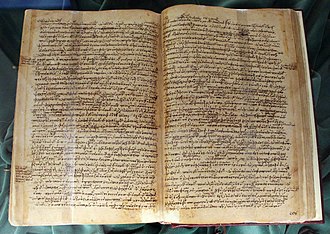
Edward Jenner wrote several important books about his work. In 1798, he published An Inquiry Into the Causes and Effects of the Variolæ Vaccinæ. In 1799, he wrote Further Observations on the Variolæ Vaccinæ, or Cow-Pox. He continued sharing his findings in 1800 with A Continuation of Facts and Observations relative to the Variolæ Vaccinæ, and in 1801, he published The Origin of the Vaccine Inoculation. These books helped people understand how to protect themselves from a dangerous disease called smallpox.
Images
Related articles



This article is a child-friendly adaptation of the Wikipedia article on Edward Jenner, available under CC BY-SA 4.0.
Images from Wikimedia Commons. Tap any image to view credits and license.