 Safekipedia
Western United States
Adapted from Wikipedia · Adventurer experience
The Western United States (also called the American West, the Western States, the Far West, the Western territories, and the West) is one of the four census regions defined by the United States Census Bureau. It includes 13 states that stretch from the Rocky Mountains and the Great Basin to the Pacific Coast, and even includes the mid-Pacific islands state, Hawaii.
As American settlement expanded westward, the idea of what “the West” meant changed over time. Long ago, the crest of the Appalachian Mountains was thought of as the edge of the known world, or the western frontier. Over time, this frontier moved further west, until eventually the lands west of the Mississippi River became known as “the West.”
The Western United States is a place of great natural variety. It has dry and semi-arid lands such as plateaus and plains, especially in the American Southwest. It also has tall, forested mountains like the Sierra Nevada, the Cascades, and the Rocky Mountains. The area has a long coastal shoreline along the Pacific Ocean and even lush rainforests in the Pacific Northwest. To the east of the Western United States lie the Midwestern United States and the Southern United States, with Canada to the north and Mexico to the south.
Geographic definition
Further information: American frontier
The Western United States is the largest part of the country. It covers almost half of the land in the United States. It has many different landscapes. These include temperate rainforests in the northwest and tall mountain ranges like the Rocky Mountains, the Sierra Nevada, and the Cascade Range. It also has glaciers, deserts such as the Mojave and the Great Basin, and parts of the Sonoran and Chihuahuan deserts. Because the area is so big and varied, it can be hard to say exactly where the West begins and ends.
The Western United States is divided into smaller areas. One group is the Mountain states. This includes Montana, Wyoming, Colorado, New Mexico, Idaho, Utah, Arizona, and Nevada. The other group is the Pacific states. This includes Washington, Oregon, California, Alaska, and Hawaii. Some people also talk about the Southwest. This includes Arizona, New Mexico, parts of West Texas, and the Oklahoma panhandle. The Pacific Northwest usually means Montana, Idaho, Oregon, and Washington.
Outlying areas
Sometimes, the three inhabited Pacific areas under U.S. control — American Samoa, Guam, and the Northern Mariana Islands — are thought of as part of the Western United States. American Samoa is in Polynesia in the South Pacific Ocean. Guam and the Northern Mariana Islands are in the Mariana Islands in the western North Pacific Ocean. These areas are also included in some U.S. groups like the U.S. National Park Service and the USGS.
| State | 2020 Census | 2010 Census | Change | Area | Density |
|---|---|---|---|---|---|
 Arizona Arizona | 7,151,502 | 6,392,017 | +11.88% | 113,594.08 sq mi (294,207.3 km2) | 63/sq mi (24/km2) |
 Colorado Colorado | 5,773,714 | 5,029,196 | +14.80% | 103,641.89 sq mi (268,431.3 km2) | 56/sq mi (22/km2) |
 Utah Utah | 3,271,616 | 2,763,885 | +18.37% | 82,169.62 sq mi (212,818.3 km2) | 40/sq mi (15/km2) |
 Nevada Nevada | 3,104,614 | 2,700,551 | +14.96% | 109,781.18 sq mi (284,332.0 km2) | 28/sq mi (11/km2) |
 New Mexico New Mexico | 2,117,522 | 2,059,179 | +2.83% | 121,298.15 sq mi (314,160.8 km2) | 17/sq mi (7/km2) |
 Idaho Idaho | 1,839,106 | 1,567,582 | +17.32% | 82,643.12 sq mi (214,044.7 km2) | 22/sq mi (9/km2) |
 Montana Montana | 1,084,225 | 989,415 | +9.58% | 145,545.80 sq mi (376,961.9 km2) | 7/sq mi (3/km2) |
 Wyoming Wyoming | 576,851 | 563,626 | +2.35% | 97,093.14 sq mi (251,470.1 km2) | 6/sq mi (2/km2) |
| Mountain | 24,919,150 | 22,065,451 | +12.93% | 855,766.98 sq mi (2,216,426.3 km2) | 29/sq mi (11/km2) |
 California California | 39,538,223 | 37,254,523 | +6.13% | 155,779.22 sq mi (403,466.3 km2) | 254/sq mi (98/km2) |
 Washington Washington | 7,705,281 | 6,724,540 | +14.58% | 66,455.52 sq mi (172,119.0 km2) | 116/sq mi (45/km2) |
 Oregon Oregon | 4,237,256 | 3,831,074 | +10.60% | 95,988.01 sq mi (248,607.8 km2) | 44/sq mi (17/km2) |
 Hawaii Hawaii | 1,455,271 | 1,360,301 | +6.98% | 6,422.63 sq mi (16,634.5 km2) | 227/sq mi (87/km2) |
 Alaska Alaska | 733,391 | 710,231 | +3.26% | 570,640.95 sq mi (1,477,953.3 km2) | 1/sq mi (0/km2) |
| Pacific | 53,669,422 | 49,880,669 | +7.60% | 895,286.33 sq mi (2,318,781.0 km2) | 60/sq mi (23/km2) |
| West | 78,588,572 | 71,946,120 | +9.23% | 1,751,053.31 sq mi (4,535,207.3 km2) | 45/sq mi (17/km2) |
Demographics
The Western United States has many different kinds of people. In 2022, the largest groups were White people, about 52% of the population, and Hispanic or Latino people, about 31%. There are also many Asian people, Black or African-American people, and American Indian or Alaska Native people.
The West includes 13 states and has about 79 million people. It is a large area where people live far apart. Only a few places, like California, Washington, and Texas, have many people living close together.
The West has people from many backgrounds, including European, Hispanic or Latino, Asian, and Native American families. Some big groups come from Mexico, Germany, England, Ireland, Italy, the Philippines, and China.
Many Native American people live in the West, especially on large areas of land called reservations. The West is also home to many African Americans, especially in cities like Los Angeles, San Diego, Las Vegas, and Denver.
Natural geography
Along the Pacific Ocean coast are the Coast Ranges, which are tall mountains. They help catch rain from the ocean. East of these mountains are fertile valleys, such as the San Joaquin and Sacramento valleys in California and the Willamette Valley in Oregon.
Beyond the valleys are the Sierra Nevada to the south and the Cascade Range to the north. Mount Whitney in the Sierra Nevada is the tallest peak in the contiguous United States. The Cascades have volcanoes like Mount Rainier in Washington and Mount St. Helens. These mountains get a lot of rain, creating dry areas to the east, such as Nevada, Utah, and Arizona, where deserts like the Mojave Desert and Sonoran Desert are found.
Further east are the tall Rocky Mountains, which stretch from New Mexico to Alaska. East of the Rockies are the Great Plains. The West has long rivers that flow into the Pacific Ocean, while rivers on the eastern side flow into the Gulf of Mexico. The Mississippi River forms the eastern edge of the West today. Important rivers include the Missouri River, which starts in the Rockies, and the Colorado River, which flows through the Grand Canyon.
The Colorado River is a key water source for the Southwest, with dams like the Hoover Dam creating reservoirs. The Columbia River and its tributary, the Snake River, provide water to the Pacific Northwest. The Rio Grande forms the border between Texas and Mexico.
Most public land managed by the U.S. National Forest Service and the Bureau of Land Management is in the Western states.
The climate in the West changes a lot. Some areas get a lot of rain or snow, while others are deserts with very little rain. The West often faces droughts. Temperatures can vary widely, with warm summers and mild winters on the coast, very hot summers and mild winters in the desert, and cold winters in the mountains.
Agriculture in the West depends on rainfall, irrigation, soil, elevation, and temperature. Dry areas are good for raising livestock, while irrigated areas grow fruits, vegetables, and grains. Washington is known for apples, and Idaho for potatoes. California and Arizona grow many citrus fruits.
The West has many earthquakes, especially in California. While the Pacific states are the most active for volcanoes, extinct volcanoes and lava flows can be found throughout the region.
Wildlife
The Western United States has many different animals and plants. The area has forests, mountains, deserts, and rivers. These create many places for wildlife to live. Some animals are found only here, which makes it a special place for nature lovers and scientists.
History
Main articles: American frontier and Timeline of the American Old West
The Western United States has been home to Native Americans for thousands of years. Long before new people arrived, there were trade routes in places such as Yellowstone National Park. In the 1840s, many people started settling there through paths like the Oregon Trail and because of the California Gold Rush in 1849. California grew so fast that it became a state in 1850.
One big movement in the 1840s was when the Latter Day Saints moved from the Midwest to build a community in Utah.
Both Omaha, Nebraska and St. Louis, Missouri called themselves the “Gateway to the West.” Omaha grew wealthy by helping settlers, while St. Louis did well from the fur trade.
The 1850s had debates about whether slavery should spread into western lands, which helped lead to the Civil War.
From 1863 to 1869, North America built its first transcontinental railroad to connect the eastern US with the Pacific coast. This made travel and trade much faster and easier.
The late 1800s and early 1900s created lasting stories about the American West. Ideas of the cowboy, the brave settler, and the wide-open frontier appeared in books, art, and movies. Writers like Bret Harte and Zane Grey wrote about this life, and artists like Frederic Remington painted scenes of the West. Movies called “Westerns” often showed the West as a place of strong, independent people.
The car allowed everyday people to visit the West. Business leaders promoted Route 66 to bring tourists. In the 1950s, western states created the Cowboy Hall of Fame and Western Heritage Center to celebrate their history. New highways brought even more visitors.
Oil discoveries in Texas and Oklahoma created busy towns. The Dust Bowl forced many families to move west for better lives.
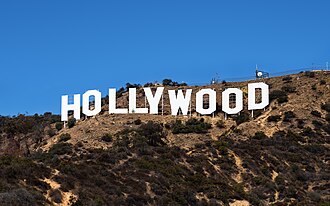
Movies became a big part of American culture, with many stories set in the West. Later, Hollywood in Los Angeles became the center for making films, radio, and television.
California became the most populous U.S. state and one of the world’s biggest economies. Huge growth created major cities like Los Angeles and the San Francisco Bay Area. Other big cities include San Bernardino–Riverside, San Diego, Denver, Phoenix, and Seattle. Fast-growing areas include Salt Lake City, Las Vegas, and Portland.
Since the mid-1970s, historians have studied how World War II changed the West. The war brought new jobs and people, especially in cities. California improved its schools, researched new technologies, and built more roads. After the war, many more people moved there, remembering good times during the war. The West led in modernizing society, dealing with issues like clean air and water.
Los Angeles has the largest Mexican community outside of Mexico. San Francisco has the biggest Chinese community in North America. Oakland, California and Long Beach, California have many African-American residents. Utah has many members of the Latter Day Saints. Some cities are near homes of Native Americans. Remote areas are home to Alaskan Natives and Native Hawaiians.
Culture
The Western United States has a rich culture shaped by many people. Cowboys, pioneers, and Native Americans helped create the region's traditions. The wide-open spaces, deserts like the Mojave and Great Basin, and long roads such as U.S. Route 66 and the First transcontinental railroad make the West famous for its open land and highways.
The West has been shaped by many different groups of people. Hawaii is special because it is the only state where Asian Americans make up more of the population than white Americans. Many people from Asia moved to California and other coastal states, helping with the Gold rush, building railroads, farming, and working in technology. The border states like California, Arizona, New Mexico, and Texas, as well as Colorado, Utah, and Nevada, have large Hispanic populations. Many place names in these areas come from Spanish and Mexican history. Mexican-Americans also live in Oregon, Washington, Texas, and Oklahoma.
In the Pacific States, big cities like Los Angeles and the San Francisco Bay area are important for movies, technology, and other industries. Los Angeles is famous for Hollywood and used to be a big center for airplane making. California is now the most populous state in the U.S. Oregon and Washington have grown quickly too, with companies like Boeing and Microsoft, along with farming and natural resource industries.
Alaska is a huge state with lots of wilderness and protected areas like national parks. Hawaii is a key spot between the United States and Asia and is known for tourism.
The Mountain States include Arizona, Colorado, Idaho, Montana, Nevada, New Mexico, Utah, and Wyoming. These states have big open areas and were originally places for ranchers and miners. They have unique cultures, including many people who follow the Mormon faith in places like Utah, famous casino towns like Las Vegas and Reno in Nevada, and many American Indian communities.
Sports
Professional sports are popular in many Western cities. Leagues such as the National Football League (NFL), Major League Baseball (MLB), and others have teams in places like Denver, Phoenix, Las Vegas, Los Angeles, Portland, Sacramento, Salt Lake City, San Diego, the San Francisco Bay Area, and Seattle. These teams bring excitement to fans across the region.
Major metropolitan areas
These are some of the biggest cities in the Western United States. The United States Census Bureau counted their populations in April 2020.
Other population centers
- The city area of El Paso is in Texas and is usually part of the Southern United States. Sometimes it is also thought of as part of the Western United States. Its population in April 2020 was 868,859.
- The largest city area in Alaska is Anchorage. Its population was 398,328 in April 2020.
- In areas far from the main Western United States, big population centers include Tafuna in American Samoa; Dededo in Guam; and Saipan in the Northern Mariana Islands.
Politics
Further information: Coastal California § Politics, and Left Coast
The Western United States has its own special politics because it is far from older places in the East. Long ago, it was the first place where women could vote. Women voted in Utah and Wyoming in 1870.
The area has many different political ideas. For example, some Western states allow certain medical treatments that are not allowed everywhere else. Some states have leaders from each of the two main political parties. This makes the Western United States an interesting place to watch for political changes.
| State | Governor | Attorney General | Upper House Majority | Lower House Majority | Senior U.S. Senator | Junior U.S. Senator | U.S. House Delegation |
|---|---|---|---|---|---|---|---|
| AK | Republican | Republican | Republican 13–7 | Republican 23–16–1 | Republican | Republican | Democratic 1–0 |
| AZ | Democratic | Democratic | Republican 16–14 | Republican 31–29 | Independent | Democratic | Republican 6–3 |
| CA | Democratic | Democratic | Democratic 29–11 | Democratic 61–19 | Democratic | Democratic | Democratic 42–11 |
| CO | Democratic | Democratic | Democratic 19–16 | Democratic 41–24 | Democratic | Democratic | Democratic 4–3 |
| HI | Democratic | Democratic | Democratic 24–1 | Democratic 46–5 | Democratic | Democratic | Democratic 2–0 |
| ID | Republican | Republican | Republican 28–7 | Republican 56–14 | Republican | Republican | Republican 2–0 |
| MT | Republican | Republican | Republican 30–20 | Republican 58–42 | Republican | Republican | Republican 1–0 |
| NV | Republican | Republican | Democratic 13–8 | Democratic 29–13 | Democratic | Democratic | Democratic 3–1 |
| NM | Democratic | Democratic | Democratic 26–16 | Democratic 46–24 | Democratic | Democratic | Democratic 2–1 |
| OR | Democratic | Democratic | Democratic 19–11 | Democratic 38–22 | Democratic | Democratic | Democratic 4–1 |
| UT | Republican | Republican | Republican 23–6 | Republican 59–16 | Republican | Republican | Republican 4–0 |
| WA | Democratic | Democratic | Democratic 28–21 | Democratic 57–41 | Democratic | Democratic | Democratic 7–3 |
| WY | Republican | Republican | Republican 28–2 | Republican 51–7–2 | Republican | Republican | Republican 1–0 |
Health
The Western United States has good health scores. From 2005 to 2011, fewer people needed hospital visits that could have been avoided compared to other areas. In 2012, the Western United States had fewer medical hospital stays than other regions, though births and newborn stays were more common.
Images
Related articles



This article is a child-friendly adaptation of the Wikipedia article on Western United States, available under CC BY-SA 4.0.
Images from Wikimedia Commons. Tap any image to view credits and license.