 Safekipedia
Culture of the United Kingdom
Adapted from Wikipedia · Discoverer experience
The culture of the United Kingdom is shaped by the history of its combined nations' history, its connections with Europe, and the unique traditions of England, Scotland, Wales, and Northern Ireland. It is often called British culture, though each part of the UK has its own distinct customs and ways of life. These cultures share some similarities but also have their own special qualities.
British literature is very famous, with the modern novel beginning in Britain. Many great writers, poets, and playwrights come from the UK. The country has also made important contributions to theatre, music, cinema, art, architecture, and television. Britain is home to ancient universities and has been a place where many important scientists and inventions were born. The Industrial Revolution started in the UK and changed the world.
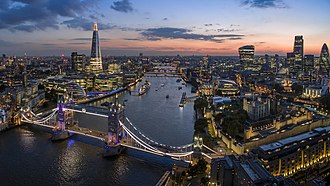
Sport plays a big role in British life. Many popular sports, such as cricket, football, tennis, and rugby, were organised and developed in their modern forms there. The UK is often called a "cultural superpower," and London is seen as one of the world’s great cultural centres. People around the world often view the UK very positively.
History
Main article: Cultural history of the United Kingdom
The culture of Great Britain grew from the traditions of England, Scotland, and Wales. Before the British Empire grew, the island was shaped by French culture (through the Normans), Scandinavian culture (through the Vikings), and Italian culture (through the Romans).
Early on, Celtic and Germanic tribes brought their own languages and ways of life. The Anglo-Saxons and the long Roman occupation of Britain also left their marks.
After the British Empire expanded, people from many parts of the world came to live in England, Scotland, and Wales. After World War II, even more people from many places moved to the UK. Since the Fall of the Berlin Wall and growth of the EU, many people from Eastern Europe also came. Today, the UK is home to people from many backgrounds, including those of South Asian, Continental European, African, and Caribbean descent.
Language
Main article: Languages of the United Kingdom
The English language is the main language spoken in the United Kingdom. It has been used since early times in England and is spoken by most of the people there. Besides English, there are other languages recognized by the government, such as Welsh, Scottish Gaelic, Scots, Cornish, Irish, Ulster Scots, and British Sign Language.
In Wales, children in school must learn Welsh or study it as an extra subject until they are 16 years old. In Scotland, Gaelic is also an official language, and there are plans to help it grow. The Cornish language was brought back to life after it was no longer spoken as a first language in Cornwall a long time ago.
Main article: Regional accents of English
People in different parts of the UK speak English in their own special ways. These differences come from the history of people moving to the UK and from the unique languages of each country. For example, Northern English has words that came from Old Norse. Scottish English, Welsh English, and Hiberno-Irish are all different from the English spoken in England. Each place has its own way of speaking, and even places that are close together can sound very different. Books sometimes use these special ways of speaking in their stories.
Arts
Literature
Main article: Literature of the United Kingdom
The United Kingdom has a rich literary history, combining traditions from England, Scotland, and Wales. This includes famous works and authors such as Geoffrey Chaucer, William Shakespeare, and John Barbour.
The Augustan Age in the early 18th century saw the rise of the novel, with writers like Daniel Defoe and Jonathan Swift creating classic stories. Poetry also blossomed during this time.
The Romantic Period focused on emotion and nature, with authors like William Wordsworth, Mary Shelley, and Jane Austen producing influential works. The Victorian Era brought social commentary through novels by authors such as Charles Dickens, Charlotte Brontë, and Elizabeth Gaskell.
World War I inspired poets who wrote about their experiences, and the 20th century saw a variety of new literary forms emerge. Today, the UK continues to be a major player in literature, with many popular authors and awards like the Booker Prize.
Theatre
Main article: Theatre of the United Kingdom
The UK has a long and vibrant tradition of theatre. From the Restoration period to modern times, British theatre has evolved with contributions from playwrights like George Bernard Shaw, Oscar Wilde, and Noël Coward.
The Shakespeare Memorial Theatre and the National Theatre are important institutions. Contemporary British theatre is centered in London's West End, home to famous musicals and plays. The National Theatre of Scotland was established in 2006.
Music
Main article: Music of the United Kingdom
See also: British pop music, British rock, British blues, New wave of British heavy metal, Britpop, British soul, British Invasion, and Second British Invasion
Classical music
British Baroque music was shaped by composers like George Frideric Handel. The Birmingham Triennial Music Festival and institutions like the Royal Academy of Music helped develop classical music in Britain.
The nationalistic trend in classical music emerged in the late 19th century, with composers like Ralph Vaughan Williams and Sir Alexander Mackenzie. Modern classical music includes diverse styles from composers such as Benjamin Britten and William Walton.
Popular music
Popular music in Britain began with broadside ballads and evolved with the influence of American jazz and rock and roll in the 1950s. The British Invasion of the 1960s, led by bands like the Beatles and the Rolling Stones, brought British rock to global fame.
The 1980s saw a second British Invasion and the rise of synthpop. British soul and dance music also flourished. Folk traditions remain strong in each nation of the UK, with distinct styles and patriotic songs.
Folk and sub-national music
Each nation of the UK has its own folk music traditions. English folk music includes sea shanties and Morris dancing, while Scotland is known for the bagpipes. Wales and Northern Ireland have their own patriotic hymns.
Cinema
Main article: Cinema of the United Kingdom
See also: Lists of British films
Britain has a long history of film production, with early films like Roundhay Garden Scene and Incident at Clovelly Cottage. The UK film industry grew in the 1940s and 1950s with directors like Alfred Hitchcock and productions such as The Third Man.
The British New Wave of the 1960s focused on realistic storytelling, while the 1970s saw important films like The Wicker Man. The 1990s and 2000s brought successes like Four Weddings and a Funeral and The King's Speech.
Broadcasting
Main articles: Television in the United Kingdom and Radio in the United Kingdom
The UK has been a leader in broadcasting, with the BBC playing a major role. ITV, Channel 4, and satellite broadcasters have also become important. BBC television and other channels provide public service programming.
Popular TV shows include Coronation Street and EastEnders. Radio in the UK includes BBC stations and commercial networks like Absolute Radio and Talksport.
Freedom of the press was established in Great Britain in 1695. Popular national newspapers include The Times, Financial Times, The Guardian, The Daily Telegraph and The Independent.
Penguin Books revolutionized publishing with inexpensive paperbacks. The Guinness Book of Records began in 1954. Copyright laws originated in Britain with the Statute of Anne in 1709.
Visual arts
Main article: Art of the United Kingdom
The English school of painting is known for portraits and landscapes, with artists like Joshua Reynolds and Thomas Gainsborough. Political cartoons developed in the 18th century with James Gillray.
The Pre-Raphaelite Brotherhood influenced art in the 19th century. Modern artists include Lucian Freud, Francis Bacon, and David Hockney. Design institutions like the Royal College of Art and the Tate Gallery are important.
Performing arts, carnivals, parades
Large outdoor music festivals like Glastonbury and V Festival are popular. The Royal Opera House and The Proms are key cultural events. The Royal Ballet and Irish dancing are significant traditions.
Punch and Judy shows are a British seaside tradition. The Edinburgh Festival Fringe is the world's largest arts festival. The Notting Hill Carnival is a major annual event led by the British African-Caribbean community.
Pantomime is a family-friendly musical comedy popular during Christmas. Music hall entertainment influenced variety shows and British comedy.
Architecture
Main article: Architecture of the United Kingdom
The architecture of the UK includes ancient sites like Skara Brae and Stonehenge, medieval castles such as Windsor Castle and Warwick Castle, and Gothic structures like Westminster Abbey and Canterbury Cathedral.
Tudor architecture developed during the Tudor period. St Paul's Cathedral and Buckingham Palace are notable examples of British architecture. Baroque and Georgian styles followed, with architects like Sir Christopher Wren and Robert Adam.
Stately homes like Knebworth House and Alton Towers are popular attractions. The Gothic revival began in the 19th century with buildings like the Houses of Parliament. Modernist architecture emerged after World War II, with architects like Lord Rogers and Norman Foster.
Comics
Main article: British comics
British comics evolved from penny dreadfuls in the Victorian era, with titles like The Beano and The Dandy becoming popular in the 1930s. The 1980s saw a "British Invasion" in mainstream comics, with writers like Alan Moore and Neil Gaiman bringing mature themes to the industry.
Prominent artists include Steve Dillon and Simon Bisley. The comic book series Hellblazer featured the Liverpudlian magician John Constantine and paved the way for British writers in the industry.
Folklore
Main articles: British folklore, English folklore, Scottish folklore, Irish folklore, and Welsh folklore
Much of the folklore of the United Kingdom is very old, dating back before the 1700s. Stories and characters come from all parts of the UK, but many belong to just one country or region. Common folkloric beings include pixies, giants, elves, bogeymen, trolls, goblins, and dwarves. Famous tales include stories of Offa of Angeln and Weyland Smith, and others like Robin Hood and his Merry Men from Sherwood and their adventures with the Sheriff of Nottingham. During the High Middle Ages, tales from Brythonic traditions appeared, especially the Arthurian legend. These stories include King Arthur, Excalibur, and Merlin, brought together in Geoffrey of Monmouth's Historia Regum Britanniae.
The Loch Ness Monster, known as "Nessie," is a famous legend from Scotland. In Irish folklore, the leprechaun is a tiny fairy who wears green and makes shoes, hiding a pot of gold at the end of a rainbow. English tales like Jack and the Beanstalk and Jack the Giant Killer helped shape how people see giants. The dwarf Tom Thumb is a hero in English stories. The tale of Goldilocks and the Three Bears is one of England's most loved stories. Some folk figures are based on real people, like Lady Godiva, who was said to ride naked through Coventry, and Hereward the Wake, who fought against invaders.
Pirates
The book A General History of the Pyrates from 1724 by Captain Charles Johnson told many stories about famous pirates. It inspired writers like Robert Louis Stevenson and J. M. Barrie. Many well-known pirates came from the West Country in southwest England. The idea of “walking the plank” became famous from Barrie's Peter Pan, where Captain Hook’s pirates were shown. The phrase "Davy Jones' Locker" comes from writer Daniel Defoe. The book made pirates like Blackbeard and Samuel Bellamy famous, and even created myths about their flags, known as Jolly Rogers.
Superstitions
Main article: Superstition in Britain
The Gremlin is a tiny creature from Royal Air Force stories that liked to cause trouble with airplanes. People in old London told stories about Sweeney Todd, a barber, and Jack the Ripper, someone who did bad things long ago. On 5 November, people in Britain celebrate Guy Fawkes Night with bonfires and fireworks to remember when Guy Fawkes tried to change history with the Gunpowder Plot.
Traditional non-religious holidays
Halloween is a big holiday in Scotland and Ireland on 31 October. It started from an old Scottish word for “All-Hallows-Even” and may come from an old Gaelic festival called Samhain. People in Scotland and Ireland used to dress up and go door-to-door for treats, make lanterns from turnips, and have parties with games like apple bobbing. They also lit bonfires and watched firework shows. Books and movies helped shape how people think about Halloween today.
Witchcraft has been part of life in the British Isles for thousands of years. People long ago believed that looking into a crystal ball could show the future. In stories, King Arthur’s wise man Merlin used a crystal ball. Later, people like John Dee also used them. Shakespeare’s play Macbeth is famous for its three witches. In the 1900s, a man named Gerald Gardner helped start a new way of witchcraft called Wicca in England.
National parks, museums, libraries, and galleries
Further information: Museums in England, Museums in Scotland, Museums in Wales, and Museums in Northern Ireland
Each country in the United Kingdom has its own group to look after important historical places and objects. In England, English Heritage manages many old sites, while the National Trust for Places of Historic Interest or Natural Beauty helps protect special places. England is home to seventeen UNESCO World Heritage Sites, such as Hadrian's Wall, Stonehenge, Avebury and Associated Sites, and the Tower of London. Scotland’s Historic Environment Scotland looks after places like Stirling Castle. Wales has many famous castles cared for by Cadw, and Northern Ireland has natural wonders like the Giant's Causeway.
The British Museum in London has millions of objects showing human history. The Natural History Museum, London displays fossils and other natural exhibits. Scotland, Wales, and Northern Ireland each have their own national museums. The Titanic Belfast museum in Northern Ireland remembers the famous ship that was built there. The first Madame Tussauds wax museum opened in London and shows wax figures of well-known people.
The British Library in London is one of the world’s largest libraries, with over 150 million items. It holds important documents like copies of the Magna Carta. Scotland and Wales also have their own national libraries with many books and historical items.
Historical markers called Blue plaques are found in London to remember important people and events. The first plaque was placed in 1867 to honor Lord Byron. Other plaques mark places where important moments happened, like the first television demonstration by John Logie Baird and the first sub 4-minute mile run by Roger Bannister.
Science and technology
Main article: Science and technology in the United Kingdom
See also: List of British innovations and discoveries
Since the Scientific Revolution, England and Scotland, and later the United Kingdom, have played an important role in the world's scientific and technological progress. The Royal Society, formed in 1660, is one of the oldest groups for sharing scientific ideas, with members from many different areas of study.
Sir Isaac Newton’s work helped start modern physics. He showed that the same force affects both the stars in the sky and objects on Earth—this force is gravity. He also made big discoveries in math and light.
The UK has contributed to almost every part of science. For example, John Napier created a way to make hard math problems easier. Michael Faraday and James Clerk Maxwell connected electricity and magnetism in important ways. James Joule studied heat and energy.
Charles Darwin wrote about how animals and plants change over time. James Hutton helped us understand the age of the Earth. Many other scientists from the UK have made big discoveries in areas like physics, biology, and engineering.
Technologically, the UK has been a leader too. It was an early leader in the Industrial Revolution with big ideas in factories, steam engines, and trains. Famous inventors include James Watt, who improved the steam engine, and George Stephenson, who helped start the railway system.
Important inventions from the UK include the flush toilet, the raincoat, the electric telegraph, the postage stamp, and the first public aquarium. The UK also helped start modern computing and made big advances in medicine.
Historically, many of the UK’s top scientists worked at Oxford or Cambridge University. Today, other universities are also known for their important research.
The UK stays a world leader in new technology. It was home to the Industrial Revolution, with big changes in how people made things and traveled. Famous engineers and inventors from this time include James Watt and George Stephenson.
The UK has also built some of the world’s most famous ships, like the RMS Titanic and RMS Queen Mary. Important scientists and inventors include Alan Turing, who helped create the modern computer, and Alexander Graham Bell, who invented the telephone.
The UK continues to be a place where new ideas and inventions change the world, from the World Wide Web to important medical treatments.
Industrial Revolution
The Industrial Revolution began in Britain because of changes in society, the economy, and politics over many years. With stable government and new ideas, Britain became the place where factories, railways, and big cities grew quickly. This change shaped the whole world.
Josiah Wedgwood, a famous pottery maker, helped start new ways of selling things, like sending catalogues through the mail and giving money back if customers weren’t happy. Other business leaders helped grow industries like banking, chocolate making, and shoe making.
Cars
Main article: List of car manufacturers of the United Kingdom
The UK has a long history of making cars. Well-known British brands include Rolls-Royce, Bentley, Aston Martin, McLaren, Jaguar, Land Rover, MG, and the Mini. Rolls-Royce, started in 1906, is famous for its luxury cars and powerful airplane engines. Bentley, founded in 1919, is also known for its high-quality cars. Aston Martin, started in 1913, became famous for its sports cars and its link to the famous spy James Bond. Jaguar, founded in 1922, made cars that even British leaders used. Land Rover, started in 1948, makes cars that can go off-road. The Mini, released in 1959, became a symbol of the 1960s and was good at racing.
Religion
Main article: Religion in the United Kingdom
See also: Religion in England, Religion in Northern Ireland, Religion in Scotland, and Religion in Wales
For more than 1,400 years, forms of Christianity have been important in the United Kingdom. Anglican churches are the largest faith group in England, Wales, and Northern Ireland, while the Presbyterian Church of Scotland is the national church in Scotland. Other religions include Roman Catholicism, Islam, Hinduism, Sikhism, Judaism, and Buddhism.
The United Kingdom has many special traditions around Christmas. The story of A Christmas Carol by Charles Dickens helped bring back the joy of Christmas as a time for families to come together. Today, Christmas and Easter are public holidays across the UK.
Politics and government
Main article: Politics of the United Kingdom
See also: Politics of England, Politics of Scotland, Politics of Wales, and Politics of Northern Ireland
The United Kingdom has a government system based on a group of rules and traditions that has been copied by many countries around the world. The main group that makes laws is called Parliament, which has two parts: one that members are chosen for, and one that members are asked to join. For a law to be made, it must be approved by the King or Queen.
The UK has two big groups of people who help lead the country: the Labour Party and the Conservative Party. There are also smaller groups that help make decisions.
One special event is called Prime Minister's Questions, where the leader of the country answers questions from other leaders for about half an hour every Wednesday. This helps keep the government open and fair for everyone.
The country also has its own set of important rules and papers that help protect people's rights, like the right to speak freely and the right to a fair trial.
Important leaders in the past have helped shape these rules, like those who fought for people's rights to vote and those who worked to end unfair treatments of others.
The UK has a way to honor people who do great things for the country, like giving them special titles. These titles are given after careful thought and by leaders of the country.
In the UK, many people still use older ways to measure things, like feet and inches for height, and miles for distance, even though other countries use different ways to measure. This is changing for some younger people, who use the newer ways more often.
In the UK, cars drive on the left side of the road. This helps keep roads safer. There are also special signs and rules to help people cross the road safely, like the Green Cross Code for children.
Cuisine
Main article: British cuisine
See also: English cuisine, Northern Irish cuisine, Scottish cuisine, and Welsh cuisine
British cuisine is the way of cooking and eating that comes from the United Kingdom. In the past, it meant simple dishes using good local ingredients with sauces to make the food taste better. People around the world knew British food mostly for breakfast and Christmas dinner. But over time, the food from England, Wales, Scotland, and Northern Ireland became more varied.
Each part of the United Kingdom has its own special foods. For example, in England, people love the Sunday roast, which is usually a piece of meat like beef, lamb, or chicken with vegetables, Yorkshire pudding, and gravy. The full English breakfast includes bacon, tomatoes, bread, beans, mushrooms, sausages, and eggs, often served with tea or coffee. Fish and chips, a meal of fried fish with potatoes, is very popular and was created in London in 1860. Other favorites are meat pies like steak and kidney pie and shepherd’s pie.
Afternoon tea is a British tradition. It is a small meal between 4 pm and 6 pm with tea, biscuits, sandwiches, scones, and cakes. Popular drinks include tea, which became common because of Catherine of Braganza. Famous biscuits to dunk in tea are chocolate digestives, rich tea, and hobnobs.
British sweets and desserts are also well-loved. Some popular ones are ice cream cones, sandwiches named after Lord Sandwich, carbonated water invented by Joseph Priestley, lemonade, Irn-Bru (Scotland’s favorite soft drink), and Lucozade. Other treats include sausages with mashed potatoes (bangers and mash), a stew called Lancashire hotpot, and cheeses like Cheddar and Wensleydale.
Home baking is a big part of British life. Famous cookbooks helped make baking popular, and shows like The Great British Bake Off made even more people interested in baking. Cakes like the Victoria sponge and sweet buns like the hot cross bun are enjoyed all year. Traditional foods from Scotland, Northern Ireland, and Wales add more variety to British cuisine.
Pubs are important places in British communities. People go there to drink, eat, and watch sports. Pubs often have games like darts and snooker, and they might host quizzes. Alcoholic drinks like beers, wines, and whisky are common. Pub signs have been used since the 1300s to help people find them.
For Christmas, turkey has become the main dish instead of goose, served with stuffing, gravy, roast potatoes, and vegetables. Christmas pudding is a traditional dessert. Christmas crackers are also a fun part of the celebration.
British people also enjoy foods from other countries, like Chinese and Indian take-aways. Crisps (or potato chips) are very popular, with flavors like cheese and onion and salt and vinegar. Chocolate bars like Cadbury Dairy Milk, Galaxy, and Kit Kat are favorites, as are sweets like Jelly Babies and After Eights. A 99 Flake, ice cream with a chocolate flake, is a classic treat.
Sport
Main article: Sport in the United Kingdom
Most major sports have separate teams for each part of the United Kingdom. While each country competes alone in some events, they join together as "Team GB" for the Olympic Games. Many modern sports were created and organized in the United Kingdom during the late 1800s. In 2012, a leader of the Olympic Games said the country is known for starting modern sports and for creating fair rules.
Football
Football is the most popular sport in the UK. It began with school games in England. The first official rules were written there in 1863, and the UK is home to the world's oldest football clubs. England is where club football started, and it also hosted the first World Cup tournament in 1966. The country has produced many famous players over the years.
Golf
Golf started in Scotland, and the town of St Andrews is known as the home of golf. The first official 18-hole course was made there in 1764. The Open Championship, golf's oldest tournament, began in Scotland in 1860.
Rugby
Rugby union began at a school in England in 1845. The first international match was between England and Scotland in 1871. Rugby has grown into two main types: rugby union and rugby league, each with its own fans and teams.
Tennis
Tennis started in England in the 1860s. The world's oldest tennis tournament, Wimbledon, began in 1877. It is famous for its traditions, like eating strawberries and cream during the matches.
Boxing
The rules for modern boxing were named after a British noble in 1867. The UK has had many famous boxers over the years, including world champions in different weight classes.
Cricket
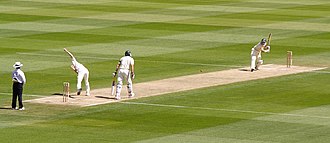
Cricket was created in England in the 1830s. The rivalry between England and Australia, called The Ashes, is one of the most famous in the sport. England has hosted the Cricket World Cup several times and has won it.
Horse racing
Horse racing began with British kings and nobles. The Derby race was first run in 1780 and has become a famous event around the world. The Grand National is another big race held every year in the UK.
Motor sports
The first Formula One race was held in Britain in 1950. The country has produced many top drivers, and several major racing teams are based there. The British Grand Prix is held at Silverstone each year.
National sporting events
The UK holds many famous events, like the London Marathon and The Boat Race. Cycling is also popular, with British riders winning major tours like the Tour de France. Ice dancing and ski jumping have also seen British success in the Winter Olympics.
Many sports popular around the world began in the UK, including football, golf, tennis, boxing, rugby, cricket, and more. The UK also has its own special traditions and events, like the Highland games in Scotland and awards for top athletes.
Healthcare
Each of the four countries in the UK has a publicly funded health care system called the National Health Service (NHS). These services began in 1948, following ideas from a report by a government elected in 1945. The NHS was created with the belief that good healthcare should be available to everyone, no matter their wealth. It was designed to meet everyone’s needs, be free when needed, and based on health needs rather than money.
The NHS was shown during the 2012 London Summer Olympics opening ceremony as a key part that unites the nation. Famous nurse Florence Nightingale started modern nursing at St Thomas' Hospital in London, which is now part of King's College London. Her book Notes on Nursing helped shape nursing education worldwide.
Pets
In the UK, about 40% of people have a pet. The most common pets in 2018 and 2019 were dogs, cats, and small animals like rabbits and hamsters. The number of pets in the UK went down from 71 million in 2013 to 51 million in 2018. However, many families got new pets during the COVID-19 pandemic; by May 2021, 3.2 million households had added a pet.
The Royal Society for the Prevention of Cruelty to Animals (RSPCA), started in 1824, works to protect animals. The British Shorthair cat is a popular breed known for its calm nature. The UK is also home to many horse breeds, such as the Clydesdale horse, Thoroughbred, and Shetland pony. Famous dog breeds from the UK include the Bulldog, Jack Russell Terrier, and Golden Retriever. The Kennel Club helps improve dog care, and Crufts is a big yearly dog show that started in 1891.
National costume and dress
The United Kingdom does not have one single national costume because it is made up of many different countries. Scotland is known for its kilt, Tam o'shanter, and tartan clothing. Some women in Wales wear a traditional Welsh costume with a Welsh hat during special events. In England, there is no official national costume, but some people wear a smock-frock in the south and a maud in the north. English country clothing, like flat caps and brogue shoes, is also popular in rural areas.
Certain military uniforms, like the Beefeater and the Queen's Guard, are seen as symbols of England. Traditional dances and costumes, such as Morris dancers and May dance outfits, are worn during special events. The Bowler hat and the flat cap are also well-known styles. Burberry is famous for its trench coat, which was first worn by soldiers in World War I. Dr. Martens boots have been popular among many groups of people over the years.
British fashion has had a big influence on the world since the 18th century. During the Victorian era, British styles set the standard for men's business wear. The tradition of wearing a white dress for weddings started with Queen Victoria in 1840.
Fashion
Main article: British fashion
British fashion is known for mixing traditional styles with new ideas. It has helped shape trends around the world, from the formal suits of Savile Row to the bold styles of mod and punk cultures. This reflects the rich history, local materials, and changing attitudes across the UK.
London is one of the world's fashion capitals and holds London Fashion Week twice a year. Many famous designers and models show their work during this event. Designers like Vivienne Westwood, Alexander McQueen, John Galliano, and Stella McCartney have made their mark. Models such as Kate Moss, Naomi Campbell, and Cara Delevingne have also been important. Mary Quant helped create the miniskirt in the 1960s.
Symbols, flags, and emblems
Main article: List of national symbols of the United Kingdom, the Channel Islands and the Isle of Man
The United Kingdom has many symbols that represent it and its parts. The Union Flag is the special flag for the whole country. It was made by combining the cross of St George and the saltire of Saint Andrew in 1707. Later, in 1801, St Patrick's saltire was added to include Ireland, and it still stands for Northern Ireland today. Each part of the UK also has its own special symbols, like flowers. For example, England has the Tudor rose, Scotland the thistle, Northern Ireland the flax flower and shamrock, and Wales the leek and daffodil.
One important flower is the remembrance poppy, worn since 1921 to honor soldiers who have passed away in wars. These poppies are given out by The Royal British Legion to help support people who have served in the military.
Traditional communication and greeting cards
The United Kingdom has many special ways of sending messages and greetings. Two famous sights are the red telephone box and the red post box. The red telephone box was designed in 1924 and shows a crown to represent the British government. The red post box began in the 1850s, making it easier and cheaper to send letters after the invention of the postage stamp called the Penny Black.
The UK also loves sending greeting cards. The first postcard was sent in 1840. Sending Christmas cards started in 1843, and the robin bird often appears on these cards because people used to call postmen "Robins" due to their red jackets. Valentine’s Day cards became popular in the UK in the late 1700s, and many people still send cards for birthdays, Mother’s Day, Easter, and Father’s Day.
Education
Main article: Education in the United Kingdom
See also: Universities in the United Kingdom
Each part of the United Kingdom has its own way of running schools. England, Scotland, Wales, and Northern Ireland all have different systems.
England
Main article: Education in England
In England, most schools are run by the government. This started in the Victorian era and became more formal after the Second World War. Schools used to be split into different types, but now many are combined into one type called comprehensive schools. England also has many private schools, some of which have been around for hundreds of years. Most schools, both private and government-run, require students to wear uniforms.
England is home to some of the world's best universities, like the University of Cambridge, Imperial College London, the University of Oxford, and University College London.
Northern Ireland
Main article: Education in Northern Ireland
The Northern Ireland Assembly takes care of education in Northern Ireland. Schools are managed by five different boards that cover various areas.
Scotland
Main article: Education in Scotland
Scotland has a long history of providing education for everyone. Most schools are not tied to any particular religion, but there are also state-run Catholic schools. Scotland's universities often have first-year courses that last a year longer than in other parts of the UK.
Wales
Main article: Education in Wales
The National Assembly for Wales is in charge of education in Wales. Many students in Wales learn in the Welsh language, and learning Welsh is required until age 16.
Outdoor education
Scouting is a big youth movement in the UK. It started in 1907 when Robert Baden-Powell held the first Scout camp. In 2009, Bear Grylls became the youngest Chief Scout ever. In 2010, Scouting in the UK grew more than it had since 1972, with almost 500,000 members.
Sociological issues
The United Kingdom has many different types of homes. In places where lots of people live close together, like in cities, you’ll often see houses built right next to each other, called terraced houses. After big changes during and after the Second World War, many people moved into apartments or public housing called council estates.
Over time, more people have started living alone or in smaller families instead of big families. This change happened because people have more money, women have more freedom, and divorce became easier. Today, many young people stay living with their parents longer before moving out on their own.
People in the UK generally feel happy, but some groups feel more stress than others. Many young women and girls feel pressure from school, exams, and social media, which can make them feel less happy and confident. Some also feel unsafe in public places or on transport.
Naming conventions
In the United Kingdom, people usually have one or more given names and a surname, or family name. A study from 2016 found that most British surnames come from the British Isles. Some of the most common ones are Smith, Jones, Williams, Brown, Taylor, Johnson, and Lee.
Surnames often come from jobs, like Smith or Carpenter, or from places and features, like Hill or Wood. Others come from family names or fathers' names, like Johnson or Evans.
First names have changed over time. Some, like Jennifer and Jessica, became popular from books and plays. Others, like Olivia and Pamela, came from stories and poems.
Images
Related articles




This article is a child-friendly adaptation of the Wikipedia article on Culture of the United Kingdom, available under CC BY-SA 4.0.
Images from Wikimedia Commons. Tap any image to view credits and license.