 Safekipedia
Washington (state)
Adapted from Wikipedia · Discoverer experience
Washington is a state in the Pacific Northwest region of the United States. It is often called Washington state to make it clear we are talking about the state and not the national capital; both are named after George Washington, a U.S. Founding Father and the first U.S. president. The state borders the Pacific Ocean to the west, Oregon to the south, and Idaho to the east. It also shares a border with the Canadian province of British Columbia to the north. Olympia is the state capital, and Seattle is the largest city.
Washington is the 18th-largest state, covering 71,362 square miles (184,830 km2), and the 13th-most populous, with over 8 million people. Most of these people live in the Seattle metropolitan area, which is a major center for transportation, business, and industry on Puget Sound. The rest of the state includes deep temperate rainforests, several mountain ranges, and a dry area in the east where lots of farming happens.
The state is a big producer of many things, including apples, hops, pears, blueberries, and sweet cherries. It is also important for fishing, especially for salmon, and for making wine. Washington became a state in 1889 and is known for being one of the wealthiest and most socially liberal states in the country. It has high rates of employment and life expectancy.
Etymology
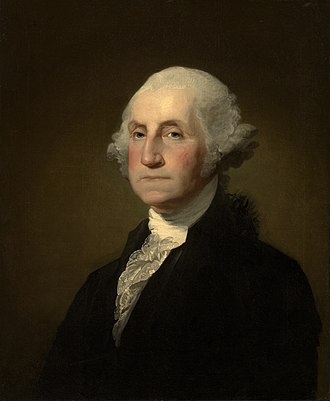
Washington was named after President George Washington when the United States Congress created Washington Territory in 1853. Originally, the territory was meant to be called “Columbia” after the Columbia River and the Columbia District. However, a representative from Kentucky thought that name was too similar to the District of Columbia, which is where the nation’s capital is located. He suggested naming the territory after President Washington instead.
Because of this, Washington is the only U.S. state named after a president. Sometimes people get confused between Washington state and the city of Washington, D.C. During the process of becoming a state in 1889, there were ideas to rename it, like calling it “Tacoma,” but these ideas didn’t get enough support. Even today, there are discussions about Washington, D.C. becoming a state, and some suggestions include using the name “State of Washington, Douglass Commonwealth.” However, people in Washington state and the Pacific Northwest usually just call their state “Washington” and the nation’s capital “Washington, D.C.” or “the other Washington.”
History
Main article: History of Washington (state)
For a chronological guide, see Timeline of Washington (state) history.
Early history
The skeletal remains of Kennewick Man, one of the oldest and most complete human remains found in North America, were discovered in Washington in 1996. The region has been home to many tribes of indigenous peoples for thousands of years. They are known for their beautifully carved welcome figures, canoes, long houses and masks. Important industries included salmon fishing and, among the Makah, whale hunting. People in the Interior had a culture based on hunting, gathering food, and some farming, and they also relied on salmon from the Columbia River and its tributaries.
The area has experienced large undersea earthquakes in the past, the last being the Cascadia earthquake of 1700.
European exploration
Main articles: Oregon Country and Columbia District
The first recorded European to reach the Washington coast was Spanish Captain Don Bruno de Heceta in 1775. Soon after, a severe disease called smallpox affected many Native American people.
In 1778, British explorer Captain James Cook saw Cape Flattery, but did not notice the nearby water passage. This passage was later seen by Charles William Barkley in 1787, and then explored by several others including George Vancouver in 1792.
European settlement
Main article: Oregon pioneer history
The British–Spanish Nootka Convention of 1790 allowed explorers and traders from many nations to visit the Northwest Coast. American captain Robert Gray discovered the mouth of the Columbia River in 1792 and began trading for sea otter skins. The famous Lewis and Clark Expedition entered Washington in 1805.
Explorer David Thompson camped near where the Snake River meets the Columbia River in 1811, claiming the area for Great Britain.
Britain and the United States shared control of lands west of the Rocky Mountains until the Oregon Treaty in 1846 set the border at the 49th parallel.
In 1836, missionaries including Marcus Whitman started settlements near present-day Walla Walla County. Later, Fort Nisqually, founded in 1833, became the first European settlement in the Puget Sound area. Settlers continued to arrive, changing the region.
Statehood
Main articles: Oregon boundary dispute, Provisional Government of Oregon, Oregon Treaty, Oregon Territory, Organic act § List of organic acts, Washington Territory, Admission to the Union, List of U.S. states by date of admission to the Union, and Mount Baker gold rush
As more people lived in the area north of the Columbia River, they asked for their own territory. In 1853, Washington Territory was created. It grew until Idaho Territory was formed in 1863, setting the current eastern border. Washington became a state on November 11, 1889, the 42nd state of the United States.
Early industries included farming, logging, fishing, and mining. The Yakima River Valley became famous for apples, and the west side of the state had thick forests and busy ports.
Post-statehood
The city of Tacoma had factories for processing metals. Seattle was an important port and later became home to the famous Boeing company.
During World War II, Washington played a big role in making airplanes and ships. The Hanford Works plant helped build important energy projects.
On May 18, 1980, Mount St. Helens erupted after many smaller earthquakes. The eruption caused landslides and covered areas far away with ash.
Geography
See also: Geography of Washington (state) and Geology of the Pacific Northwest
Washington is the northwesternmost state of the contiguous United States. It borders Idaho to the east, Oregon to the south, and shares an international border with the Canadian province of British Columbia to the north. To the west lies the Pacific Ocean.
Washington is part of the Pacific Northwest, a region that includes at least Washington and Oregon and sometimes other areas nearby. The Cascade Range runs north to south through the middle of the state, dividing it into Western Washington and Eastern Washington. These two areas have very different climates and landscapes.
Western Washington
Western Washington has a mild climate with wet winters and dry summers. The Cascade Range has several tall volcanoes, including Mount Rainier, which is the tallest mountain in the state. Western Washington also has the Olympic Mountains and many forests, including some of the few rainforests in the United States.
Eastern Washington
Eastern Washington is much drier, with large areas of grassland and some deserts. Despite the dry climate, farming is very important there because the soil is rich and irrigation helps crops grow. The main cities in this area are usually located near rivers or lakes.
Climate
See also: Climate change in Washington
Washington has a temperate climate. Western Washington has cool, wet weather, while Eastern Washington is drier and can have hotter summers and colder winters. The state's weather is influenced by ocean patterns and mountain ranges.
Rain shadow effects
Main article: Rain shadow
The amount of rain changes a lot from west to east. The western side of the Olympic Peninsula gets a lot of rain, while areas east of the Cascades get much less. This difference is called a "rain shadow" and it creates very different landscapes on each side of the mountains.
Temperatures
The state's temperature ranges from very cold winters to very hot summers, especially in Eastern Washington. The coast has milder temperatures because of the Pacific Ocean.
Flora and fauna
See also: List of flora of Washington, List of fauna of Washington, and List of federal lands in Washington
Forests cover much of Western Washington, with trees like Douglas fir and western red cedar. Eastern Washington has more open landscapes with grasses and sagebrush. The state is home to many animals, including birds, whales, and various mammals.
Washington has several national parks and many state parks and forests, offering many places to explore nature.
Administrative divisions
Main articles: List of counties in Washington and List of municipalities in Washington
There are 39 counties in Washington and many cities and towns. Most people live in Western Washington, especially in the Seattle area.
| Place | Jan | Feb | Mar | Apr | May | Jun | Jul | Aug | Sep | Oct | Nov | Dec |
|---|---|---|---|---|---|---|---|---|---|---|---|---|
| Bellingham | 48 / 36 (9 / 2) | 50 / 36 (10 / 2) | 54 / 39 (12 / 4) | 59 / 42 (15 / 6) | 64 / 47 (18 / 8) | 69 / 51 (21 / 11) | 73 / 54 (23 / 12) | 74 / 54 (23 / 12) | 68 / 50 (20 / 10) | 59 / 45 (15 / 7) | 51 / 39 (11 / 4) | 46 / 35 (8 / 2) |
| Ephrata | 35 / 22 (2 / −6) | 43 / 26 (6 / −3) | 54 / 32 (12 / 0) | 63 / 38 (17 / 3) | 72 / 46 (22 / 8) | 80 / 54 (27 / 12) | 88 / 60 (31 / 16) | 87 / 59 (31 / 15) | 78 / 50 (26 / 10) | 62 / 39 (17 / 4) | 45 / 29 (7 / −2) | 34 / 21 (1 / −6) |
| Forks | 47 / 36 (8 / 2) | 49 / 35 (9 / 2) | 51 / 37 (11 / 3) | 55 / 39 (13 / 4) | 60 / 43 (16 / 6) | 63 / 48 (17 / 9) | 67 / 51 (19 / 11) | 69 / 51 (21 / 11) | 66 / 47 (19 / 8) | 58 / 42 (14 / 6) | 50 / 38 (10 / 3) | 46 / 35 (8 / 2) |
| Paradise | 35 / 23 (2 / −5) | 36 / 22 (2 / −6) | 38 / 24 (3 / −4) | 42 / 26 (6 / −3) | 49 / 32 (9 / 0) | 55 / 36 (13 / 2) | 63 / 43 (17 / 6) | 65 / 44 (18 / 7) | 58 / 40 (14 / 4) | 48 / 33 (9 / 1) | 37 / 25 (3 / −4) | 34 / 21 (1 / −6) |
| Richland | 41 / 29 (5 / −2) | 47 / 30 (8 / −1) | 58 / 35 (14 / 2) | 65 / 41 (18 / 5) | 73 / 48 (23 / 9) | 80 / 54 (27 / 12) | 88 / 59 (31 / 15) | 88 / 58 (31 / 14) | 78 / 50 (26 / 10) | 64 / 40 (18 / 4) | 49 / 34 (9 / 1) | 38 / 27 (3 / −3) |
| Seattle | 47 / 37 (8 / 3) | 50 / 37 (10 / 3) | 54 / 39 (12 / 4) | 59 / 42 (15 / 6) | 65 / 47 (18 / 8) | 70 / 52 (21 / 11) | 76 / 56 (24 / 13) | 76 / 56 (24 / 13) | 71 / 52 (22 / 11) | 60 / 46 (16 / 8) | 51 / 40 (11 / 4) | 46 / 36 (8 / 2) |
| Spokane | 35 / 24 (2 / −4) | 40 / 25 (4 / −4) | 49 / 31 (9 / −1) | 57 / 36 (14 / 2) | 67 / 43 (19 / 6) | 74 / 50 (23 / 10) | 83 / 55 (28 / 13) | 83 / 55 (28 / 13) | 73 / 46 (23 / 8) | 58 / 36 (14 / 2) | 42 / 29 (6 / −2) | 32 / 22 (0 / −6) |
| Vancouver | 47 / 33 (8 / 1) | 51 / 33 (11 / 1) | 56 / 37 (13 / 3) | 60 / 40 (16 / 4) | 67 / 45 (19 / 7) | 72 / 50 (22 / 10) | 78 / 54 (26 / 12) | 79 / 53 (26 / 12) | 75 / 48 (24 / 9) | 63 / 41 (17 / 5) | 52 / 37 (11 / 3) | 46 / 32 (8 / 0) |
| Winthrop | 31 / 15 (−1 / −9) | 39 / 18 (4 / −8) | 51 / 26 (11 / −3) | 62 / 32 (17 / 0) | 71 / 40 (22 / 4) | 78 / 46 (26 / 8) | 86 / 50 (30 / 10) | 86 / 49 (30 / 9) | 78 / 41 (26 / 5) | 62 / 32 (17 / 0) | 42 / 25 (6 / −4) | 29 / 14 (−2 / −10) |
| Yakima | 39 / 23 (4 / −5) | 46 / 26 (8 / −3) | 56 / 30 (13 / −1) | 64 / 34 (18 / 1) | 72 / 42 (22 / 6) | 80 / 48 (27 / 9) | 88 / 53 (31 / 12) | 87 / 52 (31 / 11) | 78 / 44 (26 / 7) | 64 / 34 (18 / 1) | 48 / 27 (9 / −3) | 36 / 21 (2 / −6) |
Demographics
Washington's population was 7,705,281 in the 2020 census, a 14.6% increase since the 2010 census. In 2020, the state ranked 13th overall in population, and was the third most populous west of the Mississippi River, after California and Texas. The Seattle–Tacoma–Bellevue metropolitan area's population was 4,018,762 in the 2020 census, more than half the state total.
Four-fifths of the state's population identifies as White or European American. Washington has some of the largest Native American and Asian populations among states in the U.S.; the state also has a small proportion of African Americans. Washington's Hispanic community began growing rapidly in the late 20th century. In 2018, the top countries of origin for Washington's immigrants were Mexico, India, China, the Philippines and Vietnam. There are 29 federally recognized Native American tribes in the state, mostly in Western Washington.
In 2010, 82.51% of Washington residents age 5 and older spoke English at home as a primary language, while 17.49% spoke a mother language other than English.
Religious self-identification in Washington shows that 50% of people identify as Christian, with Protestantism and Catholicism being the largest groups. Another 42% are unaffiliated or identify with other religions, including New Age, Buddhism, Judaism, and Hinduism. Like other West Coast states, the percentage of Washington's population identifying as non-religious is higher than the national average.
| Census | Pop. | %± | |
|---|---|---|---|
| 1850 | 1,201 | — | |
| 1860 | 11,594 | 865.4% | |
| 1870 | 23,955 | 106.6% | |
| 1880 | 75,116 | 213.6% | |
| 1890 | 357,232 | 375.6% | |
| 1900 | 518,103 | 45.0% | |
| 1910 | 1,141,990 | 120.4% | |
| 1920 | 1,356,621 | 18.8% | |
| 1930 | 1,563,396 | 15.2% | |
| 1940 | 1,736,191 | 11.1% | |
| 1950 | 2,378,963 | 37.0% | |
| 1960 | 2,853,214 | 19.9% | |
| 1970 | 3,409,169 | 19.5% | |
| 1980 | 4,132,156 | 21.2% | |
| 1990 | 4,866,692 | 17.8% | |
| 2000 | 5,894,121 | 21.1% | |
| 2010 | 6,724,540 | 14.1% | |
| 2020 | 7,705,281 | 14.6% | |
| 2025 (est.) | 8,001,020 | 3.8% | |
| Source: 1910–2020 | |||
| Race and ethnicity | Alone | |
|---|---|---|
| White (non-Hispanic) | 63.8% | 70.0% |
| Hispanic or Latino | — | 13.7% |
| Asian | 9.4% | 11.8% |
| African American (non-Hispanic) | 3.8% | 5.3% |
| Native American | 1.2% | 3.2% |
| Pacific Islander | 0.8% | 1.4% |
| Other | 0.6% | 1.7% |
| Racial composition | 1990 | 2000 | 2010 | 2020 |
|---|---|---|---|---|
| White | 88.5% | 81.8% | 77.3% | 66.6% |
| Asian | 4.3% | 5.5% | 7.2% | 9.5% |
| Black or African American | 3.1% | 3.2% | 3.6% | 4.0% |
| American Indian and Alaska Native | 1.7% | 1.6% | 1.5% | 1.6% |
| Native Hawaiian and Other Pacific Islander | – | 0.4% | 0.6% | 0.8% |
| Other race | 2.4% | 3.9% | 5.2% | 6.7% |
| Two or more races | – | 3.6% | 4.7% | 10.9% |
| Race / Ethnicity (NH = Non-Hispanic) | Pop 2000 | Pop 2010 | Pop 2020 | % 2000 | % 2010 | % 2020 |
|---|---|---|---|---|---|---|
| White alone (NH) | 4,652,490 | 4,876,804 | 4,918,820 | 78.93% | 72.52% | 63.84% |
| Black or African American alone (NH) | 184,631 | 229,603 | 296,170 | 3.13% | 3.41% | 3.84% |
| Native American or Alaska Native alone (NH) | 85,396 | 88,735 | 91,191 | 1.45% | 1.32% | 1.18% |
| Asian alone (NH) | 319,401 | 475,634 | 723,062 | 5.42% | 7.07% | 9.38% |
| Pacific Islander alone (NH) | 22,779 | 38,783 | 62,490 | 0.39% | 0.58% | 0.81% |
| Other race alone (NH) | 11,989 | 11,838 | 43,221 | 0.20% | 0.18% | 0.56% |
| Mixed race or Multiracial (NH) | 175,926 | 247,353 | 511,114 | 2.98% | 3.68% | 6.63% |
| Hispanic or Latino (any race) | 441,509 | 755,790 | 1,059,213 | 7.49% | 11.24% | 13.75% |
| Total | 5,894,121 | 6,724,540 | 7,705,281 | 100.00% | 100.00% | 100.00% |
| Race | 2013 | 2014 | 2015 | 2016 | 2017 | 2018 | 2019 | 2020 | 2021 | 2022 | 2023 |
|---|---|---|---|---|---|---|---|---|---|---|---|
| Non-Hispanic White | 54,779 (63.2%) | 55,872 (63.1%) | 55,352 (62.2%) | 53,320 (58.9%) | 50,679 (57.9%) | 49,019 (56.9%) | 47,435 (55.9%) | 46,199 (55.6%) | 46,187 (55.0%) | 44,084 (52.9%) | 42,237 (52.2%) |
| Asian | 9,820 (11.3%) | 10,306 (11.6%) | 10,611 (11.9%) | 8,875 (9.8%) | 8,836 (10.1%) | 8,729 (10.1%) | 8,856 (10.4%) | 8,429 (10.1%) | 8,817 (10.5%) | 9,159 (11.0%) | 9,032 (11.1%) |
| Black | 5,241 (6.0%) | 5,254 (5.9%) | 5,302 (6.0%) | 3,862 (4.3%) | 3,944 (4.5%) | 3,922 (4.6%) | 3,813 (4.5%) | 3,841 (4.6%) | 3,698 (4.4%) | 3,797 (4.6%) | 3,653 (4.5%) |
| Pacific Islander | ... | ... | ... | 1,183 (1.3%) | 1,164 (1.3%) | 1,159 (1.3%) | 1,204 (1.4%) | 1,231 (1.5%) | 1,181 (1.4%) | 1,284 (1.5%) | 1,348 (1.7%) |
| American Indian | 2,140 (2.5%) | 2,059 (2.3%) | 2,036 (2.3%) | 1,309 (1.4%) | 1,112 (1.3%) | 1,166 (1.4%) | 1,018 (1.2%) | 1,002 (1.2%) | 928 (1.1%) | 861 (1.0%) | 828 (1.0%) |
| Hispanic (any race) | 15,575 (18.0%) | 15,779 (17.8%) | 16,073 (18.1%) | 16,533 (18.3%) | 15,973 (18.2%) | 16,073 (18.7%) | 16,161 (19.0%) | 16,020 (19.3%) | 16,260 (19.4%) | 17,190 (20.6%) | 17,145 (21.2%) |
| Total | 86,577 (100%) | 88,585 (100%) | 88,990 (100%) | 90,505 (100%) | 87,562 (100%) | 86,085 (100%) | 84,895 (100%) | 83,086 (100%) | 83,911 (100%) | 83,333 (100%) | 80,932 (100%) |
Economy
Main article: Economy of Washington (state)
See also: List of Washington locations by per capita income and List of Washington companies
Washington's economy is very strong. In 2025, the value of all goods and services made in the state was $894.9 billion. The average income for each person was $89,396. As of June 2025, the jobless rate was 4.5 percent.
The state has many important industries. These include making airplanes, cars, computer software, telecommunications, electronics, biotechnology, aluminum, lumber, mining, drinks, real estate, retail, and tourism. Washington is also known for its hydroelectric power and busy ports.
Taxes
The state of Washington does not tax personal income. However, in March 2026, the governor signed a law to create a new tax on very high incomes starting in 2028.
Washington does not tax company profits or business activities in the same way as many other states. Instead, businesses pay different taxes based on what they sell.
The basic sales tax in Washington is 6.5%, but local areas add more, making the total tax between 7.5% and 10%. Some cities, like Seattle, have even higher rates. These taxes apply to many things people buy, but not most foods. Special taxes also apply to gasoline, cigarettes, and alcoholic drinks. Property taxes are important for funding schools and local services.
Agriculture
Washington is a top farming state. In 2023, farms in the state produced goods worth $14 billion. Washington leads the country in growing red raspberries, hops, spearmint oil, wrinkled seed peas, apples, sweet cherries, pears, Concord grapes, carrots for processing, and green peas for processing.
The state is also a big producer of potatoes, nectarines, apricots, asparagus, grapes, sweet corn, and onions. Apples are especially important, with Washington leading the nation since the 1920s. Most apples come from areas like Wenatchee and Yakima.
Wine
Main article: Washington wine
Washington makes a lot of wine, ranking third in the United States. In 2024, the state produced 25.7 million U.S. gallons (97 million liters) of wine.
By 2021, Washington had over 1,050 wineries. Most wine grapes grow in the eastern part of the state, where it is dry and sunny. This area gets very little rain, so farmers need to carefully manage water for their vineyards.
Military
As of 2022, Washington had over 108,542 people working with the U.S. Department of Defense. This includes soldiers, sailors, airmen, and civilian workers. The state ranks seventh in the number of active duty military personnel.
The largest military bases are near Puget Sound, including Joint Base Lewis–McChord, Naval Station Everett, and Naval Air Station Whidbey Island. The Kitsap Peninsula has Naval Base Kitsap, which includes a major shipyard and a submarine base. Fairchild Air Force Base near Spokane is also important. Many big companies in Washington, like Boeing, help supply the military with equipment and services.
Internet access
Washington has worked to improve internet access for everyone. From 2009 to 2014, the state received money to help build better broadband networks. In 2019, the state set goals to make sure every resident has high-speed internet by 2024 and even faster speeds by 2028.
A report in 2021 showed that most people in Washington have good internet service, but some areas still need improvement. The state continues to work on making sure everyone can get online.
Transportation
Washington has many ways to get around, kept up by different groups. It has over 7,000 miles of state roads and a big ferry system, the largest in the country. There are also many local roads, local ferries, and 140 public airfields. The main airport in Seattle is Seattle–Tacoma International Airport.
The state has many waterways with many bridges and ferries. It also has four of the longest floating bridges in the world. Washington has many ports along the Pacific Ocean and rivers that can be used by boats.
The Cascade Mountains make travel tricky, with some roads closing in winter due to snow and avalanches. Washington has several freight railroads and passenger services, including Amtrak. Seattle has light rail and streetcars, with plans to grow these services. Some tribes also offer free bus services on their reservations.
Environment
Washington state has some very important places that need special care to keep the environment safe. The Hanford Nuclear Reservation is one of the most challenging clean-up sites in the United States because of harmful materials that have leaked into the surroundings.
The state has also worked to remove dangerous chemicals from everyday products. In 2007, Washington became the first state to stop using certain toxic flame retardants in many household items. Scientists have found these chemicals in the food chain and in fish, which is why there are advisories about eating fish from some rivers and lakes.
The state government has also taken steps to reduce harmful substances in water. In 2006, a law was passed to limit the amount of phosphorus in dishwashing detergents, which helps prevent too much algae from growing in rivers and lakes. This law started statewide in 2010 but began earlier in some areas.
Utilities
In 2023, Washington got most of its electricity from water power made by dams. Other sources included natural gas, wind, coal, and nuclear power. The state made about 89.3 million Megawatt-hours of electricity that year. By 2025, Washington produced the most water power of any U.S. state and supplied about a quarter of all the water power used in the country. It also ranked third among U.S. states for using clean energy sources.
Government and politics
State government
Main article: Government of Washington (state)
Washington's government is led by a governor who is elected for four years. Right now, the elected leaders include Bob Ferguson as governor and others like Denny Heck as lieutenant governor.
The state has a legislature made up of two groups: a group called the House of Representatives and another called the Senate. Each area of the state elects leaders for these groups.
Federal representation
See also: Washington's congressional delegations
Washington has two leaders who represent the state in the United States Senate, and ten leaders in the United States House of Representatives.
Politics
See also: Political party strength in Washington (state)
Washington often has different ideas about leadership, with some areas preferring one group of leaders and others preferring another. Over time, the state has mostly chosen leaders from the same group for big decisions.
Notable legislation
Washington has made some important decisions about laws, like allowing adults to use certain plants for medical reasons and making sure workers can take time off when they are sick. The state has also passed laws to clean up energy use and protect cities that welcome everyone.
Education
Washington state has many schools for children and students of all ages. In the 2024–2025 school year, about 1.1 million students were in elementary and secondary schools, taught by around 68,000 teachers.
High school juniors and seniors can join the Running Start program, started in 1990. This lets them take college classes for free while still in high school, earning both high school and college credits. The state also offers special schools focused on arts and science in cities like Tacoma, Vancouver, Seattle, and Redmond.
Washington is also known for its higher education. In 2023, it was ranked second among U.S. states for higher education. The state has over 40 colleges and universities, including major public universities like the University of Washington and Washington State University, as well as private colleges such as Seattle University and Gonzaga University. The Seattle Colleges District is the largest system for two-year colleges.
Media
See also: List of newspapers in Washington (state), List of television stations in Washington (state), and List of radio stations in Washington (state)
As of 2022[update], Washington has many newspapers. The most-read one is The Seattle Times, which is also one of the biggest newspapers in the United States. Other important newspapers include The Spokesman-Review in Spokane, The News Tribune in Tacoma, The Columbian in Vancouver, The Daily Herald in Everett, the Tri-City Herald in Kennewick, and the Kitsap Sun in Bremerton. Some big companies own many local papers.
Washington has several television and radio stations that reach different areas. Seattle has the largest TV market in the Pacific Northwest. There are many radio stations, and some, like Seattle’s KEXP-FM, are popular around the world.
Health care
Washington has important health care services. Two big companies, Premera Blue Cross and Kaiser Permanente, provide most of the health insurance. For people who buy their own insurance, Molina Healthcare is the largest.
The state started using the Washington Healthplanfinder system in 2014. This helps people get health insurance without going through a job. The state also has a program called Washington Apple Health, which helps people with disabilities or low incomes pay for health care.
Washington tried new health care rules in 1993, but most of these rules were changed before they could fully work. Many hospitals are found all over the state, especially around Seattle. The Seattle area has several big hospitals, including Harborview Medical Center, University of Washington Medical Center, and Seattle Children's. As of 2023, Washington has more than 14,000 hospital beds in 93 places. Many of these hospitals are run by Catholic organizations.
Culture
Sports
Pickleball, a racquet sport invented on Bainbridge Island in 1965, became Washington's official state sport in 2022. It has been called the fastest-growing sport in the United States for three years in a row, from 2021 to 2023.
Washington has many sports teams at different levels.
Major professional teams
Minor professional and amateur teams
Four-year college sports teams
- Washington Huskies (Big Ten Conference; Football Bowl Subdivision)
- Washington State Cougars (Pac-12 Conference; Football Bowl Subdivision)
- Gonzaga Bulldogs (West Coast Conference)
- Seattle Redhawks (West Coast Conference)
- Eastern Washington Eagles (Big Sky Conference; Football Championship Subdivision)
- Central Washington Wildcats
- Saint Martin's Saints
- Seattle Pacific Falcons
- Western Washington Vikings
Individual sports
The Seattle Open Invitational golf tournament was part of the PGA Tour from the 1930s to the 1960s. The GTE Northwest Classic was part of the Senior PGA Tour from 1986 to 1995, and the Boeing Classic started in 2005. The 2015 U.S. Open was held at Chambers Bay, and many big tournaments took place at Sahalee Country Club.
Pacific Raceways is a place where car races happen, including events from the NHRA Mello Yello Drag Racing Series and the Trans-Am Series.
The WTA Seattle tennis tournament was part of the WTA Tour from 1977 to 1982.
| Club | Sport | League | Stadium and city |
|---|---|---|---|
| Seattle Kraken | Ice hockey | National Hockey League (West) | Climate Pledge Arena, Seattle |
| Seattle Mariners | Baseball | Major League Baseball (AL) | T-Mobile Park, Seattle |
| Seattle Reign FC | Soccer | National Women's Soccer League | Lumen Field, Seattle |
| Seattle Seahawks | Football | National Football League (NFC) | Lumen Field, Seattle |
| Seattle Sounders FC | Soccer | Major League Soccer (West) | Lumen Field, Seattle |
| Seattle Storm | Basketball | Women's National Basketball Association | Climate Pledge Arena, Seattle |
| Seattle Torrent | Ice hockey | Professional Women's Hockey League | Climate Pledge Arena, Seattle |
Symbols, honors, and names
Four ships in the United States Navy have been named USS Washington to honor the state. Earlier ships carried this name to honor George Washington.
The state’s nickname, “The Evergreen State,” was suggested in 1890 because of its many evergreen trees and rainy climate that keeps plants green. Though widely used, such as on vehicle license plates, it is not an official name. The Evergreen State College in Olympia also uses this nickname.
Washington has many symbols. Its official song is “Washington, My Home,” and its bird is the American goldfinch. The state fruit is the apple, and the vegetable is the Walla Walla sweet onion. Other symbols include the square dance as the state dance, the western hemlock as the state tree, and the coast rhododendron as the state flower. The steelhead is the state fish, and the orca is the state marine mammal.
Main article: List of Washington state symbols
Sister states – friendship agreements
Washington state has friendly relationships with many places around the world. These include places like Jalisco in Mexico, Hyogo Prefecture in Japan, and Jeollabuk-do in South Korea.
The state also has friendship agreements with Sichuan in China and Pangasinan in the Philippines. These partnerships help bring people and ideas together from different parts of the globe.
Images
Related articles



This article is a child-friendly adaptation of the Wikipedia article on Washington (state), available under CC BY-SA 4.0.
Images from Wikimedia Commons. Tap any image to view credits and license.