 Safekipedia
United Kingdom
Adapted from Wikipedia · Discoverer experience
The United Kingdom of Great Britain and Northern Ireland, commonly known as the United Kingdom or Britain, is a country in northwestern Europe, located off the coast of the continental mainland. It is made up of four parts: England, Scotland, Wales, and Northern Ireland. With a population of over 69 million, it is one of the most populous countries in Europe. The UK includes the large island of Great Britain, the northeastern part of the island of Ireland, and many smaller islands, covering an area of 94,354 square miles (244,376 km2).
People have lived in the British Isles since very ancient times. The country has a rich history, with events such as the Roman conquest of Britain beginning in AD 43, and later unions that created the modern UK. In the 19th and early 20th centuries, the UK was the world's leading power, especially during a time known as the Pax Britannica. Although its role changed after two world wars and the independence of many colonies, the UK remains important today.
Today, the UK is a constitutional monarchy and parliamentary democracy. It has a strong economy, ranking among the largest in the world. The country is known for its influential culture, which can be seen in language, literature, theatre, cinema, music, art, and sports around the globe. The UK also plays a significant role in international affairs and is part of many international organisations.
Etymology and terminology
See also: Britain (place name) and Terminology of the British Isles
The Acts of Union 1707 joined the Kingdom of England and the Kingdom of Scotland into one country called "Great Britain". Later, the Acts of Union 1800 created the United Kingdom of Great Britain and Ireland. After Ireland became independent in 1922, the country was renamed in 1927 to the "United Kingdom of Great Britain and Northern Ireland".
Even though the United Kingdom is one country, its parts—England, Scotland, Wales, and Northern Ireland—are often called "countries". People sometimes use the word "England" to mean the whole United Kingdom, but this is not correct. The words "Britain" and "British" are also used to talk about the United Kingdom, though careful speakers make clear whether they mean just the island of Great Britain or the whole country.
History
Main articles: Formation of the United Kingdom of Great Britain and Northern Ireland and History of the British Isles
Further information: History of the constitution of the United Kingdom and Timeline of British history
Prior to the Treaty of Union
Main articles: History of England, History of Wales, History of Scotland, and History of Ireland
Further information: Kingdom of England and Kingdom of Scotland
People lived in what is now the United Kingdom as far back as 30,000 years ago. The island has been home to people since the ice melted about 11,500 years ago. By the end of ancient times, most people there spoke languages from a group called Insular Celtic, which included Brittonic Britain and Gaelic Ireland.
The Romans came to Britain in AD 43 and ruled for about 400 years. After they left, groups from Germany called Anglo-Saxons settled there. This changed the area that became Wales, Cornwall, and parts of northern England and southern Scotland. The Anglo-Saxons formed the Kingdom of England in the 10th century. In the same time, people in north-west Britain joined with others to form the Kingdom of Scotland in the 9th century.
In 1066, people from France called Normans invaded England. They also took over parts of Wales and Ireland and settled in Scotland. They brought new ways of ruling called feudalism and their own culture. Later, English kings finished taking over Wales but tried and failed to take over Scotland. Scotland said it was independent in 1320 and stayed that way, even though there were often fights with England.
In 1215, a document called Magna Carta said that no government could be above the law and that people had rights.
English kings owned land in France and fought there, especially in the Hundred Years' War. Kings from Scotland had friendly ties with France during this time. In the 1500s, England changed its religion, which caused big changes in the country. Wales became fully part of England, and Ireland became a kingdom linked to England. In Ireland, lands were taken from Irish leaders and given to people from England and Scotland.
In 1603, the same person became king of England, Scotland, and Ireland, but each country kept its own laws and government.
In the mid-1600s, wars happened in all three countries, leading to a short time without a king. The king was put to death, and England, Scotland, and Ireland became a republic called the Commonwealth. Later, the king came back to power, but new rules made sure the king could not have too much control.
With new ideas about science and exploration, Britain started colonies in North America and the Caribbean.
Attempts to join England and Scotland together failed several times, but in 1706, they agreed to the Treaty of Union.
Union of England and Scotland
Main articles: Treaty of Union and Kingdom of Great Britain
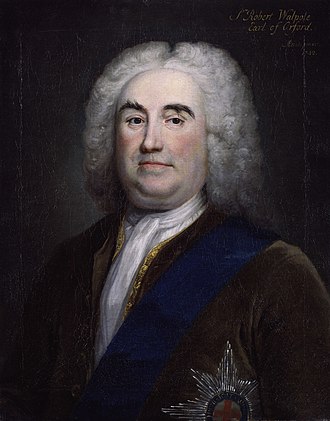
On 1 May 1707, the Kingdom of Great Britain was created from the joining of England and Scotland. In the 1700s, Robert Walpole became the first prime minister. There were uprisings trying to bring back the old royal family, but they failed. The American colonies that fought for independence became the United States. Britain focused more on Asia, especially India.
British merchants were part of the trade that moved many people from Africa to work on farms in the Caribbean and North America. Later, Britain helped stop this trade and end the practice of treating people as property worldwide.
United Kingdom of Great Britain and Ireland
In 1800, England, Scotland, and Ireland joined together to form the United Kingdom of Great Britain and Ireland.
After winning wars against France, the United Kingdom became a strong naval power. It controlled many places around the world and kept peace among big countries from 1815 to 1914. Britain fought in the Crimean War and took direct control of India after a rebellion there.
During the Victorian era, more people could vote, and cities grew quickly. Canada, Australia, and New Zealand could govern themselves. Britain faced new competition from Germany and the United States. The early 1900s brought social changes and the start of a party for workers.
World wars and partition of Ireland
Britain was one of the countries that helped defeat Germany in the First World War (1914–1918). Many soldiers died in battles, and the country faced big changes. After the war, more men and women could vote. Britain joined the League of Nations and took care of some lands that used to belong to Germany and Turkey.
In the 1920s, people could listen to radio shows, and television started in the late 1920s. Ireland divided in 1921, with the Irish Free State becoming independent and Northern Ireland staying with the United Kingdom. Women could vote in national elections starting in 1928. The 1930s were hard because of a big economic problem called the Great Depression.
Britain fought Germany again in the Second World War (1939–1945). The Royal Air Force stopped German planes in the Battle of Britain. Cities were bombed, and Britain worked with the United States and the Soviet Union to defeat Germany. British soldiers fought in many places, including Europe, Africa, and Asia.
Post-war 20th century
Main articles: Post-war Britain (1945–1979) and Social history of post-war Britain (1945–1979)
After the war, Britain helped create groups like the United Nations, the International Monetary Fund, the World Bank, and NATO. The government made big changes, such as starting a healthcare system for everyone and taking control of some industries.
Many colonies became independent, and people from those places moved to the United Kingdom. The economy had trouble competing with other countries. In 1969, people aged 18 could vote.
The United Kingdom joined the European Communities in 1973 and later the European Union in 1992.
From the late 1960s to 1998, there were troubles in Northern Ireland, but an agreement in 1998 helped bring peace.
In the 1980s, new economic policies changed the country. Britain fought a short war with Argentina over the Falkland Islands in 1982 and got oil money from the North Sea starting in 1984.
In the late 1990s, new governments were created for Scotland, Wales, and Northern Ireland.
21st century
Main articles: Political history of the United Kingdom (1979–present) and Social history of the United Kingdom (1979–present)
The United Kingdom supported the United States in fighting against groups that used terror. British soldiers fought in Afghanistan, and there were big protests against the war in Iraq.
The economy struggled after the financial crisis of 2007–2010. In 2014, people in Scotland voted to stay part of the United Kingdom.
In 2016, a vote decided that the United Kingdom would leave the European Union, which happened in 2020. A trade agreement between the UK and the EU started on 1 May 2021.
The COVID-19 pandemic in 2020–2021 affected the economy, schools, and society. The United Kingdom was the first to use a COVID-19 vaccine.
Geography
Main articles: Geography of the United Kingdom, Fauna of Great Britain, and Flora of Great Britain and Ireland
The United Kingdom covers about 94,354 square miles (244,376 km2). It includes the big island called Great Britain, part of the island of Ireland, and many smaller islands. The countries in the UK are England, Scotland, Wales, and Northern Ireland.
The UK is located between the North Atlantic Ocean and the North Sea. It is close to France, just 22 miles (35 km) away, separated by the English Channel. The UK shares a land border with the Republic of Ireland.
Main articles: Climate of the United Kingdom and Climate change in the United Kingdom
Further information: Climate of England, Climate of Scotland, Climate of Wales, and Climate of Northern Ireland
The UK has a mild climate with rain throughout the year. Temperatures usually stay between 0 °C (32 °F) and 30 °C (86 °F). The west gets more rain, while the east is drier. Winters are mild, especially in the west, and summers are warmest in southeastern England. Snow can fall on high ground in winter.
England makes up about half of the UK’s land. It has flat areas in the south and east, and hilly or mountainous areas in the north and west. Scotland is the most mountainous part of the UK, with many islands. Wales is mostly mountainous, with its highest peak in Snowdonia. Northern Ireland is hilly and includes Lough Neagh, the largest lake in the British Isles, and the Giant's Causeway, a special site recognized by UNESCO.
Government and politics
Main articles: Politics of the United Kingdom, Government of the United Kingdom, and Monarchy of the United Kingdom
Further information: Constitution of the United Kingdom
The United Kingdom is a constitutional monarchy and parliamentary democracy. It has a Parliament made up of a House of Commons and a House of Lords, with the monarch playing a formal role. The Prime Minister leads the government and is usually the leader of the party with the most support in the House of Commons.
Main article: Elections in the United Kingdom
For general elections, the UK is divided into areas each represented by one member of Parliament. The two main parties are the Conservative Party and the Labour Party.
Main articles: Countries of the United Kingdom, Administrative geography of the United Kingdom, and List of counties in the United Kingdom
The UK has different local governments in England, Scotland, Wales, and Northern Ireland. Each area has its own way of managing local matters.
Main article: Devolution in the United Kingdom
Further information: Devolved, reserved and excepted matters
Power in the UK can be shared between the central government and local governments in Scotland, Wales, and Northern Ireland. Each of these areas has its own government and parliament with certain responsibilities.
Main article: Foreign relations of the United Kingdom
The UK is a member of many international groups, such as the United Nations and NATO. It works closely with countries like the United States and France.
Main articles: British Armed Forces and Military history of the United Kingdom
The UK has an army, navy, and air force. These groups work to protect the country and support peace around the world.
Main articles: Law of the United Kingdom and Crime in the United Kingdom
Further information: English law, Northern Ireland law, and Scots law
The UK has different legal systems in England, Wales, Scotland, and Northern Ireland. These systems help make sure people follow the rules and get fair treatment.
Economy
Main article: Economy of the United Kingdom
Further information: Economy of England, Economy of Scotland, Economy of Northern Ireland, and Economy of Wales
The United Kingdom has a strong economy. In 2025, its total value was about £2.819 trillion, making it the fifth-largest economy in the world. The UK uses the pound sterling as its currency, which is very important worldwide. The country is also a big exporter and importer of goods and services.
The service sector, like banking and tourism, is very big and makes up most of the UK's economy. The UK is also known for its manufacturing, especially in cars and aerospace. The country has many scientists and engineers who have made important discoveries over the years. The UK has good transportation systems, including roads, railways, and airports. The UK gets a lot of its energy from wind power and is working on new technologies for the future.
Demographics
Main articles: Demographics of the United Kingdom and British people
Further information: Ceremonial counties of England, Subdivisions of Scotland, Subdivisions of Wales, and Counties of Northern Ireland
The United Kingdom's population was estimated to be over 66 million in 2021. It is the fourth-largest in Europe and the 22nd-largest in the world. Between 2001 and 2011, the population grew at an average of 0.7% each year. In 2018, the average age was 41.7 years. England has the largest population, with about 56 million people, making up 84% of the UK's total.
England is very crowded, with about 434 people living in each square kilometre. London, the capital, is the biggest city in Western Europe, with around 14.9 million people in its wider area.
In 2021, the average number of children born per woman in the UK was 1.53, which is much lower than the peak of 2.95 in 1964. About 47.3% of births in 2011 were to mothers who were not married.
Ethnicity
Main article: Ethnic groups in the United Kingdom
Historically, the UK was home to groups like the Celts, Romans, Anglo-Saxons, Norse, and Normans. In 2021, 83.1% of people in the UK identified as white, with other groups including Asian, Black, mixed ethnicity, and others. London has the most diverse population, with about 46.2% from non-white ethnic groups.
Language
Main article: Languages of the United Kingdom
English is the main language spoken in the UK. There are also regional dialects and accents, such as Scottish English, Welsh English, and Northern Irish English. Other languages spoken include Welsh, Irish, Scottish Gaelic, and languages brought in by immigrants, such as Punjabi, Urdu, and Polish.
Religion
Main articles: Religion in the United Kingdom and Freedom of religion in the United Kingdom
Christianity has been important in the UK for over 1,400 years, but church attendance has dropped. In the 2021 census, 46.2% of people in England and Wales identified as Christian, with Islam being the next largest faith at 6.5%. About 37.2% said they had no religion. In Northern Ireland, 42.3% were Catholic and 37.7% were Protestant or other Christian.
Migration
Main articles: Historical immigration to Great Britain and Modern immigration to the United Kingdom
See also: Foreign-born population of the United Kingdom
Immigration has helped the UK population grow. In 2014, about 27% of births were to mothers born outside the UK. In 2013, around 208,000 people became British citizens, the highest number since 1962. Many people from countries like Pakistan, India, and Nigeria have settled in the UK.
Education
Main articles: Education in the United Kingdom and Universities in the United Kingdom
Further information: Education in England, Education in Scotland, Education in Wales, and Education in Northern Ireland
Education systems differ in each part of the UK. About 38% of people have a university or college degree, one of the highest rates in the world. The UK has famous universities like Oxford and Cambridge.
Health
Main articles: Health in the United Kingdom and Healthcare in the United Kingdom
Further information: Healthcare in England, Healthcare in Scotland, Healthcare in Wales, and Healthcare in Northern Ireland
The UK has a public healthcare system called the National Health Service (NHS), started in 1949. It provides free healthcare to UK residents, paid for through taxes. Each part of the UK has its own NHS system, but they all aim to provide universal healthcare.
| Country | Land area | Population | Density (/km2) | ||
|---|---|---|---|---|---|
| (km2) | (%) | People | (%) | ||
| England | 130,310 | 54% | 58,620,101 | 85% | 450 |
| Scotland | 77,901 | 32% | 5,546,900 | 8% | 71 |
| Wales | 20,737 | 9% | 3,186,581 | 5% | 154 |
| Northern Ireland | 13,547 | 6% | 1,927,855 | 3% | 142 |
| United Kingdom | 242,741 | 100% | 69,281,437 | 100% | 285 |
| Region | Land area | Population | Density (/km2) | ||
|---|---|---|---|---|---|
| (km2) | (%) | People | (%) | ||
| North East | 8,581 | 6% | 2,683,040 | 5% | 313 |
| North West | 14,108 | 11% | 7,516,113 | 13% | 533 |
| Yorkshire and the Humber | 15,404 | 12% | 5,541,262 | 10% | 360 |
| East Midlands | 15,624 | 12% | 4,934,939 | 9% | 316 |
| West Midlands | 12,998 | 10% | 6,021,653 | 11% | 463 |
| East of England | 19,116 | 15% | 6,398,497 | 11% | 335 |
| Greater London | 1,572 | 1% | 8,866,180 | 15% | 5,640 |
| South East | 19,072 | 15% | 9,379,833 | 16% | 492 |
| South West | 23,836 | 18% | 5,764,881 | 10% | 242 |
| England | 130,310 | 100% | 57,106,398 | 100% | 438 |
Largest cities or towns in the United Kingdom (England and Wales: 2011 census built-up area; Scotland: 2016 estimates settlement; Northern Ireland: 2001 census urban area) | |||||||||
|---|---|---|---|---|---|---|---|---|---|
| Rank | Name | Urban area | Pop. | Rank | Name | Urban area | Pop. | ||
| 1 | London | Greater London | 9,787,426 | 11 | Bristol | Bristol | 617,280 | ||
| 2 | Manchester | Greater Manchester | 2,553,379 | 12 | Edinburgh | Edinburgh | 512,150 | ||
| 3 | Birmingham | West Midlands | 2,440,986 | 13 | Leicester | Leicester | 508,916 | ||
| 4 | Leeds | West Yorkshire | 1,777,934 | 14 | Belfast | Belfast | 483,418 | ||
| 5 | Glasgow | Greater Glasgow | 985,290 | 15 | Brighton | Brighton & Hove | 474,485 | ||
| 6 | Liverpool | Liverpool | 864,122 | 16 | Bournemouth | South East Dorset | 466,266 | ||
| 7 | Southampton | South Hampshire | 855,569 | 17 | Cardiff | Cardiff | 390,214 | ||
| 8 | Newcastle upon Tyne | Tyneside | 774,891 | 18 | Middlesbrough | Teesside | 376,633 | ||
| 9 | Nottingham | Nottingham | 729,977 | 19 | Stoke-on-Trent | Stoke-on-Trent | 372,775 | ||
| 10 | Sheffield | Sheffield | 685,368 | 20 | Coventry | Coventry | 359,262 | ||
Culture
Main article: Culture of the United Kingdom
Further information: Culture of England, Culture of Scotland, Culture of Wales, and Culture of Northern Ireland
The culture of the United Kingdom is shaped by its history as an island nation and its makeup of four countries, each with its own traditions. The UK has had a big influence on the world, especially in language, culture, and law in many countries it once ruled.
Literature and drama
Main articles: British literature and Theatre of the United Kingdom
Further information: Literature of England, Scottish literature, Welsh literature, and Literature of Northern Ireland
Famous writers from the UK include William Shakespeare, known as one of the greatest writers ever, and Robert Burns, Scotland’s national poet. The UK is well-known for its children’s books, with authors like Roald Dahl and J.K. Rowling, who wrote the popular Harry Potter series. Other important writers include Charles Dickens, Jane Austen, and Agatha Christie, who wrote many mystery stories.
Philosophy
Main article: British philosophy
The UK is known for its contributions to philosophy, especially ideas about knowledge and ethics. Important philosophers include John Locke, David Hume, and Jeremy Bentham, who helped develop ideas about how people should live and make decisions.
Media
Main articles: Media of the United Kingdom and Censorship in the United Kingdom
Further information: Media of England, Media of Scotland, Media of Wales, and Media of Northern Ireland
The BBC, started in 1922, is the UK’s main broadcaster, offering TV, radio, and online services. Other major media companies include ITV and Sky. Popular newspapers like The Guardian and The Times are based in the UK. London is a major center for media, but cities like Manchester, Edinburgh, and Cardiff also play important roles.
Visual art
Main articles: Art of the United Kingdom and Architecture of the United Kingdom
Famous British artists include William Turner, known for his paintings, and David Hockney, famous for his modern art. The Royal Academy in London helps support and show art throughout the UK. Important art schools and galleries can be found in cities like London, Glasgow, and Oxford.
Music
Main article: Music of the United Kingdom
Further information: Music of England, Music of Scotland, Music of Wales, and Music of Northern Ireland
The UK has a rich musical history, from folk music to modern pop and rock. The Beatles are one of the most famous bands from the UK, with millions of fans worldwide. Other well-known musicians include the Rolling Stones, Queen, and Adele. The UK is also a big player in dance music and electronic genres, with many popular DJs and producers.
Cinema
Main articles: Cinema of the United Kingdom and Independent cinema in the United Kingdom
The UK has made major contributions to cinema. Directors like Alfred Hitchcock and Christopher Nolan are known around the world. British actors have starred in many famous films, and the UK is home to major film franchises like Harry Potter and James Bond. The UK film industry continues to grow, with many films released each year.
Cuisine
Main article: British cuisine
Further information: English cuisine, Scottish cuisine, Welsh cuisine, and Northern Irish cuisine
British food includes traditional dishes like the Sunday roast, fish and chips, and afternoon tea. The UK also enjoys a variety of international foods, with many people embracing cuisines from India, Italy, and other countries. The UK is known for its pubs, which often serve beer, wine, and food. Popular drinks include Scotch whisky, cider, and gin.
Sport
Main articles: Sport in the United Kingdom and Great Britain at the Olympics
Further information: Sport in England, Sport in Scotland, Sport in Wales, and Sport in Northern Ireland
Football (soccer) is the most popular sport in the UK. The sport began in England, and each part of the UK has its own teams and leagues. Rugby is also very popular, especially in Scotland and Wales. The UK has hosted the Olympic Games three times, with London as the host city each time. Other popular sports include tennis, cricket, and golf.
Symbols
Main article: Symbols of the United Kingdom
The UK’s flag, called the Union Flag or Union Jack, combines the flags of England and Scotland. The national anthem is “God Save the King.” Each part of the UK has its own symbols, such as flags and animals, that represent its identity.
Images
Related articles


This article is a child-friendly adaptation of the Wikipedia article on United Kingdom, available under CC BY-SA 4.0.
Images from Wikimedia Commons. Tap any image to view credits and license.